Posts Categorized: HVAC

Why Your Air Conditioning Keeps Turning On and Off in Stamford: Short Cycling Causes and Fixes

Why does your air conditioning (AC) in Stamford turn on, run for a few minutes and shut off again, over and over? That pattern is called short cycling, and it has a short list of likely causes: a thermostat in the wrong place, a system that is too big for the house, restricted airflow, a frozen coil, a failing electrical part or a refrigerant problem. This post explains how to tell which one you may have and what a technician does about it. Black Plumbing Heating & Air serves Stamford homeowners and has served West, Central and North Texas since 1994.

What short cycling is
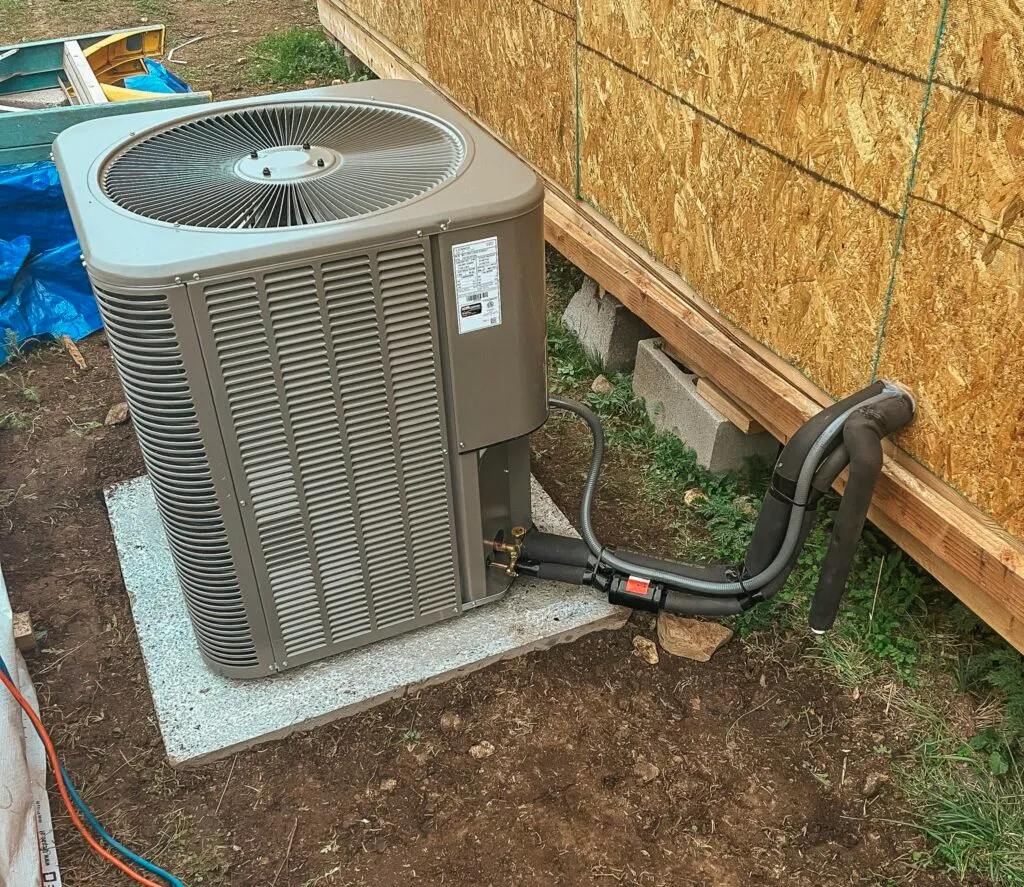
ac short cycling

A normal cooling cycle runs long enough to bring the house down to the thermostat setting and pull moisture out of the air, then shuts off. In short cycling the system starts, runs briefly and stops before it finishes that job, then starts again soon after. You may notice a house that never feels quite cool, a sticky or humid feel indoors, a system that clicks on and off and a power bill that climbs even though the equipment seems to run less in each cycle. Each start puts more strain on the compressor and the fan motors than steady running does, so the pattern wears equipment down faster.

Short cycling is a symptom, not a diagnosis. The goal is to find the reason the system is shutting off early. The causes below run from the simplest to the most involved.

Cause 1: a thermostat in the wrong place or a faulty control

The thermostat decides when the system starts and stops, so if it reads the wrong temperature, the system obeys the wrong information. A thermostat placed near a supply vent, in direct sun, close to a kitchen or on an exterior wall can read colder or warmer than the rest of the house and end the cycle early. A control that has failed or has weak batteries can also cause odd starts and stops.

What to check: look at where the thermostat sits and whether the display looks normal. Replace batteries if it uses them. ENERGY STAR’s heating and cooling maintenance checklist advises checking thermostat settings so the system keeps you comfortable at home and saves energy when you are away. If the settings are right and the problem remains, a technician can test the control and the wiring and move or replace the thermostat if needed.

Cause 2: a system that is too large for the home

An air conditioner that is bigger than the house needs cools the air quickly, reaches the set temperature and shuts off before it has run long enough to remove humidity. Then it restarts when the temperature drifts up. The result is a pattern of short runs and a house that feels cool but clammy. This can happen when a replacement system was chosen by matching the old one, without checking the actual needs of the home.

EPA’s duct cleaning guidance includes a related reminder in its prevention list: make sure replacement air conditioning units are properly sized. That is the kind of detail that shows up only when someone does the calculation. If an oversized unit is the cause, the options range from adjusting how the system operates to considering a different system. Our AC installation and replacement page explains how we size equipment to the home.

Cause 3: restricted airflow from a dirty filter or blocked returns

When too little air moves across the indoor coil, the system overheats or the coil gets too cold, and safety controls shut it down. This is a frequent reason for a system that will not run a full cycle, and it is also the easiest one to check yourself.

ENERGY STAR says to inspect, clean or change filters monthly in central air conditioners, furnaces and heat pumps, and notes that a dirty filter raises energy costs and can lead to early equipment failure. It also says airflow problems can cut system efficiency by up to 15 percent.

What to check:

  • Pull the filter and look at it. If it is gray, matted or loaded with dust, replace it.
  • Make sure supply vents are open and that furniture, rugs or curtains do not block them.
  • Check that return grilles are clear.
  • Look at the outdoor unit for leaves, grass clippings or debris that could block airflow across the condenser.

If you are in a dusty area or a home with pets, the filter may need attention more often. For help beyond the filter, our indoor air quality solutions can reduce what the system has to handle.

Cause 4: a frozen evaporator coil

The evaporator coil gets cold when the system runs. If airflow is low, or the refrigerant charge is off, the coil can drop below freezing and ice can form on it. Ice blocks airflow, which makes the freeze worse, and the system can shut down or run poorly until the ice melts.

Signs: ice on the coil or refrigerant line, water dripping near the indoor unit as ice melts, weak airflow and warm air from the vents.

What to do: turn the system off at the thermostat and let the ice melt. Do not chip it away. Then have a technician find out why it froze, because a new filter alone does not address a refrigerant or blower problem.

Cause 5: electrical component trouble

A weak capacitor, a worn contactor or a failing motor can cause a system to start, struggle and stop. These parts carry electrical load, and they can fail gradually, so the system may run for a short while and then quit. Do not open electrical panels yourself, since capacitors can hold a charge. A technician tests voltage and current at the motors and replaces what has failed. ENERGY STAR’s list of annual tasks includes tightening electrical connections and measuring motor voltage and current, which is exactly how many of these problems are caught early.

Cause 6: refrigerant that is too low or too high

Refrigerant does not get used up. If the level is low, there is a leak. If it is too high, someone overcharged the system. Either way, ENERGY STAR says too much or too little lowers efficiency and shortens equipment life. Low refrigerant can lead to a frozen coil and to shutdowns by protective controls.

Only a trained technician should check or adjust refrigerant. The technician should measure the charge, look for the leak and explain the repair options before anything is added.

Cause 7: a drain or safety switch problem

Many systems have a switch that shuts the unit down when the condensate drain backs up. A clogged drain can cause that switch to trip and stop the system, and it can also cause water damage. ENERGY STAR advises inspecting the condensate drain for this reason. If you see water around the indoor unit or a full drain pan, turn the system off and call.

How a technician diagnoses short cycling
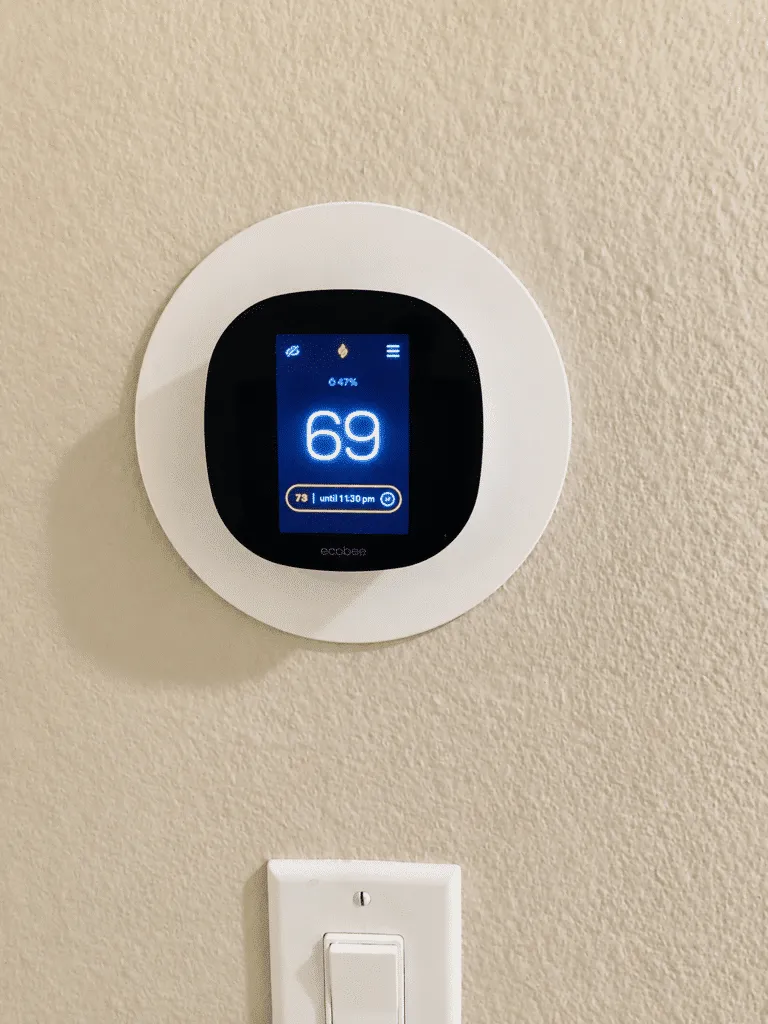
ac short cycling
  1. Observe the pattern. How long does the system run, and what happens before it stops?
  2. Check the thermostat. Location, settings and wiring are reviewed.
  3. Inspect airflow. Filter, vents, returns, blower and coils are examined.
  4. Test the electrical side. Capacitors, contactors and motors are measured.
  5. Measure the refrigerant charge and look for signs of a leak.
  6. Check sizing and the condensate drain when the pattern points that way.
  7. Explain the findings. You hear what is causing the problem and what the choices are.

Our AC and HVAC repair service follows that kind of process, working from the simplest cause to the most involved. Regular upkeep also helps, and our AC maintenance service covers the seasonal checks ENERGY STAR describes. For plumbing and other services near you, see the Stamford plumber page.

What you can do now and what to avoid

  • Do: check the filter, make sure vents are open and look at the outdoor unit and thermostat.
  • Do: note how long each cycle lasts and whether there is ice or water.
  • Do not: keep running a system that is icing up or tripping a breaker.
  • Do not: add refrigerant, open panels or touch electrical parts.
  • Do not: ignore short cycling because the house still feels cool. The strain on the equipment continues.

Frequently asked questions about AC short cycling in Stamford

Is short cycling an emergency?

Not always, but it should not be left alone. If the system also blows warm air, trips a breaker, shows ice or someone in the home is at risk from heat, treat it as urgent. We are open 24/7.

Can a dirty filter really cause short cycling?

Yes. A clogged filter restricts airflow, which can make the system overheat or freeze the coil and shut itself off. Replacing the filter is a good first check, but if the pattern continues, other causes need to be ruled out.

Could my AC be too big?

It can be. An oversized system cools fast and shuts off before it removes much humidity. A technician can tell you whether sizing is likely to be the cause.

How can I reduce the chance of short cycling?

Change the filter regularly, keep vents and returns open, keep the outdoor unit clear and schedule a seasonal tune-up. These steps cover frequent triggers.

Get your Stamford system checked

If your system keeps cycling on and off, contact us and describe what you see. We will help you figure out the cause and the right fix.
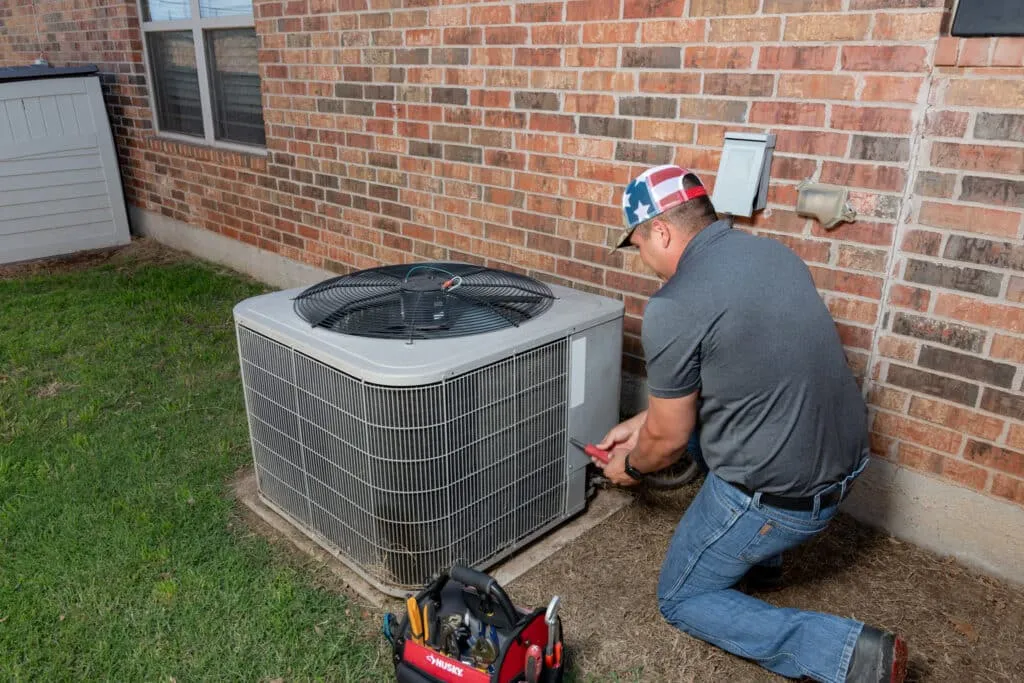
Why Your San Angelo Air Conditioning Cools at Night but Falls Behind by Afternoon

Your air conditioning (AC) keeps the house comfortable overnight, then by mid-afternoon the rooms feel warm and the thermostat will not come down. Why does a system that works at 2 AM struggle at 2 PM? It is a recognizable pattern, and it is rarely random. The system is telling you it can handle a light load but not a heavy one. This post goes through the causes one by one, shows which ones you can check yourself, and explains what a repair visit covers. Black Plumbing Heating & Air is at 501 N Main St, San Angelo, TX 76903, and we take calls 24/7.

Why the afternoon is the hardest part of the day for an AC

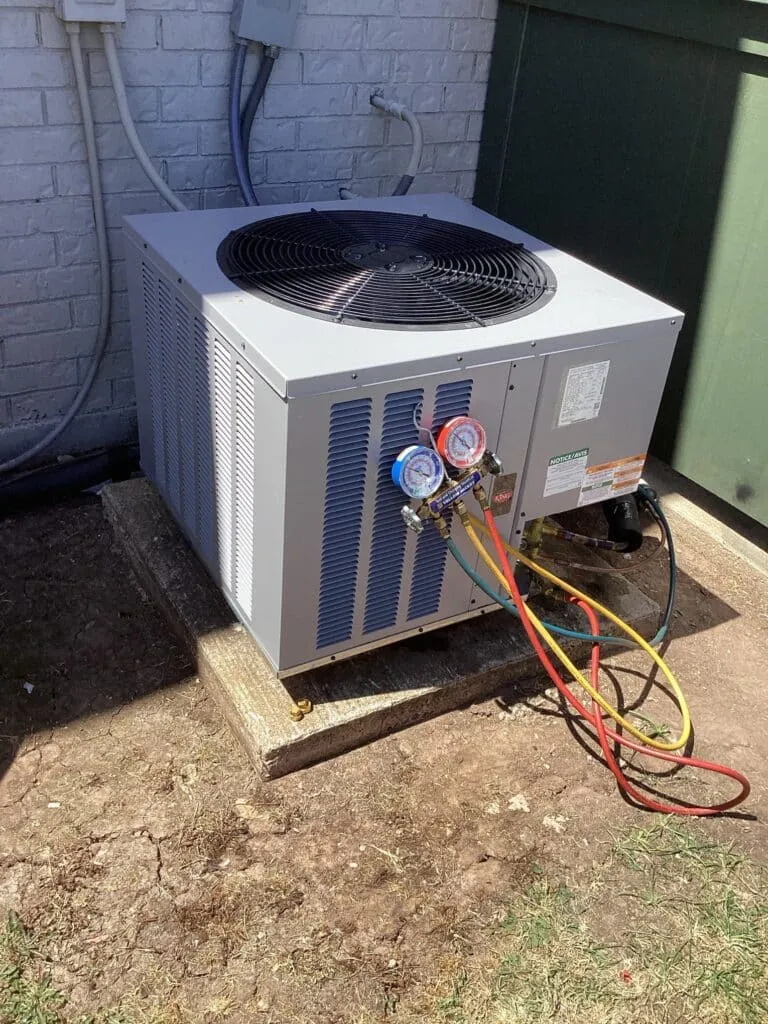
ac issues

At night the job is easy. The air outside is cooler, the sun is not heating the roof and walls, and the house has no solar gain pouring through the windows. A system with a hidden weakness can still keep up because it is not asked to do much.

By afternoon everything changes. The roof and walls have been absorbing heat for hours, the attic has heated up, and west-facing windows let in direct sun. The outdoor unit has to reject heat into the hottest air of the day, which makes the job harder. The cooling the house needs is at its highest at the same moment the system has the most difficulty delivering it. Anything that is slightly off shows up now, which is why “it works at night” is not the same as “it is fine.”

Cause 1: A dirty outdoor coil

The outdoor coil is how your system dumps heat. When it is coated with dust, cottonwood fluff, grass clippings or lint, heat cannot leave efficiently. Pressure and temperature inside the system rise, capacity drops and the compressor works harder. On a mild night the effect is hidden. On a hot afternoon it can be the difference between keeping up and falling behind.

You can look at it yourself. With the power off at the disconnect, see whether the fins are caked with dirt or blocked by debris, and clear a few feet of space around the unit. A gentle rinse with a hose, from the inside out where you can, helps. Anything beyond that, such as a coil that is deeply fouled or bent, should be handled by a technician.

Cause 2: A clogged filter or a dirty indoor coil

Airflow is half of cooling. If the filter is clogged or the indoor coil is covered in buildup, not enough air passes over the coil, and the system cannot move the heat it has absorbed. The result is weak airflow at the vents and, in severe cases, ice on the coil. Ice makes things worse, because it blocks airflow further. If you find ice on the refrigerant line or the indoor unit, turn the system off and let it thaw before you call.

Check the filter. If it looks gray and matted, replace it. A filter that fits poorly or is the wrong type can also restrict flow.

Cause 3: Low refrigerant

An air conditioner does not use up refrigerant. If the charge is low, there is a leak. A system low on refrigerant has less capacity, and the shortfall shows up under load. The U.S. Department of Energy’s guidance on residential central air conditioners lists improper charging among the installation problems that cause efficiency losses, and says regular maintenance, including charging refrigerant, is necessary to maintain peak performance. Adding refrigerant without finding and fixing the leak is a temporary answer, so our technicians measure the charge and look for the cause.

Cause 4: Ducts that lose cooled air

Many homes have ducts running through an attic that gets very hot in the afternoon. A duct with leaks, loose connections or poor insulation loses cooled air into the attic and pulls hot air in. At night the attic is cooler and the loss is small. In the afternoon, it is large. The same department’s guidance names leaky ducts as a common installation problem that causes efficiency losses.

In San Angelo, many homes are ranch-style houses from the wool and mohair years, and older homes of that era often have thin ductwork or limited attic space. If some rooms stay warm while others are fine, or if airflow at a distant register is weak, the ducts deserve a look.

Cause 5: A system that does not match the house

Sometimes the problem is the size of the system relative to the house. The Department of Energy’s guidance lists oversizing as an installation problem. An oversized system cools quickly, shuts off before it removes much humidity, and cycles on and off, which leaves the house clammy. An undersized system runs all day and cannot catch up at the peak. A house that has changed, with added windows, a room addition, or a loss of shade from a removed tree, can also outgrow its system.

If the system has never kept up since it was installed, this is a likely cause. We size replacements to the home rather than swapping in whatever fits the old ductwork. Our air conditioning replacement in San Angelo page explains how.

Cause 6: Failing electrical parts

Capacitors, contactors and motors weaken with age and heat. A part that works when it is cool can fail or drop out as temperatures climb. Signs include a unit that hums but does not start, a fan that spins slowly or not at all, or a breaker that trips in the afternoon. These parts are small repairs when caught early, and a failed capacitor left in place can damage the motor or compressor it serves.

Cause 7: The thermostat and the way you use it

It is worth ruling out the simple things. A thermostat in direct sun or near a heat source reads wrong. A setback schedule that lets the house warm up during the day leaves the system with a bigger job when it restarts. A thermostat set to “fan on” instead of “auto” blows warm, humid air between cycles. Sometimes the fix is a setting.

If you use a large temperature setback while you are out, try a smaller one. Cooling a house down by many degrees on a hot afternoon asks more of the system than holding it steady.

Cause 8: Heat coming from inside the house

Appliances, lighting and cooking add heat during the day. A west-facing room with no shade can take on a lot of sun. Closing blinds or curtains on the sunny side, running the oven at off-peak times and keeping interior doors open to allow return air can make a visible difference. These steps will not fix a faulty system, but they take load off a marginal one.

ac issues

A quick self-check before you call

  1. Is the thermostat set to cool and to “auto”?
  2. Is the filter clean?
  3. Is the outdoor unit running, and is the fan spinning?
  4. Is there ice on the indoor unit or the refrigerant line?
  5. Is the outdoor coil blocked by debris?
  6. Do some rooms cool better than others?
  7. Has the breaker tripped?

If the answers do not solve it, you now have a clear description to give. Note when the problem starts, which rooms are affected, any sounds or smells, and what the outdoor unit is doing. A phone video of the unit running is helpful.

What a repair visit covers

When our technicians service a San Angelo air conditioner, the visit covers the refrigerant level, the electrical connections, airflow and the condition of the ductwork. For an afternoon problem we add a close look at the outdoor coil and the temperature drop across the indoor coil. We test capacitors and motors under load, and we compare the system’s performance with what it should be delivering. Then we explain what we found and what the options are. Our AC repair services in San Angelo page lists the work we do, including refrigerant leaks, failed capacitors and airflow problems.

Preventing the pattern next summer

Many afternoon failures start with something a tune-up is meant to catch. A clean coil, a verified charge and healthy electrical parts mean the system has reserve capacity when the heat arrives. See our AC maintenance in San Angelo page, and our guide to how often to service your air conditioning. If the system is shutting down completely, read when to call for emergency AC repair.

Frequently asked questions about AC problems in San Angelo

Is it normal for an AC to run all afternoon?

On a very hot day, long run times are normal. What is not normal is a house that keeps getting warmer while the system runs. If the temperature climbs despite constant operation, something is limiting capacity.

Why does my AC work better at night?

Lower outdoor temperatures and no solar heat mean the system has a lighter job. It can mask a weakness, such as a dirty coil or low charge, that shows up under heavy load.

Can I fix this by lowering the thermostat?

Usually not. Setting the thermostat lower does not make the system cool faster. It only asks the system to run longer, and if it is already at its limit it will not help.

Could my ducts be the problem?

Yes. Leaking or poorly insulated ducts in a hot attic lose cooled air and are a common cause of uneven cooling in the afternoon.

Call Black Plumbing Heating & Air in San Angelo

If your air conditioning loses the afternoon battle, call (325) 659-3747 any hour or visit 501 N Main St, San Angelo, TX 76903. We hold Texas HVAC license TACLA145786C and have served San Angelo since 1994. Our office is rated 4.8 out of 5 on Google. You can see all our local services on the San Angelo page.

Seven Air Conditioning Problems in Brownwood Homes and How Each One Is Fixed

Which air conditioning (AC) problems send Brownwood homeowners to the phone, and what does fixing each one involve? This post walks through seven: a failed capacitor, restricted airflow, a frozen coil, a refrigerant leak, a thermostat fault, a clogged filter and a blocked condensate drain. For each one you will see the symptoms, why it happens and what a technician does about it. Black Plumbing Heating & Air works from 703 W Austin Ave, Brownwood, TX 76801, is open 24/7 and has served this region since 1994.

How to read this list

AC Repair Brownwood

Many AC problems share the same symptoms. Warm air, weak airflow, a system that runs without finishing the job and a rising electric bill can come from several different faults. That is why a diagnosis matters more than a guess, and why a repair that treats only the symptom tends to fail again. Use the list below to understand what might be wrong, then let a technician confirm it with tests.

ENERGY STAR’s maintenance checklist is a good companion to this post. It lists the tasks that keep cooling equipment healthy: cleaning both coils, checking the refrigerant level, cleaning and adjusting blower components, inspecting the condensate drain, tightening electrical connections and lubricating moving parts. Several of the seven problems below come straight from skipping one of those steps.

1. A failed capacitor

A capacitor stores and releases the electrical charge that helps motors start and run. In an air conditioner, one usually serves the compressor and the outdoor fan. When it weakens, the motor may hum without starting, start slowly or shut off unexpectedly.

Signs: clicking or humming from the outdoor unit, a fan that does not spin, warm air from the vents and a system that cuts out.

What the fix involves: a technician tests the capacitor, checks the motors and the electrical supply and replaces the part if it has failed. A capacitor that fails can be a symptom of a motor working too hard, so the technician should also look at why. Do not open the panel yourself, because capacitors can hold a charge.

2. Restricted airflow from dirty coils and blocked returns

Air has to move across the coils to carry heat out of the house. When dust coats the evaporator or condenser coil, or when a return vent is blocked, the system moves less air and works harder. ENERGY STAR notes that dirty coils reduce cooling and make the system run longer, and that airflow problems can cut system efficiency by up to 15 percent.

Signs: weak airflow, hot rooms far from the unit, long run times and higher energy bills.

What the fix involves: the technician cleans the coils, checks the blower and its wheel, clears obstructions and confirms that supply and return air are balanced. If ducts are leaking or undersized, that becomes part of the conversation.

3. A frozen evaporator coil

When airflow is too low, or the refrigerant charge is off, the evaporator coil can drop below freezing and ice can build up on it. As the ice grows it blocks even more airflow, and the problem feeds itself.

Signs: ice on the coil or on the refrigerant line, water dripping when the ice melts, weak airflow and warm air.

What the fix involves: first the system has to be shut off so the ice can melt. Then the technician finds out why it froze, which could be a dirty filter, a failed blower motor, a closed vent or low refrigerant. Clearing the ice without fixing the cause only gives you a short break before it freezes again.

4. A refrigerant leak or low charge

Refrigerant is not used up like fuel. If the level is low, there is a leak somewhere in the system. ENERGY STAR says the refrigerant level should be checked and adjusted if needed, because too much or too little lowers efficiency and shortens equipment life.

Signs: the system runs but does not cool, ice on the coil, a hissing sound or a rising energy bill.

What the fix involves: a technician measures the charge and looks for the leak. Simply adding refrigerant without finding the leak is a temporary answer at best. Repair options depend on where the leak is and how old the equipment is.

James W., a Brownwood customer, described a visit like this in October 2026: “They identified the leaks in our a/c and fixed them while also noting that our unit needed to be cleaned”. That is the order we aim for: find the cause, fix it and tell you what else we noticed.

5. A thermostat that is wrong or failing

The thermostat tells the system when to start and stop. If it is in a bad spot, such as near a vent or in direct sun, it can read the wrong temperature and shut the system off too early. If it has failed or has weak batteries, it may not call for cooling at all. ENERGY STAR advises checking settings so the system keeps you comfortable at home and saves energy when you are away.

Signs: the system does not start, short runs, rooms that never reach the set temperature or a display that is blank or erratic.

What the fix involves: checking the settings, batteries and wiring, then repositioning or replacing the thermostat if needed. This is a simple repair when it is the cause, and a technician can confirm that it is not hiding a larger fault.

6. A clogged air filter

This is the most preventable problem on the list. ENERGY STAR says to inspect, clean or change filters monthly in central air conditioners, furnaces and heat pumps, because a dirty filter raises energy costs and can lead to early equipment failure. A clogged filter can also lead to a frozen coil.

Signs: weak airflow, dust near vents, a system that runs longer than it should and a filter that looks gray or matted.

What the fix involves: replacement with the filter type your equipment calls for. Check the filter between changes, and do not run the system without one.

7. A blocked condensate drain

Cooling removes moisture from the air, and the water has to drain away. The condensate line can clog with debris or algae growth. ENERGY STAR says to inspect the drain, because a clogged drain can cause water damage and affect indoor humidity.

Signs: water around the indoor unit, a drain pan that is full, musty smells, a system that shuts off on its own because a safety switch has tripped and a house that feels humid.

What the fix involves: clearing the line, cleaning the drain pan and checking that water flows freely. If the line keeps blocking, the technician looks at the slope, the connection and the cause of the debris.

Why the same problems show up again and again

A cooling system in Texas works for months at a stretch, and any weak point gets tested hard. Dust coats coils, filters clog, electrical parts wear and small leaks grow. None of that is unusual, and none of it means the equipment was bad to begin with. It does mean that the best protection is a pattern: a monthly filter check, a yearly tune-up in spring and a quick response when the system starts behaving differently. A problem caught at the first odd noise or the first rise in your bill is usually a smaller repair than one caught after the system fails.

Which of these can you check yourself?

  • Safe to check: the thermostat settings and batteries, the filter, open and clear vents and the area around the outdoor unit.
  • Leave to a technician: capacitors, motors, refrigerant, electrical parts, coils and anything that requires opening a panel.
  • Turn the system off and call: ice on the coil, a tripped breaker that trips again, burning smells and water leaking indoors.

Where to go for help in Brownwood

Our AC repair service in Brownwood covers diagnosis and repair for problems like these. If the system fails late at night or on a weekend, use our emergency AC repair service. If repairs keep adding up, see how our AC replacement and installation work is handled, and for the full list of what we offer locally, visit the Brownwood plumbing and HVAC page.

Frequently asked questions about AC repair in Brownwood

How do I know which problem my AC has?

You often cannot tell from symptoms alone, because several faults look the same. A technician tests the system to find the cause. Note what you see and hear, since that helps narrow the search.

Is it okay to add refrigerant myself?

No. Handling refrigerant takes training and the right equipment, and a low charge means there is a leak that has to be found. Adding refrigerant without fixing the leak does not solve the problem.

Can maintenance prevent most of these problems?

Maintenance addresses many of them. Cleaning coils, checking refrigerant, inspecting the drain and testing electrical parts, all items on ENERGY STAR’s list, catch trouble before it becomes a breakdown. It cannot prevent every failure, but it reduces surprises.

When should I think about replacing the system?

When repairs begin to pile up, when a major part fails on an older unit or when the system can no longer keep up, replacement deserves a conversation. A technician can explain what the repair would involve and what the alternatives are so you can compare.

Call our Brownwood team

Call (325) 643-5215 or visit 703 W Austin Ave, Brownwood, TX 76801. We will find the cause and explain what we recommend.

A Pre-Summer Cooling Plan for Lubbock Businesses: What to Schedule, Who Does What and When

For a business, a cooling failure is not just uncomfortable. It can mean closed doors, lost sales, spoiled stock or staff sent home. The right protection is a plan made before the heat arrives. This guide is for owners and managers in Lubbock who want a simple structure: what to schedule, which tasks your own team can handle, which belong to a licensed contractor and what to ask before you sign off on a maintenance visit. Black Plumbing Heating and Air serves Lubbock from 8215 Avenue D and is open 24/7 for air conditioning (AC) emergencies.

Start with the building, not the calendar

Every business uses cooling differently. A restaurant has heat from the kitchen and constant door traffic. A retail shop has customers coming and going. An office has computers and a full day of occupancy. A mixed-use space has several tenants with different needs. Before you set a schedule, write a short profile of your own space.

  • What type of cooling equipment do you have, and where is it located?
  • How old is it, and who maintained it last?
  • What are your busiest hours and months?
  • Which areas are most sensitive to heat, such as a server closet, a kitchen or a stockroom?
  • Who in your team can notice and report a problem?

That profile guides everything else. It also makes the first call to a contractor more productive, because you can describe your building clearly. For a look at what we handle for businesses, see our commercial AC services in Lubbock.

A timeline that works backward from summer

Pick your hottest expected month and count back. Here is a simple schedule a small business can adapt.

  1. Early spring, well before peak heat: book a maintenance visit. ENERGY STAR advises servicing cooling in spring, since contractors get busy once summer arrives. Booking early gives you your choice of days.
  2. Next: make any repairs the visit uncovers. If a part needs ordering, there is time for it.
  3. Shortly before peak heat: have staff run the system through a normal business day and report any odd noises, smells, hot spots or leaks.
  4. Peak season: check filters monthly and keep a log.
  5. End of season: review the log and note what to raise at the next visit.

This order is our suggestion, not a rule. The point is to leave room between finding a problem and needing the system at full load.

What a maintenance visit should cover

ENERGY STAR publishes a checklist of what a professional visit includes for heating and cooling systems. It is written for homes, but its list of tasks is a useful baseline for any space. For cooling, it includes the following items.

  • Thermostat and controls. Review settings for comfort when people are present and savings when the space is empty, and test that the equipment starts, runs and shuts off correctly.
  • Electrical connections. Tighten them and measure motor voltage and current. Loose connections can make operation unsafe and shorten the life of components.
  • Moving parts. Lubricate them to reduce friction and wasted electricity.
  • Condensate drain. Inspect it, since a clog can cause water damage and affect indoor humidity.
  • Coils. Clean the evaporator and condenser coils. Dirty coils reduce cooling, lengthen run time and raise costs.
  • Refrigerant. Check the level and adjust it. Too much or too little lowers efficiency and equipment life.
  • Blower components. Clean and adjust them. ENERGY STAR says airflow problems can cut efficiency by up to 15 percent.

Ask any contractor to show how their visit covers these items for your equipment. If your building has special equipment, such as walk-in coolers, ask whether it is included. Our AC maintenance in Lubbock page describes how we approach a visit.

Who does what: staff tasks and contractor tasks

Dividing the work prevents gaps. The first list is for your own team.

  • Inspect and replace filters on a regular schedule. ENERGY STAR advises monthly checks and says a dirty filter raises energy costs and can lead to early equipment failure. A busy space may need changes more often, so follow what you observe.
  • Keep supply and return vents clear of stock, furniture and decor.
  • Keep the area around equipment clear and clean.
  • Log temperature complaints, noises and water spots with the date and location.
  • Know where the thermostat and shutoff are, and who can use them.

The second list is for a licensed contractor: electrical work, refrigerant, coil cleaning, motor and blower work, drain clearing and diagnostics. Black Plumbing holds Texas HVAC license TACLA145786C. Do not ask staff to handle these tasks.

Schedule around your hours, not just ours

A maintenance visit that disrupts a lunch rush is a poor visit. Tell the contractor when you are open, when you are slowest and what spaces they can use. Ask whether work can be done before opening or after closing, and how noise and access will be handled. Carlye H., a Lubbock customer, wrote in September 2026 that the team will “call before and give you a price estimate for your work and confirm the date and time you request.” That kind of confirmation matters even more when you are running a business around the visit.

Signals that something is wrong during the season

Ask staff to watch for these and report them the same day.

  • One area is warmer than the rest, or customers comment on the heat.
  • The system runs longer than usual to hold the temperature.
  • A new sound, such as grinding, squealing or banging.
  • A musty smell or visible moisture near vents or equipment.
  • Water around an indoor unit.
  • Ice on lines or coils.
  • A tripped breaker that trips again.

Early reports allow a planned repair. A report after the system fails means a rushed one. If something fails outright, our emergency AC repair in Lubbock page explains how we respond, and we answer 24/7.

Keep a simple season log

A log does not need software. A single sheet taped near the thermostat or a shared note on a phone will do. Record the date of each filter change, the date of each service visit, any complaint from staff or customers and any unusual sound, smell or leak. Add the outdoor conditions on the days the system struggled, since a system that falls behind only on the hottest afternoons tells a different story from one that struggles every day.

Bring the log to your next visit. It saves time, points the technician toward the right components and builds a history you can use when you decide between repair and replacement. It also helps if staff change, because the next manager does not have to start from nothing.

Questions to ask your contractor

  1. What will you inspect, test and clean on each unit?
  2. How will you tell me what you found and what you recommend?
  3. Can you work outside my business hours?
  4. What should my staff do, and what should they leave alone?
  5. How will you handle an after-hours failure?
  6. What would you watch for if this equipment is getting older?

When a unit is near the end of its life

ENERGY STAR suggests considering replacement of an air conditioner older than 10 years, and lists frequent repairs with rising energy bills as other signs. For a business, that is a planning question as much as a repair question. Replacing equipment in spring, on your schedule, is easier on operations than replacing it in an August emergency. If your building is a candidate, our AC installation and replacement in Lubbock page explains what is involved. For air quality in a space with heavy foot traffic, see indoor air quality solutions in Lubbock.

Do not forget the water side of the building

Our Lubbock hub page notes that the area’s water carries a heavy mineral load, which leaves scale in fixtures, valves and water heaters. For a restaurant or a shop with sinks and a water heater, the cooling plan should not be the only maintenance plan. Our commercial plumbing team in Lubbock can look at that side, and a single conversation can cover both.

Frequently asked questions about commercial cooling maintenance in Lubbock

When should I schedule maintenance for the summer?

In spring, ahead of peak heat. ENERGY STAR advises servicing cooling in spring because contractors get busy once summer arrives.

Can my own staff handle any of the work?

Yes. Filter checks, keeping vents and equipment areas clear and logging problems are good staff tasks. Electrical, refrigerant and coil work belong to a licensed contractor.

How do I avoid disrupting customers?

Share your busy hours and ask the contractor to plan around them. Early morning or after-closing visits are worth asking about.

What if the system fails during business hours?

Call right away. We are open 24/7. Tell us what you see and hear, and what you have already checked.

Plan your Lubbock cooling maintenance

To set up a visit for your business, call (806) 787-2200. We are at 8215 Avenue D, Lubbock, TX 79404. See our Lubbock location page for more.

Replacing a Furnace in Lubbock: The Decisions to Make Before Installation Day

Replacing a furnace is a decision you make rarely, and it often arrives under pressure. The old one fails in January and the house is cold. This guide is for the better version of that story, where you have time. It walks Lubbock homeowners through the choices that shape a good installation: when to replace, what to check besides the furnace, what a contractor should explain and what to do on installation day. Black Plumbing Heating and Air works from 8215 Avenue D in Lubbock and is open 24/7.

Decide first: repair or replace

ENERGY STAR’s guidance gives a few markers. It says to consider replacing a furnace that is over 15 years old. It notes that an ENERGY STAR furnace is about 15 percent more efficient than a conventional one. It also lists frequent repairs with rising energy bills and rooms that are too hot or cold as other signs that it may be time. None of these is a rule by itself. A furnace with one small part failing is a different case from one that needs a repair every season.

Use these questions as a starting point:

  • How old is the furnace, and how many repairs has it needed in the last few seasons?
  • Has the technician found a safety concern, such as a cracked heat exchanger?
  • Are bills rising without a change in how you live?
  • Are some rooms never comfortable?

If a technician finds a heat exchanger problem or a venting problem, the conversation changes. ENERGY STAR notes that a cracked heat exchanger reduces safety and efficiency, and the EPA lists leaking or back-drafting furnaces and blocked or leaking flues among the sources of carbon monoxide. Safety issues belong at the top of the list.

Plan the timing

A good time to replace a furnace is before it fails. In a planned replacement, you choose the equipment and the date. In an emergency, you take what can be installed fast. ENERGY STAR advises servicing heating in fall and cooling in spring, because contractors get busy once summer and winter arrive. The same logic applies to replacement: late spring through early fall is an easier window than the first cold week. If your furnace has been showing symptoms, our article on what to review on your furnace after winter in Lubbock can help you decide whether to act now.

Look beyond the furnace: ducts and airflow

A new furnace connects to the same ductwork as the old one, and weak ducts can limit what it delivers. ENERGY STAR says leaky ducts can draw dust and air from attics, crawl spaces and basements into the home, that leaky ductwork can contribute to humidity problems and that room temperature imbalances can come from duct problems or inadequate insulation. It also says an undersized duct system can make heating or cooling noisy.

Ask the contractor to look at the ducts before you commit. If one room has always been cold, or if the old furnace was noisy, the ducts may be part of the story. A new furnace on a poor duct system can disappoint you, and the disappointment will be blamed on the furnace.

Ask how the size was determined

A furnace that is too large or too small for the house will not perform well. A common mistake is to replace like with like, based on the old furnace’s size, without asking whether the house has changed. Windows may have been replaced, rooms added or insulation improved. Ask the contractor how they determined the right size for your home and what they considered. You are entitled to a clear answer in plain language. If the answer is only “same as before,” ask a follow-up.

Check venting and combustion air

A gas furnace needs a safe way to remove exhaust and a supply of air for combustion. The EPA’s page on carbon monoxide lists leaking or back-drafting furnaces and flues that are blocked, disconnected or leaking among the sources of the gas. That is why venting is not a detail to skip. Ask the contractor to explain how the new furnace will vent, whether the existing flue or vent can be reused and how the installation will be tested. A good installer welcomes the question.

Also plan for carbon monoxide alarms. The U.S. Consumer Product Safety Commission, as the EPA reports, recommends one on every level of the home and outside each sleeping area. A new furnace is a good moment to test them and replace any that are old.

Think about the thermostat and controls

ENERGY STAR notes that a good contractor can install a programmable thermostat and explain how to use it. Ask whether the new furnace works with your current thermostat, and whether a new one would help. Then ask for a walkthrough of the settings before the technician leaves. A thermostat you understand is easier to use well.

Questions to ask any contractor

  1. What did you inspect before recommending replacement?
  2. How did you determine the size of the furnace for this house?
  3. What will you check about the ducts and the venting?
  4. Is a permit or inspection needed, and who handles it?
  5. What will you test when the installation is complete?
  6. What will you show me about operating and maintaining the new furnace?
  7. What happens if something is not right after the installer leaves?

The answers tell you how the company works. Clear, unhurried explanations are a good sign. Vague answers or pressure to decide on the spot are not. We are glad to answer all of these. Black Plumbing was founded in Abilene in 1994 and holds Texas HVAC license TACLA145786C.

Common planning mistakes to avoid

  • Waiting for a failure. A forced decision in a cold house leaves little room to compare options or ask questions.
  • Replacing like with like without a second look. The house may have changed since the last furnace went in.
  • Ignoring the ducts. A new furnace cannot fix leaks, imbalance or undersized runs.
  • Skipping the venting conversation. It is a safety matter, not a detail.
  • Forgetting the carbon monoxide alarms. A new appliance is the moment to confirm they work.
  • Deciding on one visit without questions. Take the time to understand the recommendation.

Each of these is easy to avoid once you know to look for it, and none of them requires special knowledge on your part. A short list of questions and a willingness to wait for a clear answer will carry you through most of the decision.

What installation day looks like

Ask the contractor to walk you through the plan for the day. A furnace replacement generally involves shutting off power and gas, removing the old furnace, setting the new one, connecting ducts, gas, venting, drain and electrical lines, and testing the system. Plan for no heat while the work is under way, and for some noise and foot traffic. Clear a path to the furnace and move stored items away from the area beforehand.

At the end, ask the installer to walk you through the controls, show you where the filter goes and demonstrate how to turn off power and gas. Ask where the shutoffs are. Keep any manuals the crew leaves.

After installation: keep it running well

A new furnace still needs care. ENERGY STAR advises monthly filter checks and an annual contractor visit before the heating season. Our companion article on a winter furnace routine for Lubbock homeowners lays out what to do each month.

Also note that installation affects what you get. ENERGY STAR ties the savings from high-efficiency equipment to correct installation. For example, it says an ENERGY STAR heat pump or air conditioner can save up to 20 percent on heating and cooling costs when installed correctly. The equipment matters, but the work behind it matters just as much.

Where to learn more about our services

You can read about our heating and air work on our HVAC services in Lubbock page, and about furnace work more generally on our furnace installation services page. If your furnace has already failed and you need heat tonight, see emergency heater repair in Lubbock.

What Lubbock customers say

Jonah S., a Lubbock customer, said in September 2026 that the team is “always helpful and happy to help explain what the situation is and potential options for what work needs to be done.” That is the approach we bring to a replacement decision: explain, show the options, then let you choose.

Frequently asked questions about furnace installation in Lubbock

How do I know it is time to replace my furnace?

Age, repair history, rising bills and uneven comfort are the markers ENERGY STAR gives. A safety finding, such as a cracked heat exchanger, can also settle it. A technician can review these with you.

Will a new furnace fix my cold room?

Maybe not. Cold rooms often come from duct or insulation problems. Ask for a duct check along with the furnace discussion.

Do I need new ductwork with a new furnace?

Not necessarily. It depends on the condition of the ducts. Ask the contractor to inspect them and explain what they found.

Can I replace my furnace in summer?

Yes, and it is often easier. Schedules are more open outside the cold season, as ENERGY STAR’s note about contractor workloads suggests.

What should I do with my old carbon monoxide alarms?

Test them when the new furnace goes in, and replace any that do not work or are past the date on the unit.

Talk to a Lubbock heating technician

To plan a furnace replacement, call (806) 787-2200. We are at 8215 Avenue D, Lubbock, TX 79404, and open 24/7. See more on our Lubbock location page.

After the Cold Season: What Your Lubbock Furnace Is Telling You and Why Spring Is the Time to Fix It

The last cold night has passed and the furnace has gone quiet. Is this the time to ignore it until next fall? Not if you noticed anything unusual during the winter. A furnace that struggled through the cold season usually does not fix itself over the summer, and the mild months are a good time to deal with it. This guide helps Lubbock homeowners review what the heating season showed them and decide what to repair now. Our team works out of 8215 Avenue D in Lubbock and answers 24/7.

Why spring is the right time to look

Furnace Repair in Lubbock

The furnace is off, so a technician can work without the pressure of a cold house. Parts are easier to schedule, and you can make decisions without feeling rushed. ENERGY STAR notes that contractors get busy once summer and winter arrive, which is why it advises servicing cooling in spring and heating in fall. If you found a problem this winter, do not wait for fall’s rush. Fix it in the quiet months, and the furnace is ready when the weather turns.

There is a second reason. A problem that is ignored tends to get larger. A burner that ran a little rough in January can be a more serious issue by December. Spring is the point at which you can still choose to act on a small clue.

Look back: what did the furnace do this winter?

Before you do anything, think back. Write down every odd thing you remember. These are the questions that matter.

  • Did the furnace ever fail to start, or start and shut off?
  • Did it run longer than usual to reach the set temperature?
  • Were there rooms that never got warm?
  • Did you hear any new sound, such as banging, squealing, rattling or repeated clicking?
  • Did you notice a smell, such as a burning odor that did not fade?
  • Did any carbon monoxide alarm go off, even briefly?
  • Did your energy use jump in a way you could not explain?
  • Did you see water near the furnace?

Any yes on that list is worth a conversation with a technician. A no on all of them is good news, but it does not remove the value of a check.

The signs that should not wait for fall

These are the clues that call for a visit now.

  • A carbon monoxide alarm went off, even once. The EPA lists leaking or back-drafting furnaces and blocked, disconnected or leaking flues among the sources of carbon monoxide. An alarm that sounded and was dismissed is a warning that should be investigated.
  • Soot, scorch marks or rust around the furnace or flue. These can mean incomplete combustion or a venting problem.
  • A flame that looked yellow or uneven. A steady blue flame is the normal look for a gas burner. ENERGY STAR notes that a dirty burner reduces safety and efficiency.
  • A cracked or suspect heat exchanger. ENERGY STAR says a cracked heat exchanger reduces safety and efficiency. Only a technician can inspect it.
  • Repeated short cycling, where the furnace starts and stops in short bursts.
  • Persistent noise, especially grinding, scraping or banging.

If any of these showed up, tell us when you call so the technician can look at the right components. For the full routine we suggest during the season, see our article on a monthly winter furnace routine in Lubbock.

Smaller clues that add up

Some winter observations do not demand a repair, but they point toward one. Listen for them in your memory:

  • Uneven rooms. ENERGY STAR says room temperature imbalances can come from duct problems, improper equipment operation or inadequate insulation. If one room was always cold, the issue may be in the ducts.
  • Extra dust. Leaky ducts can pull dust and air from attics and crawl spaces into living areas. If your house stayed dusty all winter, the ducts are worth a look.
  • Dry or stale air. A heating system that runs more than it should can leave the house feeling uncomfortable. It may be an airflow or filter issue.
  • A filter that clogged quickly. This suggests dust is entering the system from somewhere unusual.
  • Longer run times. A system that takes longer to reach the set temperature may be losing capacity or airflow.

What a post-winter repair visit covers

When you call us about a furnace concern in the spring, the visit follows a plain order. We ask what you noticed. We then inspect the equipment, working through the heating items on ENERGY STAR’s professional checklist: gas or oil connections, gas pressure, burner combustion and the heat exchanger. We also tighten and test electrical connections, check controls and inspect the condensate drain. We explain what we find, and we describe the options for any repair. You decide what happens next.

You can read what we handle on our HVAC services in Lubbock page. For urgent problems at any time of year, our emergency heater repair in Lubbock page explains how we respond.

What happens if you wait until fall

Waiting is not always harmful, but it carries a few risks that are easy to avoid. A problem found in October competes with every other homeowner who just turned on the heat for the first time. A part that needs ordering can leave you without heat while you wait for it. A safety concern, such as a flue problem, goes unaddressed through a season in which you will not run the furnace but may still run a gas water heater or other fuel-burning equipment that vents the same way.

There is also a simple memory problem. By October, you will have forgotten the noise you heard in February. A note written in spring, or a repair made in spring, removes that guesswork. We would rather hear about a small concern in April than a large one in December.

How to describe your winter to a technician

You do not need technical terms. Tell us what you saw, heard and smelled, and roughly when. Mention the coldest nights, since that is when a furnace works hardest and weaknesses show. Tell us about any alarm, any room that stayed cold and any change in how long the furnace ran. If you kept a list, hand it over. That conversation is often the quickest route to the cause, and it makes the inspection more focused.

Repair or replace: how to think about it

If your furnace needed several repairs this winter, it is reasonable to ask whether the system is nearing the end of its useful life. ENERGY STAR says to consider replacing a furnace older than 15 years, and notes that an ENERGY STAR furnace is about 15 percent more efficient than a conventional one. It also lists frequent repairs with rising energy bills as a sign. Age is not the only factor, and a well-kept older furnace can keep running. A technician can give you an honest read on the condition of yours.

If replacement makes sense, spring is also a good time to plan it. Our article on furnace installation tips for Lubbock homeowners walks through what to think about before the work starts.

What you can do now, before the visit

  1. Replace the filter. Winter use may have loaded it, and ENERGY STAR says a dirty filter raises energy costs and can lead to early equipment failure.
  2. Write down your winter observations while you remember them.
  3. Keep the area around the furnace clear.
  4. Test your carbon monoxide alarms and replace batteries as needed.
  5. Check for any water near the furnace and note where it appears.

Why Lubbock homes should also check the water heater now

The same cold season that stressed your furnace also worked your water heater. Our Lubbock hub page notes that the area’s mineral-heavy water leaves scale and sediment in water heaters, valves and lines. If your hot water ran out sooner than it used to, or you heard rumbling from the tank, mention it. Our water heater repair team in Lubbock can look at it.

What Lubbock customers say

Carlye H., a Lubbock customer, wrote in September 2026: “Black plumbing came out to help me with my plumbing needs on a Saturday.” Whatever the season, we aim to make scheduling easy, including weekends.

Frequently asked questions about furnace repair in Lubbock

Should I repair my furnace in spring or wait until fall?

Spring. The house is not cold, schedules are open and you can decide calmly. ENERGY STAR notes that contractors get busy once winter arrives.

My carbon monoxide alarm went off once and stopped. Is that a problem?

Treat it as a warning. The EPA lists furnaces and flues among the sources of carbon monoxide. Have the equipment inspected before the next heating season.

How do I know if my heat exchanger is cracked?

You cannot tell by looking from outside. A technician has to inspect it. ENERGY STAR includes the heat exchanger in its professional heating checklist.

Is a furnace that runs fine all winter still worth checking?

Yes. Burners, connections and the drain can wear without symptoms, and a check finds them early.

Schedule a furnace check in Lubbock

Call (806) 787-2200 to talk through what you noticed this winter. We are at 8215 Avenue D, Lubbock, TX 79404, and open 24/7. See more on our Lubbock location page.

Common Air Conditioning Problems in Lubbock: Which You Can Check Yourself and Which Need a Technician

When the house stops cooling, the first question is usually “Can I fix this myself?” Sometimes you can, and a short check saves a service call. Other times, the right move is to turn the system off and call, because a wrong guess can damage the equipment or put you at risk. This guide sorts common air conditioning (AC) problems into those two groups for Lubbock homeowners. We work out of 8215 Avenue D in Lubbock, we are open 24/7, and we will tell you plainly when a problem is one you can handle.

The rule of thumb: you can look, but do not open

A safe homeowner check is one that needs no tools and no panels removed. You may set the thermostat, look at a filter, look at a vent, reset a breaker once and look for water or ice. You should not remove the cover of the outdoor unit, touch wiring, add refrigerant or try to repair an electrical part. Those jobs need training, instruments and licensing. Our Texas HVAC license is TACLA145786C, and we are glad to handle them.

Problem one: the system will not start

What you can check: the thermostat first. Make sure it is set to cool, that the set point is below the room temperature and that the display is on. Replace its batteries if it has them. Then check the breaker for the indoor and outdoor units, and the service switch near the air handler. Reset a tripped breaker once.

When to call: if the breaker trips again, if the indoor fan runs but the outdoor unit does not, or if you hear buzzing without a start. These can point to an electrical part that needs testing. ENERGY STAR’s professional checklist includes tightening electrical connections and measuring motor voltage and current, because loose connections can make operation unsafe and shorten component life. That work needs a technician.

Problem two: it runs but the house does not cool

What you can check: the filter and the vents. ENERGY STAR advises inspecting, cleaning or replacing the filter monthly, and says a dirty filter raises energy costs and can lead to early equipment failure. Make sure supply registers and return grilles are open. Also confirm that nothing is blocking the outdoor unit, such as plants, fencing or stored items.

When to call: if the filter is clean, the vents are open and the air is still warm or only slightly cool. The cause may be dirty coils, a refrigerant level that is off or a failing part. ENERGY STAR explains that dirty coils reduce cooling, lengthen run time and raise costs, and that too much or too little refrigerant lowers efficiency and equipment life. Cleaning coils and adjusting refrigerant are technician tasks.

Problem three: ice on the lines or the coil

What you can do: turn the system off at the thermostat and let the ice melt. Put the fan on to speed thawing if you want, and check the filter. A clogged filter is a common starting point for icing.

When to call: if ice returns after you replaced the filter, or if you cannot find a reason. Repeated icing means something is wrong with airflow or refrigerant, and running the system frozen can harm it. Do not chip ice off with a tool.

Problem four: water around the indoor unit

What you can check: whether the water is a small amount of condensation or a steady leak. Turn the system off if it is more than a little. If you can safely see the drain pan, check whether it is full.

When to call: any time water appears and keeps appearing. ENERGY STAR lists the condensate drain as an inspection item on air conditioners, furnaces and heat pumps in cooling mode, since a clog can cause water damage and affect indoor humidity. Clearing and testing the drain is a technician task. If the water appears to come from a supply line or a water heater, call our plumbing repairs and maintenance team in Lubbock.

Problem five: weak airflow from the vents

What you can check: the filter, the registers and the return grille. Check whether weakness is in one room or throughout the house.

When to call: if the whole house is weak with a clean filter, or one room stays weak even though its vent is open. ENERGY STAR says airflow problems can cut efficiency by up to 15 percent, and its checklist includes cleaning and adjusting blower components. It also says room temperature imbalances can come from duct problems, and that leaky ducts can pull dust and air from attics and crawl spaces into the home. Finding a duct leak or a failing blower motor takes a technician.

Problem six: strange noises or smells

What you can check: whether a rattle is a loose panel you can see from outside, or a stick or leaf in the outdoor unit. Turn the system off before you touch anything.

When to call: for grinding, squealing, banging, burning smells or anything electrical. Our companion article on AC warning sounds and smells in Lubbock goes through these in detail.

Problem seven: it runs constantly or cycles on and off

What you can check: the thermostat set point, the filter and whether windows or doors are open. On very hot afternoons a system may run for long stretches without being broken.

When to call: if run time keeps climbing, if the system turns on and off in short bursts or if the house feels clammy. Short cycling and constant running can have several causes, including a dirty coil, airflow trouble, a refrigerant level that is off or a controls problem. ENERGY STAR notes that leaky ductwork can also contribute to humidity problems. We test controls and measure performance to find the cause.

A quick summary table in words

  • Safe for you: thermostat settings and batteries, filter changes, clearing blocked vents, keeping the outdoor unit clear, one breaker reset, noting symptoms.
  • Technician only: opening panels, any wiring, refrigerant, coil cleaning, motor and capacitor work, condensate drain clearing and duct repair.

How to describe the problem when you call

A call goes faster when you can describe the problem clearly. Tell us whether the system is not starting, not cooling, running too long or making a new sound. Say whether the indoor fan, the outdoor fan or both are running, and whether you see water, ice or anything unusual outside. Mention what you already tried, such as a new filter or a breaker reset, and how long the problem has been going on. If it began right after a storm, a power flicker or work on the house, say so.

That information lets us bring the right tools and prepare for the likely cause. It also keeps you from repeating steps that were already done. If you are not sure what you are seeing, say that, too. We would rather hear “I am not sure, but it is making a noise” than have you guess at a technical term.

Safety comes before savings

It is natural to want to save a service call. Keep one limit in mind. Anything that involves electricity, refrigerant or opening a cabinet is a safety matter. ENERGY STAR notes that loose electrical connections can make operation unsafe. A short wait for a trained technician is better than a repair attempt that causes injury or turns a small problem into a larger one.

When a repair is not the whole answer

If the same problems keep coming back, think about the age and condition of the system. ENERGY STAR suggests considering replacement of an air conditioner older than 10 years, and lists frequent repairs with rising energy bills and rooms that are too hot or cold as other signs. That does not mean every older system should be replaced. A technician can tell you whether a repair makes sense, and we will explain the options so you can decide. See AC repair services in Lubbock for what we handle, and emergency AC repair in Lubbock if the system has failed and cannot wait.

Why Lubbock’s water matters to your cooling system

Our Lubbock hub page notes that the southern Ogallala Aquifer water used here carries a heavy mineral load. Minerals leave scale in fixtures and lines. A condensate drain is a small line that carries a steady flow, so a yearly drain check is a sensible way to protect ceilings and floors.

What Lubbock customers say

Wes R., a Lubbock customer, wrote in October 2026: “I wasn’t expecting Black Plumbing until the following week, but they sent a tech out and he was done in well under 20 minutes.” The visit was for a plumbing leak, but it shows how we handle calls that cannot wait.

Frequently asked questions about AC problems in Lubbock

Is it safe to reset my breaker?

One reset is generally fine. If the breaker trips again right away, stop and call. Repeated tripping signals an electrical problem that needs diagnosis.

How do I know if the filter is the problem?

Pull it out and hold it up to a light. If you cannot see light through it or it looks gray and matted, replace it. ENERGY STAR says to check it monthly.

Can I add refrigerant myself?

No. Refrigerant work needs training and the right tools. A low refrigerant level also means there may be a leak, which should be found and repaired, not topped off and forgotten.

Should I run the system with ice on it?

No. Turn it off and let the ice melt, then call if it returns.

Do you work nights and weekends?

Yes, we are open 24/7.

Call Black Plumbing about your AC in Lubbock

To talk through a problem or book a visit, call (806) 787-2200. We are at 8215 Avenue D, Lubbock, TX 79404. You can also see our Lubbock location page.

What Happens During an Air Conditioning Tune-Up in Lubbock, and What You Handle Between Visits

“Should I get my air conditioning tuned up?” is a fair question when the system seems to be working. The answer depends on what a tune-up really involves, and the list is rarely spelled out. This guide walks through it one item at a time, shows what is yours to do between visits and explains why spring is the right time to book. Black Plumbing Heating and Air serves Lubbock from 8215 Avenue D, and our technicians are available around the clock for air conditioning (AC) problems that cannot wait.

Why a tune-up is about prevention, not repair

AC Maintenance Lubbock

A repair fixes something that has failed. A tune-up looks for wear before it becomes a failure. ENERGY STAR recommends a contractor check-up before each season, with the cooling system serviced in spring and the heating system in fall. Its reason is practical: contractors get busy once summer and winter arrive. If you book in spring, you are not competing with everyone whose system quit on the first hot afternoon.

The agency also suggests an easy way to remember: schedule visits around the spring and fall clock changes. That is a habit that costs you nothing and is easy to keep, because the clock change is already a reminder.

What the technician does, step by step

ENERGY STAR publishes a checklist of what a professional visit should cover. These are the items that apply to cooling, in plain terms, along with why each matters.

  • Review thermostat settings. Settings should match comfort when you are home and savings when you are away. A schedule that no longer fits your life wastes energy.
  • Tighten electrical connections and measure motor voltage and current. Loose connections can make operation unsafe and shorten the life of components. Measuring the motor’s electrical draw can reveal a motor that is working harder than it should.
  • Lubricate moving parts. Friction in a motor wastes electricity and wears parts. Lubrication reduces both.
  • Inspect the condensate drain. A clog can cause water damage and affect indoor humidity.
  • Test system controls. The equipment should start, run and shut off correctly.
  • Clean the evaporator and condenser coils. Dirty coils reduce cooling, lengthen run time and raise costs. The indoor coil sits in the air handler. The outdoor coil surrounds the condenser.
  • Check the refrigerant level and adjust it. Too much or too little lowers efficiency and shortens equipment life.
  • Clean and adjust blower components. ENERGY STAR says airflow problems can cut efficiency by up to 15 percent.

Each of these is something you can ask about when a technician is at your home. A good visit ends with an explanation of what was checked, what was found and what, if anything, needs attention.

What you handle between visits

A tune-up is not a substitute for basic care. The one task ENERGY STAR assigns to the homeowner is the filter: inspect, clean or replace it monthly on the air conditioner, furnace or heat pump. It says a dirty filter raises energy costs and can lead to early equipment failure. Beyond that, a few simple habits help.

  1. Keep the area around the outdoor unit clear. Trim plants back, and keep leaves, grass clippings and storage items away from the sides and top so air can move freely.
  2. Keep supply registers and return grilles open. Furniture and rugs over a vent starve a room of air.
  3. Look at the indoor unit for water. A damp spot below the air handler is a flag for the condensate drain.
  4. Notice and note changes. A new sound, longer run times or a house that takes longer to cool are worth writing down. See our guide to warning sounds and smells from your air conditioner for what they can mean.

Do not use a pressure washer on the outdoor coil, open the electrical panel or add refrigerant yourself. Those tasks need training and tools.

What happens when maintenance is skipped

The ENERGY STAR checklist explains the chain. A dirty filter and dirty coils make the system run longer to reach the same temperature. Longer run time means more wear and higher energy use. A drain that clogs can cause water damage. Loose electrical connections can lead to unsafe operation. A refrigerant level that has drifted lowers efficiency. Each problem is small at first and larger the longer it goes on.

That chain is why we frame maintenance as a way to keep a cooling system running the way it was built to, not as an extra. A system that gets attention before summer is more likely to run through the season without a surprise.

Questions worth asking at the end of a visit

You do not need technical knowledge to get value from a maintenance visit. A few plain questions help you leave with a clear picture of your system.

  • What did you check, and what did you find?
  • Was anything dirty, loose or worn, and what did you do about it?
  • Is there anything you would watch over the coming season?
  • How old is the equipment, and does anything about its condition worry you?
  • What should I do between visits, and when should I call sooner?

The answers become your own record. Keep a note with the date, and compare it with the next visit. Over a few seasons, that history tells you whether the system is holding steady or slowly declining, which is useful when you decide between repairing and replacing. It also helps a new technician get up to speed quickly if the first one is not available.

How a Lubbock maintenance visit works

When you book through AC maintenance in Lubbock, here is how we approach it. We start by asking what you have noticed and what the system has done in the past. We then work through the checklist above. We tell you what we found as we go, answer questions and describe options for anything that needs attention. Then you decide.

A good maintenance relationship also gives you a place to start when something goes wrong. If a part needs repair, our AC repair services in Lubbock team can handle it. If your system is aging and repairs add up, ENERGY STAR advises considering replacement of an air conditioner older than 10 years, and says that an ENERGY STAR unit can save up to 20 percent on heating and cooling costs when installed correctly. We can talk through that choice with you when it comes up, and our AC installation and replacement in Lubbock page explains how that process works.

Why Lubbock owners should not wait for summer

Waiting for the first hot week to find out whether the system works is a risky plan. If a part needs replacing, it is better to learn that in mild weather, when you can plan around it, than on the hottest afternoon, when everyone else is calling too. Some problems develop slowly. A system that was fine last fall can have a clogged drain, a weakened motor or a dirty coil by spring, and none of those announce themselves.

Moisture is another reason. Our Lubbock hub page notes that water here carries a heavy mineral load. Scale builds up in fixtures and lines, and a drain line that sees mineral buildup is easier to clog. Checking the condensate drain each year is a small step that protects a ceiling or a floor.

What Lubbock customers say

Carlye H., a Lubbock customer, wrote in September 2026 that the team will “call before and give you a price estimate for your work and confirm the date and time you request.” For a maintenance visit, that kind of advance communication is exactly what you want.

Frequently asked questions about AC maintenance in Lubbock

When should I schedule AC maintenance?

In spring, before the cooling season begins. ENERGY STAR recommends servicing cooling in spring and heating in fall, because contractors get busy once summer and winter arrive.

How often should I change my filter?

Check it monthly, and replace it when it is dirty. ENERGY STAR advises monthly inspection and says a dirty filter raises energy costs and can lead to early equipment failure.

Can I clean the coils myself?

It is safer to leave coil cleaning to a technician. The coils are delicate, and cleaning the indoor coil means opening the air handler. You can, however, keep the area around the outdoor unit clear.

Is maintenance worth it if the system works fine?

A working system can still have a clogged drain, loose connections or a dirty coil. A tune-up finds those before they cause a failure. That is the point of maintenance.

What if my AC is already acting up?

Then call for repair. A tune-up is for prevention. If the system is not cooling, making noise or leaking, we will diagnose the problem first.

Book AC maintenance in Lubbock

Call (806) 787-2200 to schedule a visit. We are at 8215 Avenue D, Lubbock, TX 79404, and open 24/7. Learn more on our Lubbock location page.

Air Conditioner Warning Signs in Lubbock: A Clue-by-Clue Guide to What Needs a Technician

An air conditioner rarely fails without warning. It usually tells you something is wrong first, through a new sound, a smell, weaker airflow or water where there should be none. The trick is knowing what those clues mean and how fast to act on each one. This guide is organized by what you notice, not by part names. Black Plumbing Heating and Air serves Lubbock from 8215 Avenue D, and we are open 24/7. We call the whole system air conditioning (AC) here, and we will say AC from this point on.

Start with what you can see and hear

AC Repair in Lubbock

Stand near the indoor unit and the outdoor unit while the system runs and take a minute to listen. You are comparing today with what you remember as normal. A steady hum and the rush of air through the vents are normal. Anything new deserves attention.

Sounds and what they can point to

  • Squealing or screeching. Often a belt or a motor bearing in the blower or outdoor fan. It tends to get louder over time. Turn the system off if it is piercing, since running it can damage the motor.
  • Grinding or scraping. Metal on metal. A failing motor bearing or a loose part may be involved. Stop running the system and call.
  • Banging or clanking. A part may be loose or broken inside the blower or outdoor unit. Continued running can damage nearby parts.
  • Buzzing or humming that does not end in a start. This can point to an electrical component that is failing, such as a part that helps a motor start. If the fan or compressor does not turn, turn the system off.
  • Clicking at start and stop. One click when the system cycles is normal. Repeated clicking without the system starting can be a control or electrical problem.
  • Hissing or bubbling. This may be a refrigerant issue, or it may be water moving through a condensate line. A technician can tell which.
  • Rattling. A loose panel or debris in the outdoor unit is common. It may be a simple fix, but check it before it becomes a larger one.

These are patterns, not diagnoses. Two different parts can sound similar, and the same part can make different noises as it wears. That is why we trace a noise to its source with the system running, and then explain what we found and the options for fixing it.

Smells and what they can point to

  • Musty or damp smell. Often moisture at the indoor coil or a condensate line that is not draining. ENERGY STAR lists the condensate drain as a routine inspection item, because a clog can cause water damage and affect indoor humidity.
  • Burning or hot-wire smell. This can be an overheating motor or an electrical problem. Turn the system off at the thermostat and the breaker and call us.
  • Dusty smell at the first start of the season. Dust that settled on parts burns off. It usually passes on its own.
  • Sharp chemical or sweet smell. If you notice a strong, unusual chemical odor, turn the system off and call. Do not keep running it to see if it clears.

A smell that stays near the registers and comes only when the system runs suggests the air handler or ducts. A smell near the outdoor unit points to the unit itself.

Airflow clues

Weak airflow can have many causes, and the cause is often small. Before you assume a failed part, check these:

  1. The filter. ENERGY STAR advises inspecting, cleaning or replacing the filter every month, and says a dirty filter raises energy costs and can lead to early equipment failure.
  2. The vents and grilles. Make sure none is covered by furniture, rugs or curtains.
  3. One room versus the whole house. If just one room is weak, the cause may be a duct. If the whole house is weak, the cause may be the filter, the blower or the coil.

ENERGY STAR says airflow problems can cut efficiency by up to 15 percent, and its professional checklist calls for cleaning and adjusting blower components. It also says room temperature imbalances can come from duct problems, improper equipment operation or inadequate insulation. If rooms never match each other, the ducts are worth checking.

Temperature and humidity clues

  • Air that is cool but not cold. The coil may be dirty, the filter may be clogged or the refrigerant level may be off. ENERGY STAR notes that dirty coils reduce cooling and lengthen run time, and that too much or too little refrigerant lowers efficiency and equipment life.
  • A house that feels clammy even when it is cool. The system may be short cycling, or airflow may be off. ENERGY STAR notes that leaky ductwork can also contribute to humidity problems.
  • A system that runs all day. Longer run time can mean dirty coils or a loss of capacity. Watch for a steady climb in how long it runs.
  • Ice on the lines or the indoor coil. Turn the system off, let it thaw and call. Running it frozen can harm it.

Water clues

Water near the indoor unit is a warning sign. It may come from a blocked condensate drain, which is the line that carries away moisture the coil pulls from the air. The result can be stained ceilings, damaged floors and a musty smell. If you find water, shut off the system and call. If the water seems to come from a pipe and not the unit, our plumbers can help, and the plumbing repairs and maintenance in Lubbock team is part of the same company.

Write down what you notice before you call

A technician can fix what they can find, and the clues you collect make the search faster. Take a minute to write down when the symptom started, whether it happens at startup, while running or at shutdown, and whether it comes from the indoor or outdoor side. Note whether it changes with the time of day, since a system that struggles most in the afternoon behaves differently from one that struggles all day. If you can, record a short phone video of the sound with the unit running. A sound that is hard to describe is easy to recognize on a recording.

Also note anything you have already tried, such as a new filter or a reset breaker. That keeps us from repeating steps and lets us start at the next likely cause. None of this is required, and you are welcome to call with only a feeling that something is off. But the more you can tell us, the sooner we can narrow it down.

How we diagnose it

When you call for AC repair in Lubbock, the visit follows a plain order. We ask what you noticed. We look at the thermostat, the filter, the airflow and the condensate drain. We check the electrical connections and controls and look at the coils. Then we explain what we found and give you the options. You decide what to do. This approach matches ENERGY STAR’s own professional checklist, which includes tightening electrical connections, testing controls, cleaning coils and checking refrigerant.

If you want to see what our team handles, read about AC repair services in Lubbock. For urgent problems, see emergency AC repair in Lubbock.

Which clues mean call now and which can wait

Call right away for burning smells, smoke, sparks, a tripped breaker that trips again, ice, a grinding or banging noise or water pooling near the unit. These can cause more damage with every minute of running. Schedule a visit soon for weaker cooling, longer run times, a musty smell, a humid house or a noisy but otherwise working system. Those are warnings, and fixing them early is usually simpler than waiting for a breakdown.

What Lubbock customers say

Jonah S., a Lubbock customer, said in September 2026 that the team is “always helpful and happy to help explain what the situation is and potential options for what work needs to be done.” We want you to understand what your system is telling us, too.

Frequently asked questions about AC repair signs in Lubbock

Is a noisy AC always a sign of a failing part?

No. A loose panel or debris can cause rattling. But new grinding, squealing or banging noises should be checked, since a failing part can damage others.

Why does my AC smell musty?

Moisture at the coil or a condensate line that is not draining is a common cause. Replace the filter, check for water and call us if the smell stays.

Is weak airflow always a repair?

Not always. A clogged filter or a blocked vent is a common cause. Check those first. If the filter is clean and the vents are open, have a technician look at the blower, coil and ducts.

Should I keep running my AC if it makes a strange noise?

It is safer to turn it off and call. Running a system with a failing part can turn a small repair into a larger one.

Do you handle AC repair at night?

Yes. We are open 24/7.

Call Black Plumbing for AC repair in Lubbock

Call (806) 787-2200 to talk with our team. We are at 8215 Avenue D, Lubbock, TX 79404. You can also visit the Lubbock location page.

A Winter Furnace Routine for Lubbock Homeowners: What to Check Each Month

Most furnace advice stops at “change your filter.” This guide gives you a routine you can follow from the first cold snap to the last, with a short list for each stage of the season. It is for homeowners in Lubbock who want the furnace to keep working efficiently without becoming a part-time project. Our heating and air team works out of 8215 Avenue D in Lubbock and is open 24/7 if something on the list turns up a problem.

Before the first cold night: what the pre-season visit covers

ENERGY STAR recommends a contractor check-up before each season, with the heating system serviced in the fall, since contractors get busy once winter arrives. The agency’s professional checklist for heating systems includes checking gas or oil connections, gas pressure, burner combustion and the heat exchanger. Leaks are a fire hazard, and a dirty burner or a cracked heat exchanger reduces both safety and efficiency.

The same checklist applies to every system, whether it heats or cools. It calls for tightening electrical connections and measuring motor voltage and current, since loose connections can make operation unsafe and shorten component life. It also calls for lubricating moving parts, inspecting the condensate drain on furnaces, testing controls to confirm the equipment starts, runs and shuts off correctly, and reviewing thermostat settings for comfort at home and savings when you are away.

A visit like that is not a repair. It is a way to find a worn part before it picks the coldest night to quit. You can book one through our HVAC services in Lubbock.

Every month: the quick check

This is the heart of the routine. Put a reminder on your phone for the same day each month.

  1. Look at the filter. ENERGY STAR advises inspecting, cleaning or replacing filters monthly on the furnace, air conditioner or heat pump. A dirty filter raises energy costs and can lead to early equipment failure. A filter that looks gray and matted is overdue.
  2. Check the supply registers and return grilles. Make sure rugs, furniture and curtains are not covering them. A blocked return makes the blower work harder for less heat.
  3. Look at the area around the furnace. Keep boxes, paint, cleaners and anything flammable well away from the equipment. A crowded closet can restrict airflow and creates a hazard.

If your furnace uses a flat filter in the return, confirm it is seated properly and that you can feel no air slipping around its edges. Air that goes around the filter carries dust through the system.

Each time you run it hard: listen, look and smell

On the coldest days, your furnace works the most. That is when a developing problem is likely to show. Pay attention to three senses:

  • Sound: a steady hum is normal. Banging, scraping, squealing or repeated clicking is not. For more on what those sounds can mean after the season, see our article on signs your furnace needs repair after winter in Lubbock.
  • Sight: a flame that is steady and blue is the normal look for a gas burner. Yellow or flickering flame, soot marks, or a burner that lights late are reasons to call. Do not adjust a burner yourself.
  • Smell: a light dusty smell the first time you run the furnace in fall usually fades. A gas smell, a burning smell that continues or a sharp chemical odor does not.

The EPA lists leaking or back-drafting furnaces and blocked, disconnected or leaking flues among the sources of carbon monoxide. Test your carbon monoxide alarms when you change your clocks, and keep one on every level of the home and outside each sleeping area, as the U.S. Consumer Product Safety Commission recommends. If an alarm sounds, go outside and call 911 first.

Thermostat habits that save effort and energy

ENERGY STAR notes that a technician’s visit should include reviewing thermostat settings for comfort when you are home and savings when you are away. That is a good way to think about it. Set the schedule to match when you are really home, not when you hope to be. Avoid wide swings that force the furnace to run long cycles to catch up, and keep the thermostat away from heat sources and drafts that can mislead it.

If you have a programmable or smart thermostat, check the schedule after daylight saving time changes. ENERGY STAR also points out that a good contractor can install a programmable thermostat and show you how to use it. If you are not sure the schedule is doing what you think, ask the technician during the next visit.

Ducts and rooms: when one room never warms

If one room is always colder than the others, the furnace may not be the problem. ENERGY STAR says room temperature imbalances can come from duct problems, improper equipment operation or inadequate insulation, and that leaky ducts can pull dust and air from attics and crawl spaces into the living area. An undersized duct system can also make heating noisy.

Before you assume the furnace needs replacing, have the airflow and the ducts checked. Often the fix is smaller than a new furnace: sealing a duct, adjusting a damper, replacing a crushed run of flexible duct or opening a blocked register.

Mid-winter: watch the water side of the house too

Heating is only one part of keeping a Lubbock house comfortable in winter. The condensate drain on a furnace can clog, and ENERGY STAR lists it as a standard inspection item, since a clog can cause water damage and affect indoor humidity. If you see water near the furnace, shut the furnace off and call.

Plumbing also deserves a thought in cold weather. Our Lubbock hub page notes that the region’s mineral-heavy water leaves scale in water heaters, valves and lines, and a tired water heater is easy to overlook until a cold morning leaves you with no hot water. If the heating system and hot water both fail at once, call us at the same number. Our water heater repair in Lubbock team handles that side of the house.

What to do if the furnace stops

Run through the basics before you call: thermostat set to heat and above room temperature, batteries fresh, breaker and furnace switch on, filter not clogged. If the furnace still does not run, or if you have any safety sign such as a gas smell, an alarm or smoke, call us right away. Our emergency heater repair in Lubbock page explains how we handle those calls, and we answer around the clock.

End of season: set up the next one

When the last cold nights pass, replace the filter, note anything that seemed off, such as a noise or a room that stayed cool, and write it down. That note helps the technician at the next visit. Do not wait until fall to remember it. The next service window is also the time to ask whether anything worn should be replaced during mild weather, before the heating season puts load on it.

What Lubbock customers say

Carlye H., a Lubbock customer, wrote in September 2026: “Black plumbing came out to help me with my plumbing needs on a Saturday.” We are open 24/7, including weekends and after hours.

Frequently asked questions about furnace efficiency in Lubbock

How often should I check my furnace filter?

Monthly during the heating season. ENERGY STAR advises inspecting, cleaning or replacing it each month. Replace it when it looks dirty, even if the calendar says it is early.

When should I schedule a furnace check-up?

In the fall, before the first cold weather. ENERGY STAR suggests servicing heating in fall and cooling in spring, because contractors get busy once summer and winter arrive.

Why is one room colder than the others?

It may be a duct problem, a blocked register or insulation, not the furnace itself. A technician can check airflow room by room and tell you what to fix.

Is a furnace safe to run if I smell something?

A faint dust smell at the first start of the season usually passes. A gas smell or a burning smell that continues is not safe to ignore. Turn the furnace off, get outside if you smell gas and call for help.

Can I check the heat exchanger myself?

No. A cracked heat exchanger is a safety issue that needs a trained technician. Ask for a combustion and heat exchanger check at your pre-season visit.

A simple log makes the pre-season visit better

Keep a short note on your phone or inside the furnace closet door. Each month, write the date you changed the filter and anything you noticed: a new sound, a slower warm-up, a room that stayed cool. When a technician arrives, that list saves time and points straight to the parts of the system worth a closer look. It also helps you spot patterns. A noise that shows up only on the coldest mornings tells a different story than one that happens every cycle.

If you share the house with family or tenants, tell them what to report: any smell of gas, any alarm, any water near the unit and any sudden change in how the house heats. People are more likely to speak up when they know what matters, and a quick message early is better than a long repair later.

Schedule a furnace check in Lubbock

To book a pre-season check or ask about a problem, call (806) 787-2200. We are at 8215 Avenue D, Lubbock, TX 79404, and open 24/7. Read about our work on the Lubbock location page.

Heat or Cooling Out at Night in Lubbock? The Safety Signs That Cannot Wait

The system quits at 9 p.m., or the house is not warming up, or you hear something you have never heard before. The question that matters is not “what broke?” but “does this need a technician tonight, or can it wait until morning?” Black Plumbing Heating and Air is open 24/7 from 8215 Avenue D in Lubbock, so you can always call. This guide helps you sort the situation, starting with the signs that should never wait.

Safety signs that make this an emergency right now

HVAC Services Lubbock | Black Plumbing

Some problems are about comfort. Others are about safety. If you notice any of the following, treat it as urgent and put safety ahead of repairs.

  • A carbon monoxide alarm is sounding, or anyone in the house has headaches, dizziness, nausea or confusion that eases when they go outside.
  • You smell gas.
  • You see smoke, scorching or a burning smell from the furnace, air handler or outdoor unit.
  • You see sparks, hear loud electrical buzzing or find a tripped breaker that trips again as soon as you reset it.
  • Water is pooling around the indoor unit, which can damage floors and ceilings and may mean a blocked condensate line.

The EPA’s page on carbon monoxide and indoor air quality lists leaking or back-drafting furnaces, gas water heaters, and flues that are blocked, disconnected or leaking among the sources. It also notes that flu-like symptoms may clear up after you leave the home, which is a clue people often miss. The U.S. Consumer Product Safety Commission, as the EPA reports, recommends carbon monoxide alarms on every level of the home and outside each sleeping area, and an annual professional inspection of fuel-burning appliances.

If you suspect carbon monoxide or smell gas, get everyone outside into fresh air and call 911 or your gas utility from outside. Do not stay to look for the cause, and do not restart the equipment. Once the situation is safe, call us and we can look at the heating system.

Five checks you can do first

If none of those safety signs apply, a short set of checks sometimes brings a system back or gives the technician useful information. Do these in order.

  1. Check the thermostat. Confirm it is set to heat or cool as needed, that the set point is above or below room temperature, and that the display is on. Replace the batteries if it has them.
  2. Check the breakers and the switch. Look at the breaker for the indoor unit and the outdoor unit, and at the service switch near the furnace or air handler. A single trip is worth resetting once. A breaker that trips again is a stop sign.
  3. Look at the filter. ENERGY STAR advises inspecting, cleaning or replacing the filter monthly, and notes that a dirty filter raises energy costs and can lead to early equipment failure. A badly clogged filter can choke airflow enough to cause trouble.
  4. Check the vents. Make sure supply registers and return grilles are open and not blocked by furniture or rugs.
  5. Look for water. ENERGY STAR lists the condensate drain on air conditioning (AC) units, furnaces and heat pumps in cooling mode as an item to inspect, because a clog can cause water damage and affect indoor humidity. If you see water near the unit, shut the system off and call.

If you try these steps and the system still will not run, you have done what a homeowner can do safely. Do not open panels, handle wiring or relight a pilot unless you have been trained to. Those are technician jobs.

Call tonight: urgent but not a safety emergency

These situations are not dangerous the way a gas smell is, but they are poor candidates for waiting.

  • No heat when it is cold outside, especially with young children, older adults, anyone who is ill or pets in the house. A cold house gets worse the longer it sits, and plumbing is at risk when the house is not heated.
  • No cooling when it is hot, with the same vulnerable people in the house, or with medications or food that need a cool home.
  • A system that runs constantly and does not change the temperature. It may be low on charge or have a failing part, and running it can add damage.
  • Ice on the outdoor lines or the indoor coil. Turn the system off and let it thaw. Running it frozen can harm the compressor.
  • A loud grinding, banging or squealing noise. A part may be failing, and more running can cause more damage.

ENERGY STAR notes that a dirty burner or a cracked heat exchanger reduces the safety and efficiency of a heating system, and that leaks in gas or oil connections are a fire hazard. That is part of why we treat odd sounds, smells and flame problems from a furnace more seriously than a system that merely cools slowly.

It can wait until morning: how to tell

Some situations that feel urgent at night could safely wait for the next day. Examples include a system that is cooling or heating, but not as well as it should, a thermostat that needs new batteries, a noisy vent that is not coming from the equipment itself, or a room that never matches the others. If nobody in the house is at risk and the system is still running, you can usually note the symptoms and schedule a visit. You do not need to rush out of bed for it.

When you do call, tell us what you saw and heard. These details help:

  • When it stopped, and what happened just before.
  • Whether the indoor fan, the outdoor unit or both are running.
  • Any smell, noise, water or ice.
  • What you have already checked, including the breaker and the filter.

Heat and cooling failures are not the same kind of emergency

A heating failure in winter carries a safety layer that cooling does not. There is combustion, exhaust and gas to consider, and carbon monoxide is the hazard the EPA highlights. A cooling failure in summer is mainly a health and comfort question, plus the risk of water damage if a condensate line has backed up. We have separate pages for each: emergency heater repair in Lubbock and emergency air conditioning repair in Lubbock. For a general look at everything our heating and air team handles, see HVAC services in Lubbock.

Reducing the odds of a night call

An emergency can start as a small problem that went unnoticed. ENERGY STAR recommends a contractor check-up before each season, with the cooling system serviced in spring and the heating system in fall, since contractors get busy once summer and winter arrive. Its professional checklist includes tightening electrical connections, checking controls, cleaning coils and checking the burner and heat exchanger. A system that has had that attention is less likely to fail on the first cold night or the first hot afternoon.

Between visits, check the filter monthly, keep vents clear and keep the area around the equipment free of storage. Test your carbon monoxide alarms. It is a small step and may matter most of all. Replace the batteries as the alarm maker directs, and replace any alarm that no longer works.

What Lubbock customers say

Wes R., a Lubbock customer, wrote in October 2026: “I wasn’t expecting Black Plumbing until the following week, but they sent a tech out and he was done in well under 20 minutes.” His call was for a plumbing leak, not a furnace, but it reflects how we treat a call that cannot wait.

Frequently asked questions about HVAC emergencies in Lubbock

Is no heat an emergency?

It can be, depending on the weather and who is in the house. If the home is getting cold and you have young children, older adults or anyone who is ill, call right away. Do not use an unvented gas or kerosene heater as a substitute. The EPA lists those among the sources of carbon monoxide.

What should I do if my carbon monoxide alarm goes off?

Get everyone outside into fresh air and call 911 or your gas utility from outside. Do not go back in to find the source. Once the house is cleared, call us to inspect the equipment.

Can I keep running a system that is making a strange noise?

It is better to turn it off and call. A grinding or banging noise can mean a failing part, and running it can turn a smaller repair into a larger one.

Do you answer calls at night and on weekends?

Yes. We are open 24/7. Carlye H., a Lubbock customer, wrote in September 2026 that the team “came out to help me with my plumbing needs on a Saturday,” and weekend calls are part of how we work.

Call Black Plumbing in Lubbock any hour

If your heat or cooling is out, call (806) 787-2200. We are at 8215 Avenue D, Lubbock, TX 79404, open 24/7. Learn more about our service area on the Lubbock location page.

Indoor Air Quality Solutions for Lubbock Homes: What Each Option Does and Does Not Do

Walk into any home improvement aisle and you will find a dozen products that promise cleaner air. Which ones actually belong in a Lubbock house, and what can each one do? This article compares the main options one at a time: a better filter in your system, a portable air cleaner, added ventilation, and ductwork that is sealed and in good shape. Our technicians work out of 8215 Avenue D, Lubbock, and we are open 24/7 if you want a system looked at in person.

Start by naming the problem you want to solve

Indoor Air Quality Services Lubbock | Black Plumbing

The reason people choose the wrong product is that they never name the problem. “Dusty” is not the same as “stuffy,” and neither is the same as “damp.” Each has a different cause and a different fix. If you have not yet checked the free steps, such as removing sources and opening windows when the weather allows, read our companion article on improving indoor air quality in Lubbock homes first. This article picks up where that one stops: you have fixed what you can for free, and you are deciding what to add.

Use this short list to match the complaint to the category.

  • Dust and fine particles in the whole house: look at the system filter and the ducts.
  • Particles in one room: a portable air cleaner may fit.
  • Stale or stuffy air: look at ventilation.
  • Odors from cooking or chemicals: source control and ventilation come before filtration.
  • Musty smell or visible dampness: find the moisture first.

Option one: a better filter in the system you already own

Your furnace and central air system pulls house air through a filter every time the blower runs. The EPA says furnace and central HVAC filters are designed to filter air throughout a home, and it recommends upgrading the central filter as one way to improve indoor air. That makes this the broadest-reaching change for the effort involved.

The EPA explains that a MERV rating shows how well a filter captures particles between 0.3 and 10 microns, and that higher ratings generally mean better capture of specific particle sizes. Its advice for an upgrade is to choose at least MERV 13 or the highest rating your system fan and filter slot can accommodate. Read that second part twice. The right filter depends on the blower and the slot, so the number on the box is not the whole story.

What it does: captures particles from air that passes through the system, in every room the system serves.

What it does not do: it cannot catch air that never reaches the filter, such as dust pulled in through gaps in the ductwork. It also does not remove gases or odors in any meaningful way, and it needs regular replacement to keep working.

Before you buy a denser filter, ask a technician to check the slot, the fit and the airflow. We can do that during a visit.

Option two: a portable air cleaner for one room

The EPA describes portable air cleaners as units meant to filter the air in a single room or area. They suit a bedroom where someone sleeps, a nursery or a home office. The agency says effectiveness depends on two things: how well the unit captures particles and how much air it moves. It also notes that most air cleaners are not designed to remove gases.

Practical points if you go this route:

  • Match the unit to the size of the room. A small unit in a large room does little.
  • Keep doors closed while it runs, so it works on one room and not the whole hallway.
  • Maintain it as the maker directs. A clogged filter in a portable unit helps no one.
  • Do not treat it as a cure for a source. If the problem is smoke, a damp wall or a combustion appliance, fix that instead.

The EPA also states that portable air cleaners and HVAC filters can reduce indoor air pollution but cannot remove all pollutants. Plan for that. A device is one layer, not a finish line.

Option three: more ventilation, mechanical or manual

The EPA’s improvement guidance says bringing in outdoor air dilutes indoor pollutants, and it mentions that some newer homes use mechanical systems, such as heat recovery ventilators, to do this efficiently. In an older house the same job is often done with exhaust fans and open windows. If your house feels sealed up and stale, ventilation is a better lever than filtration.

There is a tradeoff. Outdoor air has to be heated or cooled once it is inside, which can add to the work your system does. The EPA also cautions that outdoor sources, such as smoke, can make things worse when you pull outside air in. That is why a technician should look at your house before you commit to a ventilation change. We can discuss what fits through our indoor air quality solutions in Lubbock.

Option four: ducts that are sealed, supported and insulated

This is the option people skip because it is not a gadget. ENERGY STAR notes that leaky ducts can draw dust and air from attics, crawl spaces and basements into living areas, and that leaky ductwork can also contribute to humidity problems. Sealing them may help. The same page says room temperature imbalances can come from duct problems, improper equipment operation or inadequate insulation, and that an undersized duct system can make heating or cooling noisy.

If a house is dusty a day after cleaning, if one room never matches the rest or if there is a musty smell tied to the system, the cause may be in the ducts and not in the air. No filter or purifier fixes a duct that leaks. For the question of cleaning inside the ducts, which is a separate issue, see our article on signs you need air duct cleaning in Lubbock.

A quick comparison

  • System filter upgrade: whole-house particles. Limited by the blower and slot. Needs regular replacement.
  • Portable cleaner: one room. Limited by size, airflow and maintenance. Does not handle most gases.
  • Ventilation: stale air and pollutant dilution. Limited by outdoor conditions and the energy cost of conditioning incoming air.
  • Duct sealing and repair: dust, humidity and imbalance that come from the ducts. Needs an inspection to find the leaks.

How we would approach a visit

When a Lubbock customer asks us about air quality, we start with questions before equipment. What are you noticing, and when? Is it worse when the system runs, or when it is off? Does it change from room to room? Then we look at the filter, the fit of the filter slot, the visible ductwork, the condensate drain and the area around the equipment for signs of moisture. With that in hand, we can tell you which of the four options above fits your house, and which ones you can skip.

That sequence protects you from buying a fix for the wrong problem. A filter upgrade will not help a leaky duct. A portable cleaner will not help a damp wall. A ventilation change will not help a clogged filter. Sorting the cause first keeps the money you spend aimed at something that works.

Why moisture decides a lot of this in Lubbock homes

Our Lubbock hub page notes that Lubbock draws much of its water from the southern Ogallala Aquifer, and the Texas Water Development Board reports dissolved solids above 1,000 milligrams per liter across large areas of it. Mineral-heavy water leaves scale in fixtures and lines. Scaled valves and connections can weep slowly, and a slow weep behind a wall or under a cabinet raises indoor moisture without anyone noticing. If you smell mustiness and no device seems to help, ask a plumber to check for leaks. Our plumbing repairs and maintenance in Lubbock team can do that.

What Lubbock customers say

Carlye H., a Lubbock customer, wrote in September 2026 that the team will “call before and give you a price estimate for your work and confirm the date and time you request.” Clear communication before any equipment decision is the standard we hold ourselves to.

Frequently asked questions about indoor air quality solutions in Lubbock

Which option should I try first?

Remove sources and ventilate first, then check the system filter and ductwork. A portable cleaner is a good fit for a single room. Name the problem before you buy.

Will a purifier fix a musty smell?

Usually not. A musty smell points to moisture, and the EPA treats moisture control as the central step in preventing mold. Find and fix the damp source, then see what remains.

Can my system handle a high-rated filter?

It depends on the blower and the filter slot. The EPA advises choosing the highest rating your system can accommodate. A technician can check this during a visit.

Are leaky ducts really a cause of dust?

They can be. ENERGY STAR says leaky ducts can pull dust and air from attics and crawl spaces into the living area. If dust returns quickly, the ducts are worth inspecting.

Schedule an air quality check in Lubbock

To have a technician look at your filter, ducts and equipment, call us at (806) 787-2200. We are at 8215 Avenue D, Lubbock, TX 79404. See everything we offer for the area on our Lubbock location page.