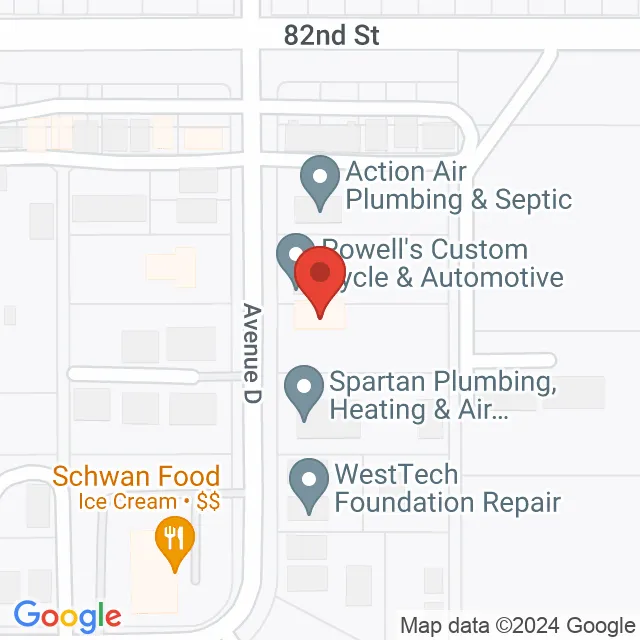
Walk into any home improvement aisle and you will find a dozen products that promise cleaner air. Which ones actually belong in a Lubbock house, and what can each one do? This article compares the main options one at a time: a better filter in your system, a portable air cleaner, added ventilation, and ductwork that is sealed and in good shape. Our technicians work out of 8215 Avenue D, Lubbock, and we are open 24/7 if you want a system looked at in person.
Start by naming the problem you want to solve

The reason people choose the wrong product is that they never name the problem. “Dusty” is not the same as “stuffy,” and neither is the same as “damp.” Each has a different cause and a different fix. If you have not yet checked the free steps, such as removing sources and opening windows when the weather allows, read our companion article on improving indoor air quality in Lubbock homes first. This article picks up where that one stops: you have fixed what you can for free, and you are deciding what to add.
Use this short list to match the complaint to the category.
- Dust and fine particles in the whole house: look at the system filter and the ducts.
- Particles in one room: a portable air cleaner may fit.
- Stale or stuffy air: look at ventilation.
- Odors from cooking or chemicals: source control and ventilation come before filtration.
- Musty smell or visible dampness: find the moisture first.
Option one: a better filter in the system you already own
Your furnace and central air system pulls house air through a filter every time the blower runs. The EPA says furnace and central HVAC filters are designed to filter air throughout a home, and it recommends upgrading the central filter as one way to improve indoor air. That makes this the broadest-reaching change for the effort involved.
The EPA explains that a MERV rating shows how well a filter captures particles between 0.3 and 10 microns, and that higher ratings generally mean better capture of specific particle sizes. Its advice for an upgrade is to choose at least MERV 13 or the highest rating your system fan and filter slot can accommodate. Read that second part twice. The right filter depends on the blower and the slot, so the number on the box is not the whole story.
What it does: captures particles from air that passes through the system, in every room the system serves.
What it does not do: it cannot catch air that never reaches the filter, such as dust pulled in through gaps in the ductwork. It also does not remove gases or odors in any meaningful way, and it needs regular replacement to keep working.
Before you buy a denser filter, ask a technician to check the slot, the fit and the airflow. We can do that during a visit.
Option two: a portable air cleaner for one room
The EPA describes portable air cleaners as units meant to filter the air in a single room or area. They suit a bedroom where someone sleeps, a nursery or a home office. The agency says effectiveness depends on two things: how well the unit captures particles and how much air it moves. It also notes that most air cleaners are not designed to remove gases.
Practical points if you go this route:
- Match the unit to the size of the room. A small unit in a large room does little.
- Keep doors closed while it runs, so it works on one room and not the whole hallway.
- Maintain it as the maker directs. A clogged filter in a portable unit helps no one.
- Do not treat it as a cure for a source. If the problem is smoke, a damp wall or a combustion appliance, fix that instead.
The EPA also states that portable air cleaners and HVAC filters can reduce indoor air pollution but cannot remove all pollutants. Plan for that. A device is one layer, not a finish line.
Option three: more ventilation, mechanical or manual
The EPA’s improvement guidance says bringing in outdoor air dilutes indoor pollutants, and it mentions that some newer homes use mechanical systems, such as heat recovery ventilators, to do this efficiently. In an older house the same job is often done with exhaust fans and open windows. If your house feels sealed up and stale, ventilation is a better lever than filtration.
There is a tradeoff. Outdoor air has to be heated or cooled once it is inside, which can add to the work your system does. The EPA also cautions that outdoor sources, such as smoke, can make things worse when you pull outside air in. That is why a technician should look at your house before you commit to a ventilation change. We can discuss what fits through our indoor air quality solutions in Lubbock.
Option four: ducts that are sealed, supported and insulated
This is the option people skip because it is not a gadget. ENERGY STAR notes that leaky ducts can draw dust and air from attics, crawl spaces and basements into living areas, and that leaky ductwork can also contribute to humidity problems. Sealing them may help. The same page says room temperature imbalances can come from duct problems, improper equipment operation or inadequate insulation, and that an undersized duct system can make heating or cooling noisy.
If a house is dusty a day after cleaning, if one room never matches the rest or if there is a musty smell tied to the system, the cause may be in the ducts and not in the air. No filter or purifier fixes a duct that leaks. For the question of cleaning inside the ducts, which is a separate issue, see our article on signs you need air duct cleaning in Lubbock.
A quick comparison
- System filter upgrade: whole-house particles. Limited by the blower and slot. Needs regular replacement.
- Portable cleaner: one room. Limited by size, airflow and maintenance. Does not handle most gases.
- Ventilation: stale air and pollutant dilution. Limited by outdoor conditions and the energy cost of conditioning incoming air.
- Duct sealing and repair: dust, humidity and imbalance that come from the ducts. Needs an inspection to find the leaks.
How we would approach a visit
When a Lubbock customer asks us about air quality, we start with questions before equipment. What are you noticing, and when? Is it worse when the system runs, or when it is off? Does it change from room to room? Then we look at the filter, the fit of the filter slot, the visible ductwork, the condensate drain and the area around the equipment for signs of moisture. With that in hand, we can tell you which of the four options above fits your house, and which ones you can skip.
That sequence protects you from buying a fix for the wrong problem. A filter upgrade will not help a leaky duct. A portable cleaner will not help a damp wall. A ventilation change will not help a clogged filter. Sorting the cause first keeps the money you spend aimed at something that works.
Why moisture decides a lot of this in Lubbock homes
Our Lubbock hub page notes that Lubbock draws much of its water from the southern Ogallala Aquifer, and the Texas Water Development Board reports dissolved solids above 1,000 milligrams per liter across large areas of it. Mineral-heavy water leaves scale in fixtures and lines. Scaled valves and connections can weep slowly, and a slow weep behind a wall or under a cabinet raises indoor moisture without anyone noticing. If you smell mustiness and no device seems to help, ask a plumber to check for leaks. Our plumbing repairs and maintenance in Lubbock team can do that.
What Lubbock customers say
Carlye H., a Lubbock customer, wrote in September 2026 that the team will “call before and give you a price estimate for your work and confirm the date and time you request.” Clear communication before any equipment decision is the standard we hold ourselves to.
Frequently asked questions about indoor air quality solutions in Lubbock
Which option should I try first?
Remove sources and ventilate first, then check the system filter and ductwork. A portable cleaner is a good fit for a single room. Name the problem before you buy.
Will a purifier fix a musty smell?
Usually not. A musty smell points to moisture, and the EPA treats moisture control as the central step in preventing mold. Find and fix the damp source, then see what remains.
Can my system handle a high-rated filter?
It depends on the blower and the filter slot. The EPA advises choosing the highest rating your system can accommodate. A technician can check this during a visit.
Are leaky ducts really a cause of dust?
They can be. ENERGY STAR says leaky ducts can pull dust and air from attics and crawl spaces into the living area. If dust returns quickly, the ducts are worth inspecting.
Schedule an air quality check in Lubbock
To have a technician look at your filter, ducts and equipment, call us at (806) 787-2200. We are at 8215 Avenue D, Lubbock, TX 79404. See everything we offer for the area on our Lubbock location page.