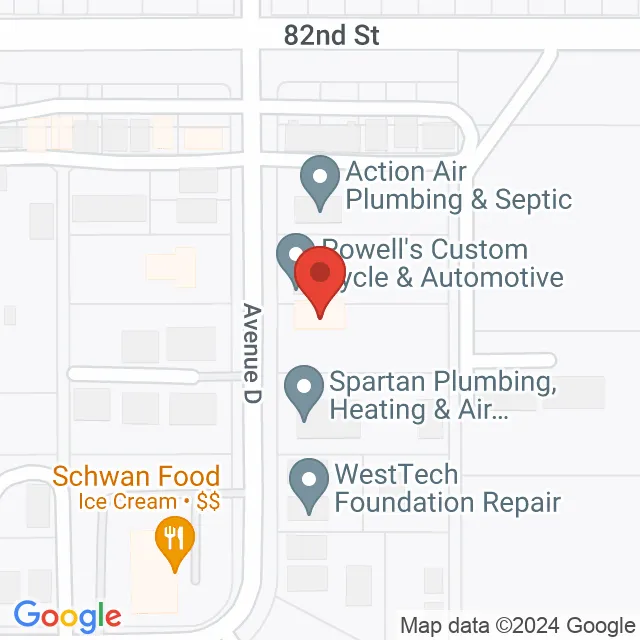
For a business, a cooling failure is not just uncomfortable. It can mean closed doors, lost sales, spoiled stock or staff sent home. The right protection is a plan made before the heat arrives. This guide is for owners and managers in Lubbock who want a simple structure: what to schedule, which tasks your own team can handle, which belong to a licensed contractor and what to ask before you sign off on a maintenance visit. Black Plumbing Heating and Air serves Lubbock from 8215 Avenue D and is open 24/7 for air conditioning (AC) emergencies.
Start with the building, not the calendar


Every business uses cooling differently. A restaurant has heat from the kitchen and constant door traffic. A retail shop has customers coming and going. An office has computers and a full day of occupancy. A mixed-use space has several tenants with different needs. Before you set a schedule, write a short profile of your own space.
- What type of cooling equipment do you have, and where is it located?
- How old is it, and who maintained it last?
- What are your busiest hours and months?
- Which areas are most sensitive to heat, such as a server closet, a kitchen or a stockroom?
- Who in your team can notice and report a problem?
That profile guides everything else. It also makes the first call to a contractor more productive, because you can describe your building clearly. For a look at what we handle for businesses, see our commercial AC services in Lubbock.
A timeline that works backward from summer
Pick your hottest expected month and count back. Here is a simple schedule a small business can adapt.
- Early spring, well before peak heat: book a maintenance visit. ENERGY STAR advises servicing cooling in spring, since contractors get busy once summer arrives. Booking early gives you your choice of days.
- Next: make any repairs the visit uncovers. If a part needs ordering, there is time for it.
- Shortly before peak heat: have staff run the system through a normal business day and report any odd noises, smells, hot spots or leaks.
- Peak season: check filters monthly and keep a log.
- End of season: review the log and note what to raise at the next visit.
This order is our suggestion, not a rule. The point is to leave room between finding a problem and needing the system at full load.
What a maintenance visit should cover
ENERGY STAR publishes a checklist of what a professional visit includes for heating and cooling systems. It is written for homes, but its list of tasks is a useful baseline for any space. For cooling, it includes the following items.
- Thermostat and controls. Review settings for comfort when people are present and savings when the space is empty, and test that the equipment starts, runs and shuts off correctly.
- Electrical connections. Tighten them and measure motor voltage and current. Loose connections can make operation unsafe and shorten the life of components.
- Moving parts. Lubricate them to reduce friction and wasted electricity.
- Condensate drain. Inspect it, since a clog can cause water damage and affect indoor humidity.
- Coils. Clean the evaporator and condenser coils. Dirty coils reduce cooling, lengthen run time and raise costs.
- Refrigerant. Check the level and adjust it. Too much or too little lowers efficiency and equipment life.
- Blower components. Clean and adjust them. ENERGY STAR says airflow problems can cut efficiency by up to 15 percent.
Ask any contractor to show how their visit covers these items for your equipment. If your building has special equipment, such as walk-in coolers, ask whether it is included. Our AC maintenance in Lubbock page describes how we approach a visit.
Who does what: staff tasks and contractor tasks
Dividing the work prevents gaps. The first list is for your own team.
- Inspect and replace filters on a regular schedule. ENERGY STAR advises monthly checks and says a dirty filter raises energy costs and can lead to early equipment failure. A busy space may need changes more often, so follow what you observe.
- Keep supply and return vents clear of stock, furniture and decor.
- Keep the area around equipment clear and clean.
- Log temperature complaints, noises and water spots with the date and location.
- Know where the thermostat and shutoff are, and who can use them.
The second list is for a licensed contractor: electrical work, refrigerant, coil cleaning, motor and blower work, drain clearing and diagnostics. Black Plumbing holds Texas HVAC license TACLA145786C. Do not ask staff to handle these tasks.
Schedule around your hours, not just ours
A maintenance visit that disrupts a lunch rush is a poor visit. Tell the contractor when you are open, when you are slowest and what spaces they can use. Ask whether work can be done before opening or after closing, and how noise and access will be handled. Carlye H., a Lubbock customer, wrote in September 2026 that the team will “call before and give you a price estimate for your work and confirm the date and time you request.” That kind of confirmation matters even more when you are running a business around the visit.
Signals that something is wrong during the season
Ask staff to watch for these and report them the same day.
- One area is warmer than the rest, or customers comment on the heat.
- The system runs longer than usual to hold the temperature.
- A new sound, such as grinding, squealing or banging.
- A musty smell or visible moisture near vents or equipment.
- Water around an indoor unit.
- Ice on lines or coils.
- A tripped breaker that trips again.
Early reports allow a planned repair. A report after the system fails means a rushed one. If something fails outright, our emergency AC repair in Lubbock page explains how we respond, and we answer 24/7.
Keep a simple season log
A log does not need software. A single sheet taped near the thermostat or a shared note on a phone will do. Record the date of each filter change, the date of each service visit, any complaint from staff or customers and any unusual sound, smell or leak. Add the outdoor conditions on the days the system struggled, since a system that falls behind only on the hottest afternoons tells a different story from one that struggles every day.
Bring the log to your next visit. It saves time, points the technician toward the right components and builds a history you can use when you decide between repair and replacement. It also helps if staff change, because the next manager does not have to start from nothing.
Questions to ask your contractor
- What will you inspect, test and clean on each unit?
- How will you tell me what you found and what you recommend?
- Can you work outside my business hours?
- What should my staff do, and what should they leave alone?
- How will you handle an after-hours failure?
- What would you watch for if this equipment is getting older?
When a unit is near the end of its life
ENERGY STAR suggests considering replacement of an air conditioner older than 10 years, and lists frequent repairs with rising energy bills as other signs. For a business, that is a planning question as much as a repair question. Replacing equipment in spring, on your schedule, is easier on operations than replacing it in an August emergency. If your building is a candidate, our AC installation and replacement in Lubbock page explains what is involved. For air quality in a space with heavy foot traffic, see indoor air quality solutions in Lubbock.
Do not forget the water side of the building
Our Lubbock hub page notes that the area’s water carries a heavy mineral load, which leaves scale in fixtures, valves and water heaters. For a restaurant or a shop with sinks and a water heater, the cooling plan should not be the only maintenance plan. Our commercial plumbing team in Lubbock can look at that side, and a single conversation can cover both.
Frequently asked questions about commercial cooling maintenance in Lubbock
When should I schedule maintenance for the summer?
In spring, ahead of peak heat. ENERGY STAR advises servicing cooling in spring because contractors get busy once summer arrives.
Can my own staff handle any of the work?
Yes. Filter checks, keeping vents and equipment areas clear and logging problems are good staff tasks. Electrical, refrigerant and coil work belong to a licensed contractor.
How do I avoid disrupting customers?
Share your busy hours and ask the contractor to plan around them. Early morning or after-closing visits are worth asking about.
What if the system fails during business hours?
Call right away. We are open 24/7. Tell us what you see and hear, and what you have already checked.
Plan your Lubbock cooling maintenance
To set up a visit for your business, call (806) 787-2200. We are at 8215 Avenue D, Lubbock, TX 79404. See our Lubbock location page for more.