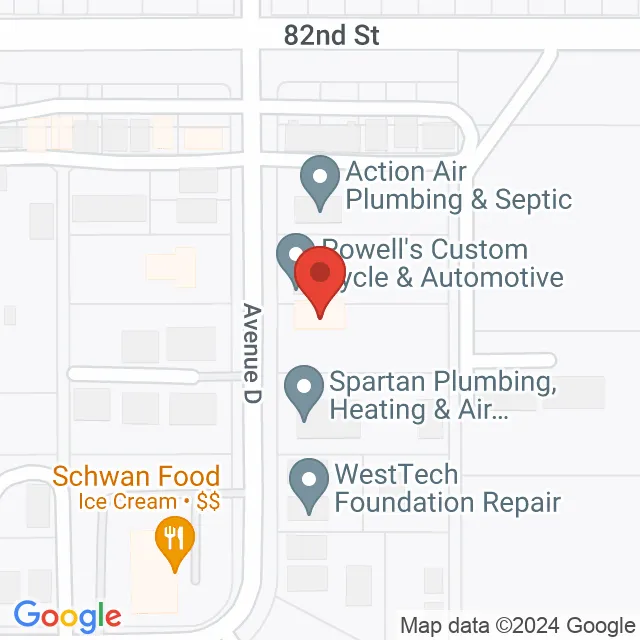
Most furnace advice stops at “change your filter.” This guide gives you a routine you can follow from the first cold snap to the last, with a short list for each stage of the season. It is for homeowners in Lubbock who want the furnace to keep working efficiently without becoming a part-time project. Our heating and air team works out of 8215 Avenue D in Lubbock and is open 24/7 if something on the list turns up a problem.
Before the first cold night: what the pre-season visit covers

ENERGY STAR recommends a contractor check-up before each season, with the heating system serviced in the fall, since contractors get busy once winter arrives. The agency’s professional checklist for heating systems includes checking gas or oil connections, gas pressure, burner combustion and the heat exchanger. Leaks are a fire hazard, and a dirty burner or a cracked heat exchanger reduces both safety and efficiency.
The same checklist applies to every system, whether it heats or cools. It calls for tightening electrical connections and measuring motor voltage and current, since loose connections can make operation unsafe and shorten component life. It also calls for lubricating moving parts, inspecting the condensate drain on furnaces, testing controls to confirm the equipment starts, runs and shuts off correctly, and reviewing thermostat settings for comfort at home and savings when you are away.
A visit like that is not a repair. It is a way to find a worn part before it picks the coldest night to quit. You can book one through our HVAC services in Lubbock.
Every month: the quick check
This is the heart of the routine. Put a reminder on your phone for the same day each month.
- Look at the filter. ENERGY STAR advises inspecting, cleaning or replacing filters monthly on the furnace, air conditioner or heat pump. A dirty filter raises energy costs and can lead to early equipment failure. A filter that looks gray and matted is overdue.
- Check the supply registers and return grilles. Make sure rugs, furniture and curtains are not covering them. A blocked return makes the blower work harder for less heat.
- Look at the area around the furnace. Keep boxes, paint, cleaners and anything flammable well away from the equipment. A crowded closet can restrict airflow and creates a hazard.
If your furnace uses a flat filter in the return, confirm it is seated properly and that you can feel no air slipping around its edges. Air that goes around the filter carries dust through the system.
Each time you run it hard: listen, look and smell
On the coldest days, your furnace works the most. That is when a developing problem is likely to show. Pay attention to three senses:
- Sound: a steady hum is normal. Banging, scraping, squealing or repeated clicking is not. For more on what those sounds can mean after the season, see our article on signs your furnace needs repair after winter in Lubbock.
- Sight: a flame that is steady and blue is the normal look for a gas burner. Yellow or flickering flame, soot marks, or a burner that lights late are reasons to call. Do not adjust a burner yourself.
- Smell: a light dusty smell the first time you run the furnace in fall usually fades. A gas smell, a burning smell that continues or a sharp chemical odor does not.
The EPA lists leaking or back-drafting furnaces and blocked, disconnected or leaking flues among the sources of carbon monoxide. Test your carbon monoxide alarms when you change your clocks, and keep one on every level of the home and outside each sleeping area, as the U.S. Consumer Product Safety Commission recommends. If an alarm sounds, go outside and call 911 first.
Thermostat habits that save effort and energy
ENERGY STAR notes that a technician’s visit should include reviewing thermostat settings for comfort when you are home and savings when you are away. That is a good way to think about it. Set the schedule to match when you are really home, not when you hope to be. Avoid wide swings that force the furnace to run long cycles to catch up, and keep the thermostat away from heat sources and drafts that can mislead it.
If you have a programmable or smart thermostat, check the schedule after daylight saving time changes. ENERGY STAR also points out that a good contractor can install a programmable thermostat and show you how to use it. If you are not sure the schedule is doing what you think, ask the technician during the next visit.
Ducts and rooms: when one room never warms
If one room is always colder than the others, the furnace may not be the problem. ENERGY STAR says room temperature imbalances can come from duct problems, improper equipment operation or inadequate insulation, and that leaky ducts can pull dust and air from attics and crawl spaces into the living area. An undersized duct system can also make heating noisy.
Before you assume the furnace needs replacing, have the airflow and the ducts checked. Often the fix is smaller than a new furnace: sealing a duct, adjusting a damper, replacing a crushed run of flexible duct or opening a blocked register.
Mid-winter: watch the water side of the house too
Heating is only one part of keeping a Lubbock house comfortable in winter. The condensate drain on a furnace can clog, and ENERGY STAR lists it as a standard inspection item, since a clog can cause water damage and affect indoor humidity. If you see water near the furnace, shut the furnace off and call.
Plumbing also deserves a thought in cold weather. Our Lubbock hub page notes that the region’s mineral-heavy water leaves scale in water heaters, valves and lines, and a tired water heater is easy to overlook until a cold morning leaves you with no hot water. If the heating system and hot water both fail at once, call us at the same number. Our water heater repair in Lubbock team handles that side of the house.
What to do if the furnace stops
Run through the basics before you call: thermostat set to heat and above room temperature, batteries fresh, breaker and furnace switch on, filter not clogged. If the furnace still does not run, or if you have any safety sign such as a gas smell, an alarm or smoke, call us right away. Our emergency heater repair in Lubbock page explains how we handle those calls, and we answer around the clock.
End of season: set up the next one
When the last cold nights pass, replace the filter, note anything that seemed off, such as a noise or a room that stayed cool, and write it down. That note helps the technician at the next visit. Do not wait until fall to remember it. The next service window is also the time to ask whether anything worn should be replaced during mild weather, before the heating season puts load on it.
What Lubbock customers say
Carlye H., a Lubbock customer, wrote in September 2026: “Black plumbing came out to help me with my plumbing needs on a Saturday.” We are open 24/7, including weekends and after hours.
Frequently asked questions about furnace efficiency in Lubbock
How often should I check my furnace filter?
Monthly during the heating season. ENERGY STAR advises inspecting, cleaning or replacing it each month. Replace it when it looks dirty, even if the calendar says it is early.
When should I schedule a furnace check-up?
In the fall, before the first cold weather. ENERGY STAR suggests servicing heating in fall and cooling in spring, because contractors get busy once summer and winter arrive.
Why is one room colder than the others?
It may be a duct problem, a blocked register or insulation, not the furnace itself. A technician can check airflow room by room and tell you what to fix.
Is a furnace safe to run if I smell something?
A faint dust smell at the first start of the season usually passes. A gas smell or a burning smell that continues is not safe to ignore. Turn the furnace off, get outside if you smell gas and call for help.
Can I check the heat exchanger myself?
No. A cracked heat exchanger is a safety issue that needs a trained technician. Ask for a combustion and heat exchanger check at your pre-season visit.
A simple log makes the pre-season visit better
Keep a short note on your phone or inside the furnace closet door. Each month, write the date you changed the filter and anything you noticed: a new sound, a slower warm-up, a room that stayed cool. When a technician arrives, that list saves time and points straight to the parts of the system worth a closer look. It also helps you spot patterns. A noise that shows up only on the coldest mornings tells a different story than one that happens every cycle.
If you share the house with family or tenants, tell them what to report: any smell of gas, any alarm, any water near the unit and any sudden change in how the house heats. People are more likely to speak up when they know what matters, and a quick message early is better than a long repair later.
Schedule a furnace check in Lubbock
To book a pre-season check or ask about a problem, call (806) 787-2200. We are at 8215 Avenue D, Lubbock, TX 79404, and open 24/7. Read about our work on the Lubbock location page.