Posts Categorized: Plumbing

Tank or Tankless: Which Water Heater Fits Your Snyder Household?

Which type of water heater fits your household: a tank or a tankless unit? The answer comes from how your home uses hot water, not from which type is newer. A family that runs showers, laundry, and a dishwasher in the same hour has different needs from a couple who never overlap. Black Plumbing, a family-owned company founded in Abilene in 1994, serves Snyder as part of our service area, and our team is available 24/7. This guide helps Snyder homeowners match the heater to the household.

How each type works
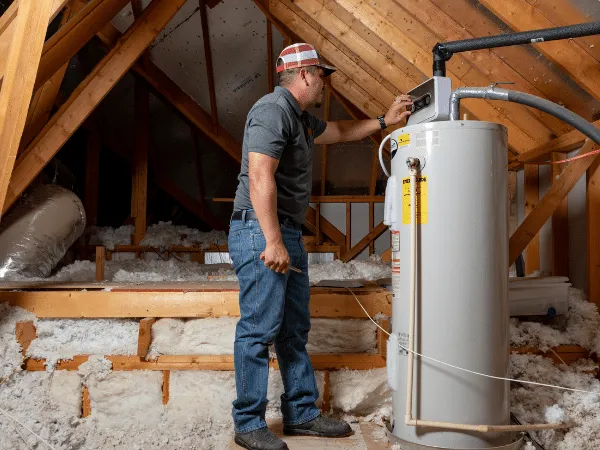
A tank heater, also called a storage heater, keeps a supply of hot water ready in an insulated tank. When you open a tap, hot water leaves the tank and cold water refills it. The burner or elements cycle on to hold the temperature. That is simple and familiar.

A tankless heater, also called an instantaneous or on-demand heater, has no storage tank to speak of. When you open a hot tap, water flows through a heat exchanger and is heated as it passes. When the tap closes, the heater stops.

ENERGY STAR draws the line in numbers. On its water heater key product criteria page, it describes tankless units as those that contain no more than one gallon of water per 4,000 Btu per hour of input. Everything else in the storage category holds a tank of heated water.

The number that matters for each type

Each type is rated on a different yardstick, and that is where many homeowners get stuck.

Tank heaters: first hour rating

The ENERGY STAR page defines the first hour rating as an estimate of the maximum volume of hot water, in gallons, that a storage heater can supply in one hour that begins with a fully heated tank. If a morning rush in your house uses more hot water than that number, the last person in line gets lukewarm water.

Tankless heaters: gallons per minute

For a tankless unit, the same page defines gallons per minute as the amount of hot water the unit can supply while keeping a steady temperature rise. The limit is flow, not volume. A tankless unit can run as long as you like, but it can only heat so much water at once. Run two showers and a dishwasher together, and the flow may exceed what one unit can heat.

Efficiency: uniform energy factor

Both types also carry a Uniform Energy Factor, which ENERGY STAR describes as the measure of a water heater’s overall efficiency. A higher number means a more efficient heater. Use it to compare models within a type, and be careful comparing a tank number against a tankless number without looking at the whole picture of your usage.

Questions that decide it

Work through these before you pick.

  1. How many people use hot water at the same time? If peak use is one or two taps, a properly sized tankless unit can keep up. If three or four things run together, a tank or a larger tankless setup may suit better.
  2. What fuel do you have? Gas and electric units behave differently. Tankless gas units need adequate gas supply and venting. Tankless electric units need substantial electrical capacity.
  3. Where does the heater sit? Tanks need floor space and clearance. Tankless units mount on a wall and take less room, but they need venting or electrical service in that spot.
  4. How long will you stay? A longer plan for the house gives tradeoffs more time to pay off. A short plan often favors the simpler choice.
  5. Do you want to avoid the run of cold water at the start? Tankless units heat on demand, but hot water still has to travel through the pipes. Distance from heater to tap affects how long you wait.

Three example households

These are illustrations, not customer stories. They show how the same questions lead to different answers.

A busy family of five

Mornings are crowded: two showers, a load of laundry, and the dishwasher all running before school. Hot water demand arrives in a big block. A tank heater with a first hour rating that covers that block is a natural fit. A tankless unit would need to be sized for the peak, and the household would need to accept that a very large unit may call for upgrades to gas or electric service.

A couple with staggered routines

One person showers early, the other later, and the dishwasher runs at night. Demand is small and spread out. A tankless unit sized to one or two fixtures at a time suits this pattern well, and it does not keep stored water hot all day.

A household with a long pipe run

The heater sits at one end of the house and the main bathroom at the other. Either type will take time to deliver hot water to the far tap, because the cold water already in the pipe has to clear first. Neither heater type fixes that. If it bothers you, a plumber can look at the layout of the lines, and sometimes a heater in a different spot helps.

What a tank heater does well

  • It supplies a large volume at once, up to the first hour rating, which suits busy households.
  • It is a familiar design, and most plumbers can service it.
  • It often fits into the space and connections that already exist, which can simplify a swap.
  • It keeps working through short, large demands that would exceed a small tankless unit’s flow.

The tradeoffs are floor space, the energy used to keep stored water hot, and the fact that a tank has a finite working life. See our guide on repairing or replacing a tank heater if you are looking at an older one.

What a tankless heater does well

  • It does not keep a tank of hot water waiting, so it is not heating water you are not using.
  • It takes less space and mounts on a wall.
  • It can supply hot water for as long as the tap is open, within its flow limit.
  • Many models are rated at high efficiency numbers.

The tradeoffs are the flow limit, the possible need for gas line, venting, or electrical upgrades, and more complex parts. A tankless unit needs its own upkeep as well. Our tankless water heater repair page covers the service side.

Replacing a tank with a tankless unit

Switching types is a bigger job than swapping like for like. A plumber looks at several things before recommending it:

  • The size of the gas line or the capacity of the electrical panel.
  • Whether there is a route for venting that meets code.
  • The location, including clearance and access for service.
  • The home’s peak hot water use, so the unit is sized to it.
  • The condition of the water lines that will connect to it.

If any of these call for changes, they should be explained before work starts, and the decision is yours. Our water heater service covers both types.

What a sizing conversation covers

A licensed plumber helping you choose would generally work through these points:

  1. How many people live in the home and how they use hot water.
  2. The current heater, the fuel supply, the venting, and the space.
  3. Which types are a good fit and which are not, and why.
  4. Your choice, then scheduling the work.
  5. After installation, a test of the heater and a walk-through of its operation.

Our licenses are Texas plumbing license M-40900 and Texas HVAC (ACR) license TACLA145786C.

Frequently asked questions about tank and tankless water heaters in Snyder

Can a tankless heater supply a whole house?

It can, if it is sized for the household’s peak demand. The limiting factor is flow. A unit that is too small will give you a drop in temperature when several fixtures run together. Sizing matters more than the type.

Is a tankless heater always more efficient?

Not automatically. Efficiency depends on the model and on how you use hot water. Compare the Uniform Energy Factor on each unit, and think about your own pattern of use instead of relying on a general claim.

Will a tankless unit fit where my old tank is?

Sometimes. The space may be fine, but gas supply, venting, or electrical service may need changes. That is why the location should be checked before a switch is recommended.

What if I choose one and it does not suit us?

That is why the first step is looking at your actual use. If the match is right, the type you pick will meet the need. If you are not sure, ask a plumber to weigh the tradeoffs with you before you commit. For routine care on whichever type you choose, see our post on yearly water heater checks.

Talk through the choice with us

If you are deciding between a tank and a tankless heater in Snyder, we can look at your home and walk through the options. Use our service scheduling page to set up a visit, or learn more about the area we cover on the Snyder service page.
Water Heater Leaking in Snyder? How to Find Where the Water Is Coming From

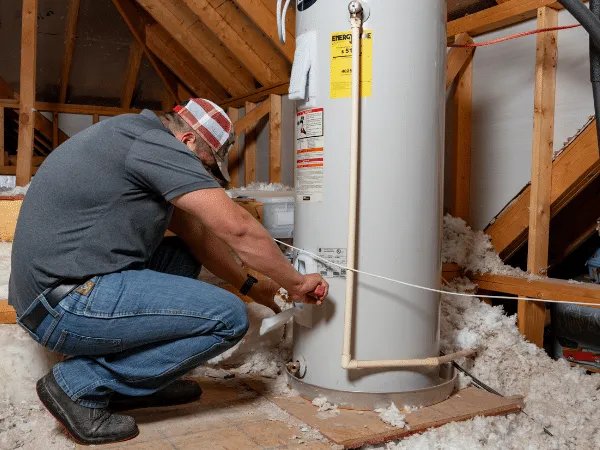
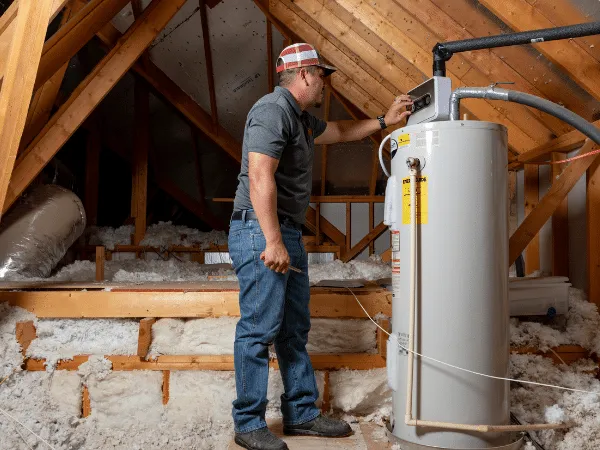
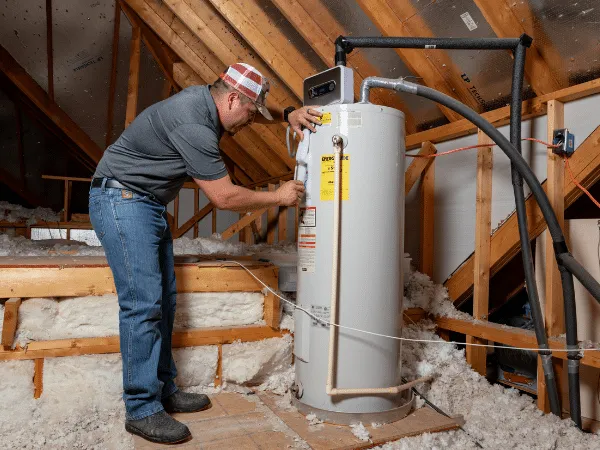
Water on the floor near your water heater does not always mean the tank has failed. Where the water is coming from decides what happens next. A drip at a pipe fitting is a small repair. Water seeping from the tank body is not. This guide shows Snyder homeowners how to trace a water heater leak to its source, what to do in the first few minutes, and which leaks can be prevented. Black Plumbing is a family-owned company founded in Abilene in 1994, we serve Snyder as part of our service area, and our team is available 24/7.

First, make the leak stop spreading

Before you work out the cause, limit the damage. These steps are safe for most homeowners:

  1. Turn off the power at the breaker for an electric heater, or set the gas control to off for a gas heater.
  2. Close the cold water supply valve on the pipe feeding the top of the tank.
  3. Put towels down, or use a wet vacuum, and move anything stored nearby out of the water.
  4. Do not touch electrical parts while standing in water.

If water is spreading fast or you cannot reach the shutoff, close the main water valve for the house. Then call us. For a heater that is flooding a room, our emergency plumber service is the right place to start.

Where the water is coming from

Dry the area with a towel, then watch for where moisture comes back first. The location tells you a lot.

From the top of the tank

Look at the cold and hot water pipes where they enter the tank, and at the fittings and shutoff valve. White or green crust around a connection means a slow, long-running drip. Tightening or replacing a fitting often fixes it. Water that runs down the side of the tank from the top may be coming from one of these fittings and not from the tank at all, so check before you assume the worst.

From the relief valve or its pipe

The temperature and pressure relief valve has a discharge pipe that runs toward the floor. If that pipe is dripping or wet, the valve has opened or is leaking. It may be reacting to high pressure or high temperature, or it may be worn out. Do not cap or plug it. This is a safety device, and the cause needs a plumber to find.

From the drain valve near the bottom

A slow drip from the small valve near the base of the tank is common on older units, especially after the tank has been flushed. The valve may have a worn seat or a bit of grit that stops it from closing. A plumber can replace the valve without replacing the heater.

From underneath the tank

Water on the floor beneath the heater is harder to read. It could be condensation, a drip from above that ran down, or a failed tank. On a gas heater, check whether the burner area is wet. On an electric heater, do not open the panels. If you have dried everything above and the base is still wet, the tank may be leaking from inside.

From the tank wall or seam

Water that appears through the steel, or rust streaks that start at one point on the tank and run down, points to a failed tank. That cannot be patched. Replacement is the next step, and the sooner the heater is off, the less damage there will be.

Leaks that look like the heater but are not

Not every puddle near a water heater starts at the heater. Several other sources can leave water in the same spot:

  • A washing machine hose or valve on a shared wall or in the same closet.
  • A condensate line from a furnace or air handler that sits next to the heater.
  • A supply pipe that runs overhead and drips onto the tank.
  • A floor drain that has backed up or is slow to clear.

If the tank body, the fittings, and the valves are all dry, look at these next. If you cannot find it, call us. Tracing a leak that hides inside a wall or under a floor is what our leak detection and repair service is for.

Why tanks corrode

A steel tank holds water all day, so corrosion is a matter of time and conditions. Several things drive it:

  • A used-up anode rod. The rod is there to corrode first. When it is gone, the tank wall takes its place.
  • Sediment on the bottom. Minerals that settle in the tank can trap heat and hold moisture against the lining.
  • High water pressure. Pressure that runs high stresses the tank, the fittings, and the relief valve.
  • Heat cycling. Water heats, expands, and cools again every day. Metal and seals feel it.
  • Age. Eventually the lining and steel wear through, no matter how well the heater is cared for.

Some of these you can influence. The anode rod, sediment, and pressure can all be checked. Age you cannot change, but you can plan for it.

What you can do to prevent leaks

Prevention for a water heater is mostly attention. A small habit catches most trouble early.

  • Look under and around the heater when you do laundry or take out the trash. A glance takes seconds.
  • Keep the space around the heater clear, so you can see the floor and the fittings.
  • Put a drain pan with a drain line under the heater if the location is above living space.
  • Have a plumber check the anode rod and the relief valve on a schedule. Our guide to yearly water heater checks lists what to look at.
  • Ask a plumber to check the water pressure at your home. Pressure that is too high stresses everything it touches.
  • Replace the heater before it fails if the signs are there. See our post on deciding between repair and replacement.

A drain pan does not stop a leak. It gives the water a place to go and gives you time to notice.

Why small leaks matter

A leak that drips once a minute does not look like much. The EPA reports that the average household’s leaks can account for more than 9,300 gallons of water wasted every year, and that about nine percent of homes have leaks that waste 50 gallons or more per day. You can read those figures on the EPA Fix a Leak Week page. A water heater is not the only source, but it is one place where a small drip becomes a flooded floor if nobody sees it. If your water bill climbs and you cannot find the reason, hidden leaks are worth ruling out. Our post on spotting hidden water leaks explains how.

How a plumber traces a water heater leak

For a leaking heater, a licensed plumber generally works in this order:

  1. Stop the water. If it is still running, supply and power or fuel are shut off first.
  2. Find the source. The unit is dried and the moisture traced to its starting point, checking the top fittings, the relief valve and pipe, the drain valve, and the tank wall.
  3. Explain the findings. You should hear where the water is coming from and whether the tank is still sound.
  4. Offer the options. If a valve or fitting is the cause, it can be repaired. If the tank has failed, replacement is the conversation.
  5. Test the result. After any repair, the heater is brought up to temperature and checked to confirm the leak is gone.

Our water heater service covers both repair and replacement. We hold Texas plumbing license M-40900.

Frequently asked questions about water heater leaks in Snyder

Is a leaking water heater an emergency?

Water coming from the tank is, because it can get worse quickly and damage the floor and nearby walls. A slow drip at a fitting is less urgent, but should still be looked at soon. When in doubt, shut off the water to the heater and call.

Can a leaking tank be repaired?

If the leak is through the tank wall, no. The steel or lining has failed. If the leak is at a fitting, a valve, or the relief valve, those parts can usually be replaced.

What is the wet spot under my heater if I cannot see a leak?

It could be condensation, which forms when cold water in the tank meets warm air, especially right after a heavy use of hot water. It could also be a slow drip from above that is running down the tank. Dry the area and watch it. If the spot returns, have it checked.

Should I drain the tank if it is leaking?

Shut off the power or gas and the cold water supply first. Draining a tank can limit damage from a large leak, but the water can be hot enough to scald, so let it cool and run a hose to a floor drain or outdoors. If you are not comfortable doing that, call a plumber.

Need help with a leaking heater in Snyder?

If your water heater is leaking now, shut off the supply and reach out. Our team is available 24/7 across the area. You can also read about our full range of work on the Snyder service page, or book a non-urgent visit through our scheduling page.

Repair or Replace? How to Tell If Your Snyder Tank Water Heater Is Done

Is your Snyder water heater worth repairing, or has it reached the point where replacing it makes more sense? The honest answer depends on where the problem is. A bad thermostat, element, or relief valve is a repair. Water leaking from the tank body is not. Black Plumbing is a family-owned plumbing and HVAC company founded in Abilene in 1994, and we serve Snyder as part of our service area, 24/7. Below is how the repair-or-replace question usually breaks down, so you can make the call with facts instead of pressure.

Start with where the problem is

A tank water heater is a steel tank, a heat source, and a handful of replaceable parts. Some failures sit in the parts. Others sit in the tank. That difference decides almost everything.

  • Parts that can be replaced: thermostats, heating elements on electric units, gas control valves, thermocouples, pilot assemblies, the temperature and pressure relief valve, the drain valve, and the supply fittings.
  • The tank itself: once the steel wall or the lining has corroded through, there is no patch. Water seeping from the tank body, or a puddle that returns after you dry the fittings, means the tank has failed.

So the first job is to find out which side of that line you are on. A plumber should identify the water source before discussing options.

Signs a repair is the right call

A repair usually makes sense when the problem is limited and the tank is sound. Examples:

  • No hot water at all on an electric unit, which is often a failed element or thermostat.
  • Lukewarm water that never gets hot, which can point to one of two elements or a thermostat setting.
  • A gas heater that will not stay lit, which is often a thermocouple or gas control issue.
  • A dripping relief valve with no sign of water from the tank wall.
  • A leak at a supply line, shutoff, or fitting on top of the tank.

In these cases the tank is doing its job and a part is not. Replacing the part is the sensible step, and our water heater repair and replacement service handles it.

Signs the tank itself is done

Some symptoms point to replacement because the tank cannot be repaired. If you see any of these, the conversation shifts from fixing to planning.

  • Water seeping from the bottom or side of the tank, not from a pipe or valve.
  • Rust streaks running down the outside of the tank, or a heavy rust stain on the floor under it.
  • Rusty hot water that clears when you run only cold water.
  • A tank that makes rumbling or popping noises and also runs out of hot water quickly.
  • Repeated repairs on the same unit within a short period.

A heater that is leaking from the tank can fail quickly, and the water can damage flooring, drywall, and anything stored nearby. If you find water around your heater, turn off the power or gas to the unit, close the cold water supply valve on top, and call us.

What a plumber checks before recommending replacement

A heater should not be replaced just because it is older. A sound evaluation usually runs in this order:

  1. Confirm the source of the water. Dry the fittings, check the valves, and watch the tank to see where moisture reappears.
  2. Read the label. The data plate gives the manufacture date, the capacity, and the fuel type.
  3. Test the working parts. Check the thermostat, element or burner, and the relief valve to learn what is still healthy.
  4. Look at the connections and venting. Corroded water lines, a weak flue, or a bad gas connection affect both repair and replacement choices.
  5. Explain the options. If a repair is reasonable, the plumber says so. If the tank has failed, the plumber explains why and what replacement involves.

The decision is yours, and no work should start until you agree to it.

Age is a clue, not a verdict

Every tank heater has a date on its label. A heater that has served a household for many years is closer to the end of its working life than a newer one, and repair parts on an older unit do not change that. But age alone does not tell you whether a given problem is worth fixing. A newer heater with a bad thermostat should be repaired. An older heater with a leaking tank should be replaced. A heater in between, with several small problems, is the hard case, and it deserves a real conversation about what the next repair buys you.

One practical point: if you are already thinking about replacement, do it on your schedule. A planned replacement lets you compare options and pick a day. An emergency replacement happens with water on the floor.

Choosing the replacement

If you do replace, a few decisions matter more than brand names.

Capacity

ENERGY STAR defines the first hour rating as an estimate of the maximum volume of hot water, in gallons, that a storage water heater can supply within an hour when it starts fully heated. That is the number to compare against how your household uses hot water in a busy hour. The definition is on the ENERGY STAR water heater key product criteria page. Your plumber can help you match it to your showers, laundry, and dishwasher use.

Efficiency

The same ENERGY STAR page describes the Uniform Energy Factor as the measure of a water heater’s overall efficiency. A higher number means a more efficient unit. When you compare models, look for that number on the label.

Fuel and location

The fuel you have now, gas or electric, and the place the heater sits both affect what can go in. Venting, clearance, gas line size, and electrical capacity can all limit the choice. A plumber checks these before recommending a unit.

Tank or tankless

Some households choose a tankless unit when they replace. That is a different decision with its own tradeoffs, and we cover it in our post on tank versus tankless water heaters. If you already have a tankless unit and it is misbehaving, see our tankless water heater repair page.

What a tank replacement involves

A licensed plumber generally works through steps like these for a standard tank replacement.

  1. The fuel or power and the water supply are shut off, and the old tank is drained.
  2. The old unit is disconnected and removed.
  3. The new heater is set in place, with a drain pan or protection where the space calls for it.
  4. The water lines, the relief valve and its discharge pipe, and the gas or electrical supply are connected.
  5. For gas units, the venting is connected and checked.
  6. The tank is filled, the air is purged, fuel or power is restored, and the unit is brought up to temperature.
  7. The plumber tests for leaks, checks gas connections where they apply, and confirms the heater is heating properly.
  8. The homeowner should be shown the controls and what to watch for.

Texas plumbing license M-40900 covers the plumbing side of this work, and our Texas HVAC (ACR) license is TACLA145786C.

What to do while you wait for service

If your heater is leaking or acting up and you cannot be seen right away, a few steps limit the damage.

  • Turn off the power at the breaker for an electric unit, or set the gas control to off for a gas unit.
  • Close the cold water supply valve on the pipe above the heater.
  • Move stored items away from the floor around the tank.
  • Use towels or a wet vacuum to keep the water from spreading to other rooms.
  • Take a photo of the data plate so the technician has the model and serial number ready.

Do not open the access panels on an electric unit or work around the burner on a gas unit. Those are jobs for a licensed professional.

Frequently asked questions about replacing a water heater in Snyder

How do I know how old my water heater is?

Look at the data plate on the side of the tank. The manufacture date is usually in the serial number, as a letter for the month followed by digits for the year. If you cannot decode it, send us the serial number or ask the technician on a visit.

Is a small leak at the top of the tank a reason to replace it?

Not always. A leak at a fitting, valve, or supply connection can often be repaired. What matters is whether the water is coming from outside the tank or through it. A plumber confirms that before anything else.

My water heater is working but loud. Should I replace it?

Noise often comes from sediment on the bottom of the tank. Our post on yearly water heater checks explains how sediment builds up. If noise comes with rust, leaks, or hot water running out, replacement is worth discussing.

Can I wait until it fails?

You can, but failure usually comes with water on the floor and no hot water at the same time. If your heater shows the signs above, plan the replacement instead of waiting for it to choose its own moment.

Get a second opinion in Snyder

If a heater has been giving you trouble, we can look at it. Use our service scheduling page to book a visit, or learn more about our work in the area on the Snyder service page. If water is already on the floor, treat it as an emergency and reach out right away, because our team is available 24/7.

Water Heater Maintenance in Snyder: What to Check Each Year

What should you check on your water heater each year? For a tank heater in a Snyder home, the answer is six things: the tank and the floor around it, the temperature setting, the relief valve, the sediment inside the tank, the anode rod, and the gas or electrical connections. Black Plumbing, a family-owned company founded in Abilene in 1994, serves Snyder as part of our service area and is open 24/7. This guide covers each check so you know which ones you can do yourself and which ones belong to a licensed plumber.

Why a yearly check matters for a tank heater

A tank water heater runs every day of the year, and most of what goes wrong with it happens slowly. Minerals settle on the bottom of the tank. Metal parts wear. Valves stick. None of that is dramatic while it is happening, which is why a heater can seem fine right up to the morning it is not.

A yearly look gives you a baseline. You learn what your heater normally sounds like, where it normally sits, and what the floor around it normally looks like. When something changes, you notice it early, and early is when a repair is still a repair.

This post is about upkeep on a heater that is working. If yours is already leaking, read our guide on finding where a water heater leak is coming from. If you are wondering whether an older unit is worth saving, see our post on repairing or replacing a tank water heater.

Six checks to make each year

1. Look and listen around the tank

Start with your eyes and ears. Check the floor or drain pan for moisture, rust-colored stains, or a ring where water has dried. Look at the pipes on top of the tank for white or green crust, which is a sign of a slow drip at a fitting. Then listen when the burner or element comes on. Popping, rumbling, or a sound like water boiling usually points to sediment on the bottom of the tank.

The EPA notes that worn valves and other small leaks are among the common household leaks, and that finding them early saves water. You can read the details on the EPA Fix a Leak Week page. The same advice applies to the connections on a water heater.

2. Check the temperature setting

Look at the dial or display on the heater. The setting should be one the household can live with without scalding risk, especially if there are children or older adults in the home. A setting that is higher than you need makes the heater work harder and wears parts faster. If the water at your tap is much hotter or much cooler than the setting suggests, the thermostat or an element may be failing, and that is a diagnosis job for a plumber.

3. Look at the temperature and pressure relief valve

The relief valve is a safety part. It sits on the side or top of the tank with a pipe running down toward the floor. Its job is to open if the tank gets too hot or the pressure climbs too high. Do not cap it, plug it, or tighten anything on it. What you can do is look at it. If the discharge pipe is wet or the valve is dripping, call us. A valve that drips is telling you something about pressure or temperature in the system, and a plumber should find out what.

4. Think about sediment

Sediment is the grit that settles at the bottom of a tank. It sits between the burner or lower element and the water, so the heater has to work longer to heat the same amount of water. Over time it can cause noise, uneven heating, and wear on the tank lining. Draining a few gallons from the bottom valve is the usual way to see what is in there. Turn off the power at the breaker or set the gas control to off first, and let the water cool, because water from the tank can scald. If the water runs cloudy or gritty, there is sediment. If the drain valve will not open or will not close again, stop and call a plumber. A stuck drain valve on an old tank is a common way a small job turns into a leak.

5. Ask about the anode rod

Inside most tank heaters is a metal rod that corrodes on purpose so the tank does not. Once the rod is used up, the tank itself is next. Checking it means partly unscrewing it from the top of the tank, which is awkward and sometimes the fittings are seized. This is a good item to have a plumber inspect, because forcing a rod on an old tank can damage the fitting around it.

6. Check the gas and electrical side

For a gas heater, look at the burner flame through the viewing window if your model has one, and look at the vent pipe or flue above the heater. Rust, soot marks, or loose sections need attention. If you ever smell gas, leave the house and call your gas utility and emergency services before anything else. For an electric heater, never open the access panels yourself. Wiring and elements are work for a licensed professional.

Which tasks stay with a plumber

Seeing is fine. Fixing is where the line falls. These tasks should go to a licensed plumber:

  • Replacing a relief valve or its discharge pipe.
  • Replacing an anode rod, a heating element, or a thermostat.
  • Anything that touches gas supply, burner parts, or venting.
  • Flushing a tank where the drain valve is stuck, leaking, or clogged with sediment.
  • Any repair where water is already coming from the tank body.

Black Plumbing holds Texas plumbing license M-40900 and Texas HVAC (ACR) license TACLA145786C. Our water heater service covers repair, replacement, and preventive maintenance for homes in Snyder.

What a professional maintenance check covers

If you would rather have a licensed plumber run the yearly check, this is the general order of work.

  1. Look first. The plumber inspects the tank, the fittings, the floor, and the venting before touching anything.
  2. Test how it runs. The heater is brought up to temperature and watched through a heating cycle, and the temperature at a nearby tap is compared with the setting.
  3. Check the safety parts. That means the relief valve, the discharge pipe, and for gas heaters the flue and combustion.
  4. Deal with sediment. If the tank is a candidate for flushing, it is flushed. If the drain valve or the tank condition makes flushing risky, a plumber should say so and explain the options.
  5. Explain the findings. You should hear what is normal, what is wearing, and what to watch. If a part needs replacing, the decision is yours before any work starts.

The point is that nothing is a surprise. You should leave knowing the condition of your heater in plain terms.

Water heater trouble in the cold months

A water heater works hardest when the incoming water is cold, so a weak heater shows its age in winter first. A cold-water shower on a freezing morning is often the first sign that an element, a thermostat, or a sediment-clogged burner is struggling. During a hard freeze, also protect the pipes that feed the heater. Ready.gov lists keeping pipes from freezing as part of preparing a home for winter weather, and its winter weather page is a good place to start. If a pipe near the heater does freeze or burst, shut off the water and call our emergency plumber line.

Signs that maintenance is not enough

A yearly check keeps a good heater good. It cannot make a worn-out heater good again. Watch for these:

  • Water on the floor that comes from the tank itself, not from a fitting.
  • Rust-colored hot water that clears when you run only cold.
  • Hot water that runs out much sooner than it used to.
  • Repeated pilot, element, or thermostat problems.
  • A tank so noisy that you can hear it from another room.

Any of these means it is time for a diagnosis, not another round of upkeep.

Frequently asked questions about water heater maintenance in Snyder

How often should a tank water heater be checked?

Once a year is a sensible rhythm for a heater that is working. The checks above take little time, and doing them at the same point each year helps you spot change. If your heater is older, or you notice noise or small leaks, check more often and call a plumber sooner.

Can I flush the tank myself?

Many homeowners do. The risk is the drain valve. On an older tank the valve can seize, crack, or fail to seal after being opened. Turn off the power or gas and let the water cool first. If you are not sure the valve is in good shape, have a plumber do it, so a stuck valve does not become a flood in your utility room.

Does maintenance apply to tankless heaters?

Tankless units have their own upkeep, which centers on the heat exchanger and the water side rather than on a tank. Our tankless water heater repair service handles those units. If you are weighing the two types, our post on choosing between a tank and a tankless heater explains the differences.

Should the heater be serviced before I leave on a trip?

If you will be gone for a long stretch and the heater is old or has shown signs of trouble, a check beforehand is a good idea. A slow leak that goes unnoticed for days does far more damage than one you catch in an hour.

Schedule a water heater check in Snyder

Black Plumbing serves homes across the Snyder area, and our team is available 24/7. To book a maintenance visit, use our service scheduling page. To see everything we do for the area, visit the Snyder plumbing and HVAC page. If you have a hot water emergency right now, do not wait for a regular appointment.

Is It Really a Slab Leak? How San Angelo Homeowners Can Tell Before Anything Gets Torn Up

The words “slab leak” are enough to make any homeowner nervous. They suggest a broken pipe under the concrete, a torn-up floor and a long, messy repair. But here is the question that matters first: is it really a slab leak? Many symptoms that look like one turn out to be something else, and confirming the source before anyone opens a floor can save you a great deal of trouble. This post explains what a slab leak is, the signs that point to one, the look-alikes that fool people, and how detection works in San Angelo, TX. Black Plumbing Heating & Air is at 501 N Main St, San Angelo, TX 76903, and our line is open 24/7.

What a slab leak actually is

A slab leak is a leak in a water line that runs beneath or inside the concrete foundation of a house. Hot and cold supply lines can run through or under the slab, so a failure there is out of sight. Because the pipes are buried, the first sign is often indirect: a bill that climbs, a sound, a warm patch of floor.

Pipes under a slab can fail for several reasons. Corrosion eats at older metal pipes from the inside. Constant water pressure that is too high stresses fittings. Pipes can rub against concrete or gravel as the house and the ground move slightly over time. None of these causes is specific to one house, and most are slow to develop.

Signs that point to a slab leak

No single sign proves it, but several together raise the odds:

  • A warm or hot spot on the floor. A leak in a hot water line can heat the concrete above it. You may feel it through bare feet or notice that one area is warmer than the rest.
  • The sound of running water when everything is off. A faint hiss or trickle at night, when the house is quiet, can mean water escaping from a pressurized line.
  • A water meter that keeps moving with every fixture closed. This is one of the most reliable clues that a leak exists, though not where.
  • A rising water bill with no change in habits. The U.S. Environmental Protection Agency suggests checking usage in a colder month such as January or February, and says a family of four that exceeds 12,000 gallons a month could have serious leaks.
  • Low water pressure. Water that is escaping before it reaches the fixtures will lower the pressure at them.
  • Damp or discolored flooring. Carpet that stays wet in one place, floor tile that lifts, or a musty smell on a dry day can point to moisture from below.
  • Cracks along walls or flooring that appear with moisture. Cracks can have many causes, but together with other signs they deserve a look.

The look-alikes: what else can cause the same symptoms

This is the part most homeowners are never told. A number of other problems produce the same signs, and the repair for each is different. Before you assume the worst, consider:

  • A leak in an accessible line. A supply line in the attic, a wall or a crawlspace can leak and send water to the floor. The path of the water can mislead you about the source.
  • A leak at a fitting or valve near where the water line enters the house. Connections off the main line can degrade and leak. One San Angelo customer, C. J., wrote in October 2026: “I called Black Plumbing and they discovered a degraded soft water connection off the main.” The problem was found at a connection, not under the foundation.
  • A leaking water heater or its connections. A slow leak at a tank or at a supply fitting can run under a closet floor and produce a damp spot that looks structural.
  • A leak at a toilet, tub or shower drain. Drain leaks can leave moisture in the subfloor and a musty smell.
  • A running toilet. The EPA notes that an old or worn flapper can silently leak thousands of gallons a year, which can explain a high bill without any leak under the floor.
  • A drain or sewer line problem. Slow drains, gurgling and odors are separate from a pressurized supply leak, and they need a camera inspection, not a leak detector.
  • Condensation or an air conditioning drain. Water near an air handler can come from a clogged condensate line.

The takeaway is simple: a warm floor or a high bill is a reason to investigate, not a diagnosis. Confirming the source first can mean the difference between a small repair and a large one.

How slab leak detection works

Finding a leak without tearing up a floor is the whole point of detection. Our technicians use acoustic and thermal equipment to find hidden leaks without opening every wall or floor to look for them. In practice a detection visit moves through these steps:

  1. Talk through the symptoms. When did you notice it, where is the damp area, and what does the bill look like?
  2. Confirm there is a leak. We shut off water to the fixtures and check whether the meter keeps moving. That tells us if water is leaving the system.
  3. Check the obvious places first. Accessible lines, fittings, the water heater, valves near the main, toilets and fixtures. Ruling these out narrows the search.
  4. Isolate the lines. We can test the supply lines in sections to determine which one is losing pressure.
  5. Listen and scan. Acoustic equipment picks up the sound of water escaping from a pressurized pipe, and thermal equipment can show a temperature difference where a hot line is leaking into the concrete.
  6. Pinpoint and explain. We mark where the leak is likely to be, tell you what we found and how sure we are, and lay out the options.

Our leak detection and repair page has more on the service.

What happens if the leak really is under the slab

If detection confirms a slab leak, you have choices, and the right one depends on the pipe, its condition and the location of the leak. We explain the options so you can decide. In general the question is whether to repair the break at the spot, route the line differently so it no longer runs under the slab, or replace more of the failing pipe because the rest of it is in similar shape. A pipe that has failed once because of corrosion may fail again nearby, which is a good reason to understand the condition of the whole line before choosing.

In older San Angelo ranch-style homes, galvanized steel supply lines are a common concern. They corrode from the inside, narrowing the passage and eventually rusting through at the joints. If your home is of that era and you see rusty water or falling pressure, ask for the pipes to be evaluated as part of any leak visit. For broader plumbing work, see our plumbing repairs and maintenance in San Angelo page.

What you can do right now

  • Do the meter test: turn off every fixture and appliance, then check whether the meter is moving.
  • Walk the house and feel the floors for warm spots, in the evening when it is quiet.
  • Check the water heater area, the toilets and the area where the line enters the house for moisture.
  • Look at your bills for the past several months and note when they started to rise.
  • If you see water or feel a hot spot, close the main shutoff and call. A leak under a slab can run constantly.

For other leaks in the home, see our guide to what to do when you find water damage, and our overview of early signs of water leaks in San Angelo homes.

Frequently asked questions about slab leaks in San Angelo

Can a slab leak damage my foundation?

Water escaping beneath a slab can wash away or soften the material the concrete rests on, and prolonged moisture can affect flooring and the structure. That is why a suspected slab leak should be investigated promptly instead of left to run.

Do you have to break the concrete to find a slab leak?

No. Detection uses acoustic and thermal equipment to locate the leak from above. Concrete is opened only if the findings confirm that the line under it needs repair, and we explain that before anything is done.

How do I know if a high water bill is a leak?

Do the meter test. If the meter moves with everything off, water is escaping somewhere. If it does not, the cause may be how much water you use or a seasonal change.

Could the problem be somewhere other than the slab?

Yes, and that is common. Fittings, valves, the water heater and toilets all produce signs that resemble a slab leak. Finding the real source first is the point of detection.

Have your leak checked by Black Plumbing Heating & Air

If you suspect a leak under your floor, call (325) 659-3747 or visit 501 N Main St, San Angelo, TX 76903. We hold Texas plumbing license M-40900, have served the area since 1994, and our San Angelo office is rated 4.8 out of 5 on Google. You can see the full list of what we do on the San Angelo page.

Found Water Damage in Your San Angelo Home? What to Do Before the Plumber Arrives

You have found a brown stain on the ceiling, a spongy patch of floor, or water where there should be none. What do you do before the plumber arrives? The first minutes matter, because water keeps moving and keeps soaking in until someone stops it. This post is a first-response guide for San Angelo homeowners: what to do, what to avoid, and how leak repair works once we arrive. If you would rather talk it through, Black Plumbing Heating & Air is at 501 N Main St, San Angelo, TX 76903, and our phones are answered 24/7.

First: make it stop, or make it safe

Do these in order. They take only a few minutes and they limit the damage.

  1. Shut off the water. If you can see the source, close the fixture shutoff valve under the sink or behind the toilet. If you cannot, close the main shutoff where the water line enters the house. If the main valve will not turn, do not force it. Call us and tell us.
  2. Watch for electrical danger. Water and electricity do not mix. If water is dripping from a ceiling light, pooling near outlets or reaching a breaker panel, turn off the power to that area at the breaker, but only if you can reach the panel without standing in water. If you cannot do that safely, stay out and call.
  3. Contain what you can. Put a bucket under a drip. Pull rugs and furniture off a wet floor. Use towels to slow the spread.
  4. Take photos and short videos. Capture the damage and the area around it for your own records and so you can describe it clearly on the phone.
  5. Call a plumber. Describe where the water is, what you have shut off and whether it is still spreading.

What not to do

  • Do not poke a bulging ceiling, and do not stand under it. A bulge can hold a surprising amount of water, and it may sit near wiring or a light fixture. Keep people and pets away, shut off the water, turn off power to that area only if you can do it safely, and call us for guidance.
  • Do not use a wet vacuum on standing water near electrical equipment unless it is rated for it and you are sure of the circuit.
  • Do not ignore a damp spot because it is small. A small stain at the surface may be the visible end of a bigger problem inside the wall.
  • Do not cover a damp wall with paint to hide the stain. Moisture trapped behind paint will stay there.
  • Do not keep running appliances that may be connected to the leaking line, such as the washing machine or dishwasher, while you wait.

Why water damage gets worse the longer it sits

Water does not stay where it first appears. It follows pipes, wicks into drywall and insulation, and settles under flooring. Wood swells, drywall softens, and adhesives let go. Damp material also invites mold. The U.S. Environmental Protection Agency’s guidance on mold in the home says to fix plumbing leaks and other water problems as soon as possible and to dry all items completely, and it warns that if you already have a mold problem you should act quickly. Drying and repair belong together: fixing the pipe without drying the area leaves the conditions for mold in place.

There is also the water you cannot see. The EPA says the average household’s leaks can account for more than 9,300 gallons of water wasted every year, and that about nine percent of homes have leaks that waste 50 gallons or more per day. Leaks that never leave a puddle still cost you in water and in damage to the structure.

What a leak repair visit looks like

When we arrive, the job is to answer three questions: where is the water coming from, why, and what else is affected? Our process follows a sequence:

  1. Confirm the shutoff. We make sure the water supply is controlled before anything else.
  2. Find the source. A visible drip is not always where the leak is. Water can travel along a pipe before it appears, so the stain may be some distance from the break. When the source is not obvious, our technicians use acoustic and thermal equipment to locate a hidden leak without opening every wall to look for it.
  3. Identify the cause. A failed fitting, a worn supply line, corrosion, a loose connection and pressure problems each call for a different repair. In older San Angelo ranch-style homes, galvanized steel supply lines corrode from the inside and eventually rust through at the joints, so the answer to a leak is sometimes a section of failing pipe rather than a single bad joint.
  4. Explain the options. We tell you what failed, what the repair involves, and whether other parts of the system look like they are heading the same way.
  5. Repair. We fix the leak, whether that means replacing a fitting, a supply line, a valve or a length of pipe.
  6. Test. We turn the water back on, check the repair under pressure and watch for further leaks before we leave.

You can see the broader range of work on our plumbing repairs and maintenance in San Angelo page, and the detection side on our leak detection and repair page.

After the plumber: drying and cleanup

Stopping the leak is the first half. The second half is drying what got wet. The extent of cleanup depends on what was wet and for how long, and some jobs call for other trades. What you can do yourself:

  • Remove standing water and wet rugs, and lift wet items off floors and walls.
  • Run fans and open windows when the weather allows, to move air across wet surfaces.
  • Use a dehumidifier if you have one.
  • Check the area over the next few days for stains that spread, a musty smell or warping.
  • Remove and replace soaked drywall, insulation or carpet padding that will not dry, rather than painting over it.

If you see mold, the EPA recommends scrubbing mold off hard surfaces with detergent and water and drying them completely. For larger areas or soaked porous materials, talk to a restoration professional.

When the damage is not obvious

Many leaks never produce a clear sign. You may only notice a higher water bill, a meter that moves when everything is off, the sound of running water in the walls, or a warm spot on the floor. The EPA suggests comparing water use in a colder month, such as January or February, and says a family of four using more than 12,000 gallons a month could have serious leaks. If you suspect a hidden leak, do a simple test: turn off all water in the house, then look at the meter. If it is still moving, there is a leak somewhere.

For a closer look at the early clues, see our guide to early signs of water leaks in San Angelo homes. If the water seems to come from under the floor, read what homeowners should know about slab leaks before assuming the worst.

Preventing the next one

  • Look under sinks and around toilets, the water heater and washing machine hoses a couple of times a year.
  • Replace aging supply lines and worn parts before they fail. The EPA notes that toilet flappers wear out and can silently leak thousands of gallons a year.
  • Know where your main shutoff is and make sure it works.
  • Have older galvanized lines evaluated, especially if you see rusty water or falling pressure.
  • Do not ignore small drips. They signal a part that is wearing out.

Frequently asked questions about leak repair in San Angelo

How do I know the leak is inside a wall?

Clues include a stain with no visible pipe above it, the sound of running water when nothing is on, a moving water meter with all fixtures off, and warm or damp spots on walls or floors. A technician can use detection equipment to confirm the location before any wall is opened.

Can I use the water while I wait for a plumber?

If you have shut off the main valve, no. If you have isolated one fixture, you can use the rest of the house as long as the leak is not affecting other lines. When in doubt, leave the water off and call.

Does a small drip need a repair visit?

Usually yes. A drip is a worn part giving notice. Replacing it is simple, and waiting lets it worsen and soak the surrounding materials.

Will you repair the drywall and flooring too?

Our work is the plumbing: finding the leak, repairing it and testing it. Wall and floor repair is a separate trade, and we can tell you what we saw so you know what to ask for.

Call Black Plumbing Heating & Air in San Angelo

If water is where it should not be, call (325) 659-3747 any hour, or visit 501 N Main St, San Angelo, TX 76903. We hold Texas plumbing license M-40900 and have served San Angelo since 1994. Our office is rated 4.8 out of 5 on Google. See what else we do on the San Angelo page.

How to Get a Plumbing Problem Fixed in San Angelo Without Losing Your Week

A pipe is leaking, a drain is backing up, or the water heater has quit, and your calendar is already full. How do you get the problem handled without losing a whole week to it? Most of what costs busy people time is not the repair itself. It is the guessing, the phone tag, the second visit, and the damage that grows while you wait. This post gives five practical steps for San Angelo homeowners who need a plumber and do not have spare hours. Black Plumbing Heating & Air works from 501 N Main St, San Angelo, TX 76903, and our line is open 24/7, including nights and weekends when work and family leave no other time.

Step 1: Stop the damage first, so the rest can wait for a plan

The single most useful thing you can do in the first few minutes is limit the harm. That turns a panic into a scheduled job. Learn these three controls before you need them:

  • The main water shutoff. It is usually where the water line enters the house, often near the water heater, in a utility area or at an outside wall. Find it now and make sure it turns.
  • Fixture shutoff valves. The small oval or round valves under sinks and behind toilets can isolate one fixture and leave the rest of the house running.
  • The water heater shutoff. If a tank is leaking, turning off the cold supply to the tank and the power or gas to the heater stops the problem from growing.

If you cannot find a valve, or the valve will not close, call right away and tell us. Do not keep wrestling with it.

The stakes of a small leak are higher than they look. The U.S. Environmental Protection Agency says the average household’s leaks can account for more than 9,300 gallons of water wasted every year, and about nine percent of homes have leaks that waste 50 gallons or more per day. A leak you ignore for a busy week is not free.

Step 2: Sort the problem into “now” and “this week”

Not every plumbing problem is an emergency. Sorting yours saves you from dropping everything when you do not need to, and from waiting when you should not.

Call now:

  • Water spreading across a floor, or coming through a ceiling.
  • A burst or split pipe.
  • Sewage backing up into a tub, shower or floor drain.
  • No hot water in a household with young children or older adults.
  • The smell of gas near a water heater or appliance. Leave the house and call the gas utility first.

Book a visit soon:

  • A slow drain that is not yet backing up.
  • A toilet that runs or does not flush well.
  • A dripping faucet or a weak spray from a shower head.
  • Rusty or discolored water from one tap.
  • A water heater that makes noise but still heats.

The “soon” list can often be bundled into one visit, which is the next point.

Step 3: Give the dispatcher what they need in one call

A few details up front help send the right technician with the right parts the first time, which is the surest way to avoid a second visit. When you call, be ready to say:

  1. What you see, hear or smell, and where in the house.
  2. When it started and whether it is getting worse.
  3. Whether you were able to shut off the water.
  4. Whether anyone will be home, and when.
  5. Anything unusual about access, such as a locked gate, a dog, or a crawlspace entry behind stored items.

A quick photo or video of the problem is useful, especially if the leak is intermittent and may stop when the technician arrives. Clear the area under the sink or around the water heater before we come, so the work can begin right away.

Step 4: Make one visit count

This is where a good plumber saves you time. A repair visit should solve the problem you called about, and it should also give you a look at the rest of the system so that a second problem does not surprise you next month. When our technicians come to handle a repair, we inspect what else is in view while we are already under the sink or at the water heater. The goal is to leave you with one clear plan instead of a series of calls.

A typical plumbing visit with us includes checking water pressure, looking at exposed pipe for corrosion, and running a camera through drain lines when the situation calls for it. In an older San Angelo ranch-style house, a technician checking pressure can spot a galvanized supply line that is close to failing, which is the kind of problem that is much easier to deal with on your schedule than in the middle of the night.

One customer, Mitt R., a San Angelo customer, wrote in October 2026: “Black plumbing shows up on time and the workers are knowledgeable, attentive to your issues and efficient.” Being on time is what lets you plan the rest of the day around the visit.

You should leave the visit knowing three things: what was wrong, what was done, and what to watch for. If something is unclear, ask. Our plumbing repairs and maintenance in San Angelo page explains the range of jobs we handle.

Step 5: Prevent the next call

A little time spent on prevention pays off. A few habits cut the odds of a plumbing emergency:

  • Check under every sink twice a year. Look for moisture, stains or a musty smell. Small leaks announce themselves this way before they cause damage.
  • Watch your water bill. The EPA suggests checking usage in a colder month such as January or February, and says a family of four that exceeds 12,000 gallons a month could have a serious leak.
  • Do the toilet dye test. A few drops of food coloring in the tank will show a silent leak if color appears in the bowl after a short wait.
  • Know your shutoff valves. Everyone in the house should know where the main valve is.
  • Do not ignore a slow drain. It is easier to clear before it becomes a backup. See our drain services page.
  • Pay attention to your water heater. Noises, rust-colored water or puddles are signs to have it checked. Our water heater services cover repair and replacement.
  • Have hidden leaks investigated. If your bill rises with no change in habits, leak detection and repair can find the source without opening every wall.

Handling the household while the work is under way

A repair is easier on a busy household when everyone knows the plan. A few small steps help:

  • Tell the family what is off. If the main valve is closed, say so, so nobody runs a dishwasher or starts a load of laundry and finds out the hard way.
  • Keep a bucket and towels handy. They buy time when a supply line is dripping and you are waiting on a visit.
  • Move valuables and electronics. If water is near a wall, floor outlet or cabinet, clear the area and keep cords away from damp spots.
  • Plan for the water to be off briefly. Fill a pot or two before the work starts if you will need water for the kids or the dog.
  • Protect the pets. Technicians work with tools and open access panels, so keep animals in another room.

If you work from home, tell the technician which rooms you need quiet in, and we will plan the order of work around that where we can. If you work away from home, a neighbor, a relative or a property manager can let us in, as long as they can describe the problem and you can approve the work by phone.

Why a licensed plumber is worth the call

When you are short on time, it is tempting to hand a plumbing job to whoever is free. Texas takes plumbing licensing seriously. The Texas State Board of Plumbing Examiners offers a Find-a-Plumber search on its website so you can verify who is at your door. Black Plumbing holds Texas plumbing license M-40900. Plumbing touches your drinking water, your drains and your gas lines, so the person working on it should be accountable for the result.

If you are choosing a plumber for the first time, our post on finding the right plumber in San Angelo covers what to look for in more detail.

Frequently asked questions about plumbers in San Angelo

Do I need to be home during the repair?

Usually someone should be there to let the technician in, show the problem and approve the work. Tell us when you call if that is a challenge, and we can talk through options.

Can you work around my schedule?

We answer the phone around the clock, so you can call when it suits you. Tell the dispatcher what times work, and we will do our best to match them.

What should I do if I cannot find my main shutoff?

Call us and say so. We can help you think through where it is likely to be, and the technician can locate and test it during the visit so you are ready next time.

Is a small leak worth a service call?

Yes, in most cases. A small leak is easier to fix before it damages cabinets, flooring or drywall, and it wastes water the whole time it runs.

Call Black Plumbing Heating & Air in San Angelo

If a plumbing problem is landing on top of a full week, call (325) 659-3747 or find us at 501 N Main St, San Angelo, TX 76903. Our San Angelo office is rated 4.8 out of 5 on Google, and we have served the area since 1994. Learn more about our local work on the San Angelo page.

Why Big Spring Drains Keep Clogging and What to Do Between Cleanings

Why does the same drain in your Big Spring home keep slowing down, and what can you do between professional cleanings to stop it? Repeat clogs usually come from what goes down the line, how the pipe is built and what the water leaves behind. This post covers each cause and gives you a practical routine. Black Plumbing Heating & Air works from 1105 E 3rd St, Big Spring, TX 79720, is open 24/7 and has served this region since 1994.

What is actually building up inside your drains

A drain is a pipe with a smooth path in, and a clog starts when something gives the next thing a place to catch. Over time a thin film forms on the inside of the pipe, and anything that follows sticks to it. The usual ingredients are different in each part of the house:

  • Kitchen sink: cooking grease, oil, coffee grounds and food scraps that cool and harden on the pipe wall.
  • Bathroom sink and tub: hair bound together with soap residue and personal care products.
  • Toilet: too much paper, wipes and anything else that does not break down.
  • Laundry: lint and detergent residue that collect in the drain line.
  • Main sewer line: a mix of all of the above, plus tree roots or a damaged section of pipe.

Mineral-heavy water, which is common around Big Spring, can add scale to the pipe wall as well. A rough surface catches debris more easily than a smooth one, so a line coated with mineral deposits can clog sooner than a clean one.

What not to put down the drain

The U.S. Environmental Protection Agency publishes practical household guidance on what to keep out of pipes. In its septic system care guidance, the agency says to flush only human waste and toilet paper, and lists cooking grease or oil, non-flushable wipes, feminine hygiene products, dental floss, diapers, paper towels, cigarette butts, coffee grounds and cat litter among the items that should never go in the toilet. For sinks, it says never to pour cooking oil or grease down the drain and to limit garbage disposal use because food waste adds fats and solids to the line.

The advice is written for homes with septic systems, but the logic applies to any drain: grease hardens, wipes do not dissolve and coffee grounds pack together. If you are on a septic system, these habits matter even more. EPA also advises avoiding chemical drain openers and using boiling water or a drain snake instead, which is worth remembering the next time a drain slows down.

Warning signs that a drain needs attention

  • Water drains more slowly than it used to, even after you clear the stopper.
  • Gurgling sounds from a sink or tub when water runs elsewhere in the house.
  • Bad smells that return soon after you clean the drain.
  • Water backing up in a tub or shower when you run the washing machine.
  • More than one fixture draining slowly at the same time.
  • A toilet that bubbles or rises when another fixture drains.

One slow drain is usually a local clog. Several slow drains at once point toward the main line, and that is a job for a professional.

Why chemical cleaners are a poor habit

It is tempting to pour a bottle of drain opener down a slow line and hope for the best. The problem is that chemical cleaners can only reach part of what is clogging a pipe, and they sit in the line while they work. If the clog does not break, you are left with standing water full of caustic liquid, which is unpleasant and unsafe for the next person who has to open the trap. Repeated use can also be hard on older pipe. EPA’s guidance points to boiling water or a drain snake instead, and we agree.

A simple routine between professional cleanings

  1. Use strainers in the kitchen sink, shower and tub so food and hair stay out of the line.
  2. Wipe grease into the trash before you wash pans. Let it cool, then throw it away.
  3. Run hot water after washing dishes so loose residue moves along the line.
  4. Clean stoppers and strainers regularly, because hair and soap collect at the first point of contact.
  5. Use the toilet only for waste and toilet paper. Wipes labeled flushable are not meant for a home sewer line.
  6. Limit the garbage disposal to small amounts of soft food, and run cold water while it works.
  7. Pay attention to early signs instead of waiting for a full backup.

When a plunger or snake is enough, and when it is not

A plunger or hand snake can clear a local clog in a sink or tub if the problem is close to the drain opening. Use them gently so you do not damage fixtures or push material deeper. If the clog comes back soon after you clear it, if several fixtures are slow or if water backs up in a lower drain, stop and call a plumber. At that point the blockage is likely farther down the line, where hand tools cannot reach.

How we clear a drain and find out why it keeps coming back

  1. Ask questions. We learn which fixtures are affected, when it started and what has been tried.
  2. Locate the blockage. We work out whether it is in a fixture line, a branch line or the main sewer.
  3. Clear it with the right tool. The method depends on what is in the line, not on a single approach for every drain.
  4. Use a camera when the problem repeats. If a drain keeps clogging, a camera inspection shows us what is inside the pipe, whether that is scale, roots, a belly in the line or a damaged section.
  5. Explain what we found. You hear the cause and the options before any larger work begins.
  6. Test the line. We run water to confirm the drain flows freely before we finish.

Our drain cleaning and installation service in Big Spring covers this process from a single slow sink to a recurring sewer problem.

Why regular attention matters in this area

Big Spring plumbing deals with groundwater that carries a lot of dissolved minerals, and that affects the inside of pipes. Scale narrows the opening and gives debris more to cling to. If your home is older, or if you have had repeated clogs, ask a plumber to look at the line with a camera instead of clearing it again and again. A camera inspection shows whether you have a habit problem, a mineral problem or a pipe problem, and each needs a different answer.

What a clean drain does for the rest of your plumbing

A free-flowing drain protects more than the sink. When wastewater moves freely, traps stay full of water and block sewer gas, fixtures empty without pooling and the risk of a backup into the lowest drain in the house drops. Slow drains also stress seals and connections, since water that sits or backs up is looking for another way out. Treating a slow drain early is a small chore. Waiting until a tub fills with sewage is a much bigger job for you and for us.

Other plumbing services that connect to drains

A drain that will not stay clear is sometimes part of a larger plumbing issue. These pages explain related work:

You can see our full list of services at the Big Spring plumbing and HVAC page.

Frequently asked questions about drain cleaning in Big Spring

How often should my drains be cleaned?

There is no one schedule for every home. A household that cooks often, has long hair or has an older line may need attention sooner than a small household with newer pipe. The best guide is your drains themselves: if they slow down, gurgle or smell, have them looked at before they back up.

Is a slow drain an emergency?

A slow single drain can usually wait for a regular visit. A sewage backup, water coming up through a floor drain or several fixtures failing at once should be treated as urgent. Stop using water in the house and call us, because we are open 24/7.

Can tree roots clog a drain line?

Yes. Roots can enter a sewer line through small gaps or joints and then grow inside the pipe. If clogs return in the main line even after clearing, a camera inspection can show whether roots or a damaged section are behind it.

Why does my kitchen drain clog more than other drains?

Grease and food scraps cool and harden on the pipe wall, so kitchen lines are prone to repeat blockages. Keeping grease out of the sink and using a strainer help, and a professional cleaning can remove buildup that home methods leave behind.

Get help with a stubborn drain

Call (432) 935-1117 or visit our Big Spring office at 1105 E 3rd St, Big Spring, TX 79720. We will clear the clog and, if it keeps returning, work out why.

Slab Leak Warning Signs in Big Spring Homes and What Happens Next

How can you tell whether a Big Spring home has a slab leak, and what happens once you suspect one? A slab leak is a break in a water or drain line that runs under or inside the concrete foundation. You cannot see it, so the clues show up elsewhere: a water bill that climbs, a warm spot on the floor or the sound of running water when everything is off. This post covers the signs, a safe way to check, how the leak is located and what repair options exist. Black Plumbing Heating & Air works from 1105 E 3rd St, Big Spring, TX 79720, is open 24/7 and has served this region since 1994.

What a slab leak is and why it stays hidden

Many homes are built on a concrete slab with supply lines, drain lines or both running beneath or through it. When one of those lines develops a pinhole or a crack, water escapes into the soil or gravel below the slab instead of into a room. Nothing drips, and nothing shows until the water has been moving for some time. That is why slab leaks are found through side effects, not through a puddle on the floor.

Several things can cause the failure. Pipes can corrode from the outside, especially where soil moisture is chemically aggressive. In Big Spring, the ground carries salts and minerals that attack buried copper and steel from the outside, while mineral-heavy water works on the pipe from the inside. Pipes can also rub against rock or concrete as the slab shifts, or wear at a joint where the original install was rough. Any one of these can eventually lead to a leak.

Signs of a slab leak

  • A water bill that rises with no change in how your household uses water.
  • The sound of running or hissing water when every fixture is off.
  • A warm or hot area on the floor, often from a leaking hot water line.
  • A damp spot, musty smell or mold growth along a baseboard or under flooring.
  • Cracks in walls, tile or flooring that were not there before.
  • Low water pressure at fixtures that used to run strong.
  • Water collecting at the foundation’s edge or in the yard near the slab.

Any one of these can have another cause, which is why a single sign is not proof. Two or three at once deserve a closer look.

A safe first check you can do yourself

The U.S. Environmental Protection Agency describes a simple method on its Fix a Leak Week page: read your water meter, then wait without using any water and read it again. If the numbers change, water is going somewhere. Before you test, make sure no one is running a faucet, a toilet is not refilling, the dishwasher and washing machine are idle and any ice maker or irrigation system is accounted for. The same page notes that household leaks can waste more than 9,300 gallons of water a year in the average home, and that a family of four using more than 12,000 gallons in a cold winter month may have a serious leak.

If the meter test shows movement and you cannot find a leaking fixture, a hidden line is likely. Check your toilets and outdoor spigots first, because they are the easy suspects. If they are fine, call a plumber.

Why waiting makes it worse

A hidden leak does not stay the same. Water that escapes under a slab can wash away or soften soil, add moisture to the foundation and move toward walls and flooring. Over time that can mean damaged flooring, mold growth and added stress on the structure. Even a small leak keeps running day and night, wasting water you are paying for. Acting early keeps the repair smaller and protects your home.

How we find a slab leak without tearing into your floor

The first goal is to find the leak exactly, so that any cutting or digging happens in one place instead of several. Our Big Spring crews use acoustic listening equipment to pick up the sound of escaping water, thermal imaging to show temperature differences that point to a leaking hot line and camera inspection where a drain line may be involved. The steps look like this:

  1. Talk through the symptoms. We ask what you have seen, heard and measured.
  2. Isolate the system. We check which line is losing water, such as hot, cold or drain.
  3. Pinpoint the location. Listening equipment and thermal imaging narrow the search to a small area.
  4. Confirm before opening anything. We want to be sure of the source before a floor or wall is touched.
  5. Explain your options. You hear what the repair involves and what the alternatives are.

Our slab leak repair and detection service follows this process. For leaks that are not under the slab, such as in walls or yard lines, our water leak detection and repair service applies the same locate-first approach.

Repair options once the leak is located

The right fix depends on where the leak is, what kind of pipe is affected and how many other weak points the line has. In general there are three paths:

  • Spot repair. If the damage is limited to one short section and the rest of the pipe is sound, that section can be cut out and replaced after access is made.
  • Rerouting. A new line is run through the walls or attic and the old one under the slab is abandoned, which avoids breaking the concrete.
  • Repiping. If the lines are old, corroded or leaking in several places, replacing a larger part of the system can be a better plan than chasing leaks one at a time.

A plumber should explain why one path suits your home better than another. Ask what condition the rest of the pipe is in and whether the cause of the failure has been addressed, so the new line is not exposed to the same problem.

Protecting your plumbing from the ground up

Once a leak is repaired, think about what caused it. If water chemistry is working on your pipes from the inside, softening or filtration can reduce the mineral load that your lines and water heater deal with every day. Our water softener and filtration installation is one way to do that. Keep an eye on your water bill, and learn where your main shutoff valve is so you can stop water quickly if a line fails.

What to tell the technician when you call

The more specific you are, the faster the search goes. Tell us when you first noticed the signs and which ones you have seen. Share your meter readings if you took them, and note which fixtures are on hot or cold lines if you can tell. Mention any remodeling, plumbing work or foundation repair in the past, since earlier work can leave weak points. If you know where the main shutoff is, tell us whether you have already closed it. This background helps a technician decide where to listen first and keeps the visit focused on finding the leak instead of reconstructing the history of your plumbing.

What to do if you suspect a slab leak right now

  • Run the meter test described above and note the reading.
  • Check toilets, faucets and outdoor spigots for easy-to-find leaks.
  • If you can hear water or find a hot spot on the floor, shut off the main water valve and call us.
  • Keep the main off if water is coming up through the floor or the area is soaking.
  • Move rugs, furniture and electronics away from damp areas.

Frequently asked questions about slab leaks in Big Spring

Can a slab leak fix itself?

No. A leak in a pipe will not seal on its own. Water keeps escaping until the damaged section is repaired or replaced, and the problem usually spreads rather than shrinking.

Will you have to break the concrete?

Not always. Locating the leak first lets us decide the least disruptive route. Some repairs require opening the slab at one point, while rerouting a line through the walls or attic can avoid it. We explain which one applies before work begins.

How do I know the leak is under the slab and not in a wall?

Warm spots on the floor, sounds from the floor area and a meter that moves with no visible leak all point toward the slab. Locating equipment confirms the position, so we are not guessing.

Should I call right away or wait for business hours?

If water is coming up through the floor or you cannot stop a loss, shut off the main and call us now, because we are open 24/7. If the signs are mild, such as a slightly higher water bill, schedule a visit soon, but do not let it sit for weeks.

Call our Big Spring team

See our Big Spring plumbing and HVAC page for the services we offer, or call (432) 935-1117. Our office is at 1105 E 3rd St, Big Spring, TX 79720.

What a Water Softener Can and Cannot Do for Big Spring Homes

Will a water softener actually help a home in Big Spring, and what can it realistically do? Hardness minerals leave scale on fixtures and inside water-using equipment, and a softener or filtration system is the usual answer. But a softener is not a cure-all, and it works best when you know what is in your water first. This post explains what hardness is, what a softener does and does not do and how to decide. Black Plumbing Heating & Air works from 1105 E 3rd St, Big Spring, TX 79720, is open 24/7 and has served this region since 1994.

What hard water is

The U.S. Geological Survey explains on its water hardness page that hardness is the amount of dissolved calcium and magnesium in water. It leaves films on hands, dishes and glassware, forms soap scum and means you need more soap or detergent to get things clean. The agency classifies water as soft, moderately hard, hard or very hard on a scale of milligrams per liter, and notes that groundwater is especially prone to hardness because it picks up minerals from the soil and rock it moves through. USGS also says hardness varies across the country and that its maps show regional patterns only, so the number for your own home should come from your water utility or a test.

For a homeowner, the important point is what happens when hard water is heated. USGS notes that heating hard water deposits calcium carbonate scale, which can shorten equipment life, raise heating costs, reduce the efficiency of electric water heaters and clog pipes over time. Scale can narrow a pipe, which lowers flow and pressure.

Signs your Big Spring home may be dealing with mineral-heavy water

  • White or chalky crust around faucets, showerheads and fixtures.
  • Spots on dishes and glassware even after the dishwasher runs.
  • Soap that does not lather well, and a film left on skin or in the tub.
  • Laundry that feels stiff or looks dull.
  • Low flow at faucets and showerheads as scale narrows the openings.
  • A water heater that makes popping or rumbling sounds, often from sediment.
  • Appliances that wear out or need descaling sooner than you would expect.

The ground around Big Spring carries a lot of dissolved solids, and mineral-heavy water is part of daily life here. These signs are not proof of a specific number, but they are a good reason to find out what your water contains.

What a water softener does

A softener is designed to pull hardness minerals out of the water that enters your home. In a typical salt-based system, the water passes through resin that holds calcium and magnesium and releases a different ion in its place. The resin is recharged from time to time so it keeps working. The result is water that causes less scale on fixtures, in pipes and in equipment that heats water.

In practical terms, a properly sized softener can reduce the buildup that coats showerheads and heating elements, help soap work better and take some strain off appliances that use water. Our water softener and filtration installation and repair in Big Spring covers both softening and filtration so you can match the equipment to what your water needs.

What a water softener does not do

A softener addresses hardness. It is not a general solution for every issue in your water. Here is what to keep in mind:

  • It does not fix every taste or odor. Taste and smell can come from other substances that call for filtration, not softening.
  • It does not replace maintenance. A water heater still needs to be flushed and inspected, and a softener needs its own care.
  • It does not repair existing damage. Scale already inside pipes, fixtures or a tank stays until it is cleaned or the part is replaced.
  • It is not automatically the right size. A system sized too small will not keep up, and one that is too large wastes salt and water.

That is why we suggest testing first. A water test tells you whether hardness is the main problem or whether a different kind of treatment would suit you better. Softening and filtration can also work together, since each handles a different part of the job.

How to find out what is in your water

Start with your water utility, which can tell you about the supply it delivers. If you are on a private well, a lab test of your own sample is the only real way to know. When you read a report, look for the hardness figure, usually given as milligrams per liter, and compare it with the USGS ranges: up to 60 is soft, 61 to 120 is moderately hard, 121 to 180 is hard and above 180 is very hard. Also note any other minerals the report lists, because they affect which equipment makes sense. Bring the report to the conversation about a softener so the recommendation starts from facts instead of guesses.

What owning a softener involves

A softener is a piece of equipment that needs a little attention. Salt-based systems need salt added to the brine tank on a regular basis, and you should look inside it from time to time to make sure the salt is not bridged or clumped. The control head has settings that should match your water and household, and it is worth reviewing them if your water use changes. If you notice scale returning, hard water at the tap or odd noises, have the system checked. A softener that is working well is mostly out of sight, but it should not be out of mind.

Where the benefits show up around the house

  1. Water heater. Less scale on elements and at the bottom of the tank means the heater has less to fight as it heats water. In an area where mineral buildup is a known issue, that matters.
  2. Pipes and fixtures. Reducing scale can slow the narrowing of pipes and keep faucets and showerheads flowing better for longer.
  3. Dishwasher and washing machine. Water that is less hard leaves fewer spots on glassware and rinses cleaner, and it can cut down on the film that builds up inside these appliances over time and leaves the machines easier to keep clean.
  4. Daily life. Soap and shampoo lather more easily, and cleaning bathroom surfaces takes less scrubbing.

How we help you decide

When you ask us about a softener, we start with the same questions we ask for any plumbing problem. What are you seeing? Where in the house? How old is the water heater? Then we talk through the options for your home:

  1. Look at the symptoms. Scale on fixtures, spots, low flow and heater noises tell us where minerals are causing trouble.
  2. Test the water. A water test shows what your water contains, so the equipment matches the problem.
  3. Choose the system. Softening, filtration or both, sized for the household.
  4. Install and set up. The system is connected to your plumbing and adjusted so it works as intended.
  5. Show you how it works. You learn what the unit needs from you, such as keeping the salt supply topped up.

Water heaters and softeners work as a pair

If your water heater is near the end of its life, it can make sense to treat the water and replace the heater at about the same time, so the new unit starts out protected. See our water heater repair and replacement page to understand how we approach that decision. For homes with older fixtures or pipes, ask about the condition of the plumbing as well, because a softener helps most when the system it serves is in decent shape. Our plumbing repairs and maintenance service covers the rest of that work.

Frequently asked questions about water softeners in Big Spring

Do I need a softener if my water tastes fine?

Taste is not a reliable guide to hardness. Water can taste normal and still leave scale on fixtures and inside your water heater. Look at spots, crust and appliance wear, or have the water tested.

Will a softener get rid of everything in my water?

No. It targets hardness. Other substances may call for filtration or a different kind of treatment, which is why we suggest testing before recommending equipment.

Is softened water safe to use?

USGS describes hardness as a nuisance rather than a health concern. Whether to soften is mainly about protecting your plumbing and making household chores easier. If you have questions about your diet or a medical condition, ask your doctor.

Can a softener help a water heater that is already scaled up?

It helps slow new buildup, but it does not remove scale that is already there. The heater may still need to be flushed, repaired or replaced, depending on its condition.

Talk to our Big Spring team about your water

See all our services on the Big Spring plumbing and HVAC page, or call (432) 935-1117. Our office is at 1105 E 3rd St, Big Spring, TX 79720.

Brownwood Plumbing Problems: What You Can Check Yourself and When to Call

Which plumbing problems in a Brownwood home can you check yourself, and which ones need a licensed plumber? Small drips, running toilets and slow drains often start with a quick look. Hidden leaks, water heater failures and anything involving gas or sewage do not. This post sorts the common household problems into those two groups and tells you what to do first. Black Plumbing Heating & Air works from 703 W Austin Ave, Brownwood, TX 76801, is open 24/7 and has served this region since 1994.

A quick way to sort any plumbing problem

Ask three questions. Is water going somewhere it should not? Is anyone at risk, whether from gas, sewage, electricity near water or a flood? Can the problem be shut off at a fixture? If water is escaping and cannot be stopped, or if there is any chance of gas or a sewage backup, skip the do-it-yourself step and call. If the problem is isolated to one fixture and can be shut off at the supply valve, you have time to look more closely.

Knowing where your shutoffs are is the single most useful thing you can learn about your plumbing. Find the main water shutoff for the house, and note the small valves under each sink and behind each toilet. Test them once so they are not stuck when you need them.

Running toilets and constant refills

A toilet that runs on its own is the easiest leak to find and fix. The U.S. Environmental Protection Agency explains on its WaterSense toilet page that most toilet leaks come from old or worn-out flappers, the rubber, plastic or silicone part that controls water flow into the bowl, and that household leaks can waste 180 gallons per week. EPA adds that replacing a flapper is quick and easy, and that toilets account for nearly 30 percent of an average home’s indoor water use. Older toilets can use up to 6 gallons per flush, while a WaterSense labeled model uses 1.28 gallons or less.

You can check for a silent leak with a little food coloring in the tank. If color reaches the bowl without flushing, the flapper is not sealing. If you replace the flapper and the toilet still runs, or if water appears around the base of the toilet, a plumber should look at it.

Dripping faucets and fixtures

A faucet that drips is usually a worn washer, cartridge or seal. Many homeowners can replace these with the right part, but be careful. Turn off the supply first, plug the drain so small parts do not fall in and take a photo before you take it apart. If the faucet is old, corroded or the valve will not turn, forcing it can cause a bigger leak. That is a good time to call.

Slow drains and clogs

A single slow drain can often be cleared with a plunger or a hand snake, especially in a bathroom sink or tub where hair is the likely cause. Avoid chemical drain cleaners, which can leave caustic liquid standing in the line and are hard on older pipe. Call a plumber if the clog returns soon after you clear it, if more than one fixture drains slowly or if water backs up in a tub or floor drain when you use another fixture. Those are signs that the blockage is deeper in the system. Our drain services cover everything from a stubborn sink to a sewer line problem.

Low water pressure

Start by figuring out whether the problem is at one fixture or throughout the house. If it is one faucet or showerhead, mineral buildup in the aerator or the showerhead is the likely cause, and soaking it in vinegar often helps. If pressure is low at every fixture, the cause could be a partly closed valve, a failing pressure regulator, corrosion inside older pipes or a leak. A leak is worth ruling out first, so check your water meter with everything off. If the meter moves, there is a leak somewhere.

Water heater problems

If hot water runs out quickly, comes out lukewarm or not at all, or the tank makes noise, the cause may be inside the heater. Typical issues include sediment or mineral buildup, a failed heating element, a faulty thermostat, ignition problems or a worn burner. You can check that the breaker has not tripped on an electric heater, and that the pilot is lit on a gas model, but do not take the heater apart. Any sign of water around the tank, a gas smell or scorching should be handled by a professional. If you smell gas, leave the home and call your gas provider or 911 from outside.

Our water heater repair and installation work covers tank and tankless units, and we can talk you through repair or replacement once we see what is going on.

Hidden leaks and high water bills

Water that disappears without a visible source is a plumber’s job. Warning signs include a rising water bill, damp spots on walls or ceilings, a musty smell, stained flooring and the sound of running water when nothing is on. EPA’s Fix a Leak Week page suggests a simple test: read your water meter, wait without using any water, then read it again. Any change suggests a leak. If you do find one, a technician can locate it without tearing open walls blindly. Our leak detection and repair service is built around finding the source first. For leaks in or under a foundation, we use methods such as infrared imaging and acoustic listening equipment.

Sewage odors and backups

A sewage smell, gurgling drains or water rising in a lower fixture means the sewer line or vent may be affected. Stop using water, keep people away from the area and call. Sewage is a health concern and cleanup is not a casual project.

Habits that prevent small problems from growing

Most big plumbing repairs start as small things nobody looked at. A few habits help. Glance under sinks every month for dampness or corrosion on connections. Note your normal water bill so a jump stands out. Replace toilet flappers when they wear, since EPA suggests checking them periodically and replacing them at least every five years. Do not pour grease down the kitchen drain, and keep wipes out of toilets. Learn what your water heater sounds like when it runs normally so you notice when it changes. None of this takes much time, and it gives you early warning when something is going wrong.

Quick guide: yourself or a plumber?

  • You can usually handle: replacing a toilet flapper, clearing a hair clog in a tub, cleaning an aerator or showerhead, finding and testing shutoff valves.
  • Call a plumber for: a leak you cannot find, any gas smell, a leaking water heater tank, repeated clogs, sewage backups, low pressure throughout the house and anything involving pipe replacement.
  • Call right away for: water you cannot shut off, a burst pipe, flooding or sewage inside the home.

How we handle a plumbing call

  1. Listen first. We ask what you have seen and what you have already tried.
  2. Diagnose. We look at the fixture, line or appliance to confirm the cause.
  3. Explain the options. You hear what is wrong, what the choices are and what each one involves.
  4. Get your go-ahead. We do not begin work before you have agreed.
  5. Repair and test. We fix the problem, then check that it works and that nothing else leaks.

Jessica N., a Brownwood customer, put that approach in her own words in October 2026: “They checked with me before making any changes.” You should be part of every decision about your plumbing.

For ongoing care, our plumbing repairs and maintenance service keeps small issues from turning into emergencies, and our Brownwood plumbing and HVAC page lists everything we do locally.

Frequently asked questions about plumbing in Brownwood

When is a plumbing problem an emergency?

Water you cannot stop, a burst pipe, a sewage backup, flooding or any gas smell is urgent. We are open 24/7, so call as soon as you have shut off what you can.

Is it safe to use chemical drain cleaner?

We recommend against it. These products can sit in the line without clearing the clog and are hard on older pipes. A plunger or snake is the better first step, and a plumber should handle anything that returns.

How do I know if my toilet is leaking?

Put a little food coloring in the tank and wait without flushing. If color reaches the bowl, the flapper is leaking. Flush right away afterward so the dye does not stain.

Why is my water bill higher than usual?

A hidden leak is the first thing to rule out. Check toilets and faucets, then do the meter test. If the meter moves with everything off, a leak is likely and a plumber can find it.

Talk to our Brownwood plumbers

Call (325) 643-5215 or visit 703 W Austin Ave, Brownwood, TX 76801. Tell us what you are seeing and we will help you decide the next step.

Repair or Replace Your Water Heater in Big Spring: What Decides the Answer

Is your Big Spring water heater worth repairing, or is it time to replace it? The answer depends on the unit’s age, what failed, how much mineral buildup is inside the tank and what your household needs from hot water. This post walks through each factor so you can ask better questions before you decide. Black Plumbing Heating & Air works from 1105 E 3rd St, Big Spring, TX 79720, is open 24/7 and has been serving this region since 1994.

Why this question matters in Big Spring

Water in this part of Texas carries a heavy mineral load. Minerals settle at the bottom of a tank as sediment, coat heating elements and burners, and use up the anode rod, the sacrificial metal piece that protects the inside of the tank from corrosion. Once the rod is gone, the tank itself begins to corrode. That is why a heater here can wear out sooner than the same model would in a place with softer water.

It also means the repair-or-replace decision is rarely about one part. A failed element is a simple part to swap, but if the tank is already full of scale and the rod is gone, the repair may only buy a short reprieve. A good technician looks at the whole unit, not only the part that stopped working.

Signs your water heater is struggling

  • Hot water runs out sooner than it used to.
  • Rumbling, popping or knocking noises from the tank, often a sign of sediment.
  • Rusty or discolored hot water, but cold water looks normal.
  • Water pooling around the base of the tank.
  • A pilot light that will not stay lit, or a burner that sounds rough.
  • The temperature swings between hot and lukewarm without anyone touching the setting.
  • Visible corrosion on fittings, the tank top or the relief valve.

A leak from the tank body itself is the clearest sign. Water escaping through the steel shell is not fixable with a part swap. Shut off the water supply to the heater and the power or gas, and call us.

What usually points to repair

Repair makes sense when the problem is limited and the rest of the unit is in good condition. Typical examples include a failed thermostat, a worn heating element, a faulty gas control, a leaking relief valve or a loose connection. If the tank has been flushed regularly, the anode rod has been replaced on schedule and there are no leaks, fixing the failed part is often the sensible choice.

Ask the technician what they see inside the tank, not only outside it. Sediment level, rod condition and corrosion at the fittings tell you more about remaining life than the age on the label.

What usually points to replacement

  • The tank is leaking through its shell.
  • Heavy sediment has built up and flushing does not clear it.
  • The unit has needed repeated repairs for different parts.
  • The heater is well past the age at which the manufacturer expects it to last.
  • Your household has grown and the current size no longer keeps up.
  • You want a different type of heater, such as a tankless model.

The more of these that apply, the more a replacement is likely to serve you better than another repair. Our water heater repair and replacement service in Big Spring covers both paths, and a technician can explain which one fits your situation.

What goes into a replacement

If you are asking “how much,” the honest answer is that the total depends on several choices. We do not quote a figure in a blog post because no two homes are the same, but these are the factors that shape any replacement:

  • Fuel type. Gas and electric units have different venting, wiring and gas line needs.
  • Size. A heater that is too small runs out of hot water. One that is too large wastes energy keeping extra water hot.
  • Tank or tankless. Each has different installation requirements and different ways of delivering hot water.
  • Efficiency. Higher-efficiency models are designed to use less energy to heat the same water.
  • Location and access. A heater in a tight closet or attic is a different job than one in an open garage.
  • Code requirements. Venting, relief valves, drain pans and expansion control may need updating.

ENERGY STAR lists the main efficient water heater categories on its water heater product page: heat pump, high efficiency gas storage, whole-home tankless gas, solar and commercial models. That is a useful starting list when you want to know what types exist before you talk to a technician about what suits your home.

Tank or tankless in mineral-heavy water

Tankless units heat water on demand, so they have no tank to collect sediment. They are not immune to scale, though. Minerals can coat the heat exchanger inside a tankless unit, which is why flushing matters there too. If you are weighing a tankless model, our tankless water heater repair page explains how we handle those systems.

Whichever type you choose, think about water quality at the same time. Softening or filtration removes the dissolved minerals that build scale in heaters and shorten anode rod life. A water softener and filtration system installed alongside a new heater protects the equipment you just bought.

How we approach a water heater call

  1. Listen. We ask what you have noticed: noises, temperature changes, leaks, discolored water.
  2. Inspect. We look at the tank, fittings, relief valve, venting or wiring, and the anode rod where we can.
  3. Explain. We tell you what we found and why it matters.
  4. Offer options. You hear the repair path and the replacement path, with the tradeoffs of each.
  5. Do the work you choose. We repair or install, then test the unit and check for leaks before we leave.

If a failure cannot wait until morning, our emergency service runs 24/7.

What a Big Spring customer says

Mike K., a Big Spring customer, wrote in October 2026: “They got the job done in a timely and efficient manner.” That is the standard we work toward on every visit, whether it is a small repair or a full replacement.

Safety checks that matter with any heater

Whether you repair or replace, a few details deserve attention. The temperature and pressure relief valve should be in good shape and piped to a safe discharge point, because it is the part that protects the tank if pressure builds. Gas heaters need proper venting so combustion gases leave the home, and a heater in a closet should have the clearance its manufacturer requires. Electric heaters need correct wiring and a breaker sized for the unit. These are quiet details, and they are the reason replacement is not a good place for guesswork.

Around the heater, look for a drain pan or a clear path for water to escape if the tank fails. A small investment in that protection keeps a failed tank from reaching flooring or drywall. If you smell gas at any point, leave the home and call your gas provider or 911 from outside.

Questions to ask before you approve a replacement

  • What did you find that makes repair a poor choice?
  • What size and fuel type are you recommending, and why?
  • Will the venting, gas line, drain or electrical connections need to change?
  • What happens to the old unit?
  • Is there anything about my water that I should deal with at the same time?

Frequently asked questions about water heater replacement in Big Spring

Can I flush my water heater myself?

Many homeowners do, and it can help with sediment. But a heater that has not been flushed for a long time may have hardened scale that does not drain out, and old drain valves can break when opened. If you are unsure, ask a technician to do it so a small chore does not turn into a leak.

How do I know what size heater my home needs?

Size depends on how many people live in the home, how many bathrooms you have and how much hot water you use at the same time. A technician can look at your current setup and your habits and recommend a size so you are not stuck with too little or too much.

Is a tankless water heater a better choice in Big Spring?

It can be, depending on your household and your home’s layout. Tankless units do not store water, so they avoid standby heat loss and sediment buildup in a tank, but they still need maintenance in mineral-heavy water. We can talk through both styles and help you decide.

What should I do if my water heater is leaking?

Turn off the power or gas to the heater and close the cold water supply valve above it. Keep people away from standing water around electrical components, and call us. A leaking tank usually needs replacement, and acting early limits damage to floors and walls.

Talk to our Big Spring team

Start at our Big Spring plumbing and HVAC page to see all our services, or call (432) 935-1117. Our office is at 1105 E 3rd St, Big Spring, TX 79720.