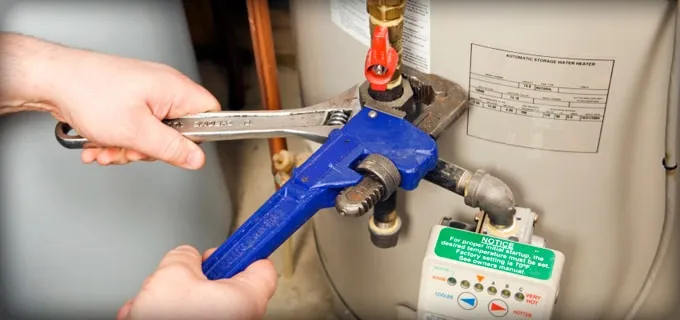
What should you check on your water heater each year? For a tank heater in a Snyder home, the answer is six things: the tank and the floor around it, the temperature setting, the relief valve, the sediment inside the tank, the anode rod, and the gas or electrical connections. Black Plumbing, a family-owned company founded in Abilene in 1994, serves Snyder as part of our service area and is open 24/7. This guide covers each check so you know which ones you can do yourself and which ones belong to a licensed plumber.
Why a yearly check matters for a tank heater
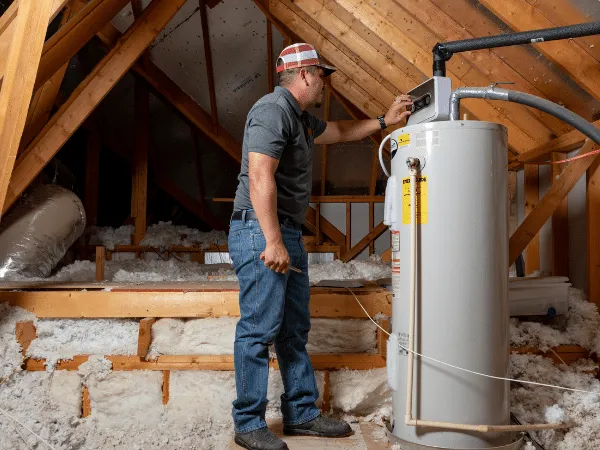
A tank water heater runs every day of the year, and most of what goes wrong with it happens slowly. Minerals settle on the bottom of the tank. Metal parts wear. Valves stick. None of that is dramatic while it is happening, which is why a heater can seem fine right up to the morning it is not.
A yearly look gives you a baseline. You learn what your heater normally sounds like, where it normally sits, and what the floor around it normally looks like. When something changes, you notice it early, and early is when a repair is still a repair.
This post is about upkeep on a heater that is working. If yours is already leaking, read our guide on finding where a water heater leak is coming from. If you are wondering whether an older unit is worth saving, see our post on repairing or replacing a tank water heater.
Six checks to make each year
1. Look and listen around the tank
Start with your eyes and ears. Check the floor or drain pan for moisture, rust-colored stains, or a ring where water has dried. Look at the pipes on top of the tank for white or green crust, which is a sign of a slow drip at a fitting. Then listen when the burner or element comes on. Popping, rumbling, or a sound like water boiling usually points to sediment on the bottom of the tank.
The EPA notes that worn valves and other small leaks are among the common household leaks, and that finding them early saves water. You can read the details on the EPA Fix a Leak Week page. The same advice applies to the connections on a water heater.
2. Check the temperature setting
Look at the dial or display on the heater. The setting should be one the household can live with without scalding risk, especially if there are children or older adults in the home. A setting that is higher than you need makes the heater work harder and wears parts faster. If the water at your tap is much hotter or much cooler than the setting suggests, the thermostat or an element may be failing, and that is a diagnosis job for a plumber.
3. Look at the temperature and pressure relief valve
The relief valve is a safety part. It sits on the side or top of the tank with a pipe running down toward the floor. Its job is to open if the tank gets too hot or the pressure climbs too high. Do not cap it, plug it, or tighten anything on it. What you can do is look at it. If the discharge pipe is wet or the valve is dripping, call us. A valve that drips is telling you something about pressure or temperature in the system, and a plumber should find out what.
4. Think about sediment
Sediment is the grit that settles at the bottom of a tank. It sits between the burner or lower element and the water, so the heater has to work longer to heat the same amount of water. Over time it can cause noise, uneven heating, and wear on the tank lining. Draining a few gallons from the bottom valve is the usual way to see what is in there. Turn off the power at the breaker or set the gas control to off first, and let the water cool, because water from the tank can scald. If the water runs cloudy or gritty, there is sediment. If the drain valve will not open or will not close again, stop and call a plumber. A stuck drain valve on an old tank is a common way a small job turns into a leak.
5. Ask about the anode rod
Inside most tank heaters is a metal rod that corrodes on purpose so the tank does not. Once the rod is used up, the tank itself is next. Checking it means partly unscrewing it from the top of the tank, which is awkward and sometimes the fittings are seized. This is a good item to have a plumber inspect, because forcing a rod on an old tank can damage the fitting around it.
6. Check the gas and electrical side
For a gas heater, look at the burner flame through the viewing window if your model has one, and look at the vent pipe or flue above the heater. Rust, soot marks, or loose sections need attention. If you ever smell gas, leave the house and call your gas utility and emergency services before anything else. For an electric heater, never open the access panels yourself. Wiring and elements are work for a licensed professional.
Which tasks stay with a plumber
Seeing is fine. Fixing is where the line falls. These tasks should go to a licensed plumber:
- Replacing a relief valve or its discharge pipe.
- Replacing an anode rod, a heating element, or a thermostat.
- Anything that touches gas supply, burner parts, or venting.
- Flushing a tank where the drain valve is stuck, leaking, or clogged with sediment.
- Any repair where water is already coming from the tank body.
Black Plumbing holds Texas plumbing license M-40900 and Texas HVAC (ACR) license TACLA145786C. Our water heater service covers repair, replacement, and preventive maintenance for homes in Snyder.
What a professional maintenance check covers
If you would rather have a licensed plumber run the yearly check, this is the general order of work.
- Look first. The plumber inspects the tank, the fittings, the floor, and the venting before touching anything.
- Test how it runs. The heater is brought up to temperature and watched through a heating cycle, and the temperature at a nearby tap is compared with the setting.
- Check the safety parts. That means the relief valve, the discharge pipe, and for gas heaters the flue and combustion.
- Deal with sediment. If the tank is a candidate for flushing, it is flushed. If the drain valve or the tank condition makes flushing risky, a plumber should say so and explain the options.
- Explain the findings. You should hear what is normal, what is wearing, and what to watch. If a part needs replacing, the decision is yours before any work starts.
The point is that nothing is a surprise. You should leave knowing the condition of your heater in plain terms.
Water heater trouble in the cold months
A water heater works hardest when the incoming water is cold, so a weak heater shows its age in winter first. A cold-water shower on a freezing morning is often the first sign that an element, a thermostat, or a sediment-clogged burner is struggling. During a hard freeze, also protect the pipes that feed the heater. Ready.gov lists keeping pipes from freezing as part of preparing a home for winter weather, and its winter weather page is a good place to start. If a pipe near the heater does freeze or burst, shut off the water and call our emergency plumber line.
Signs that maintenance is not enough
A yearly check keeps a good heater good. It cannot make a worn-out heater good again. Watch for these:
- Water on the floor that comes from the tank itself, not from a fitting.
- Rust-colored hot water that clears when you run only cold.
- Hot water that runs out much sooner than it used to.
- Repeated pilot, element, or thermostat problems.
- A tank so noisy that you can hear it from another room.
Any of these means it is time for a diagnosis, not another round of upkeep.
Frequently asked questions about water heater maintenance in Snyder
How often should a tank water heater be checked?
Once a year is a sensible rhythm for a heater that is working. The checks above take little time, and doing them at the same point each year helps you spot change. If your heater is older, or you notice noise or small leaks, check more often and call a plumber sooner.
Can I flush the tank myself?
Many homeowners do. The risk is the drain valve. On an older tank the valve can seize, crack, or fail to seal after being opened. Turn off the power or gas and let the water cool first. If you are not sure the valve is in good shape, have a plumber do it, so a stuck valve does not become a flood in your utility room.
Does maintenance apply to tankless heaters?
Tankless units have their own upkeep, which centers on the heat exchanger and the water side rather than on a tank. Our tankless water heater repair service handles those units. If you are weighing the two types, our post on choosing between a tank and a tankless heater explains the differences.
Should the heater be serviced before I leave on a trip?
If you will be gone for a long stretch and the heater is old or has shown signs of trouble, a check beforehand is a good idea. A slow leak that goes unnoticed for days does far more damage than one you catch in an hour.
Schedule a water heater check in Snyder
Black Plumbing serves homes across the Snyder area, and our team is available 24/7. To book a maintenance visit, use our service scheduling page. To see everything we do for the area, visit the Snyder plumbing and HVAC page. If you have a hot water emergency right now, do not wait for a regular appointment.