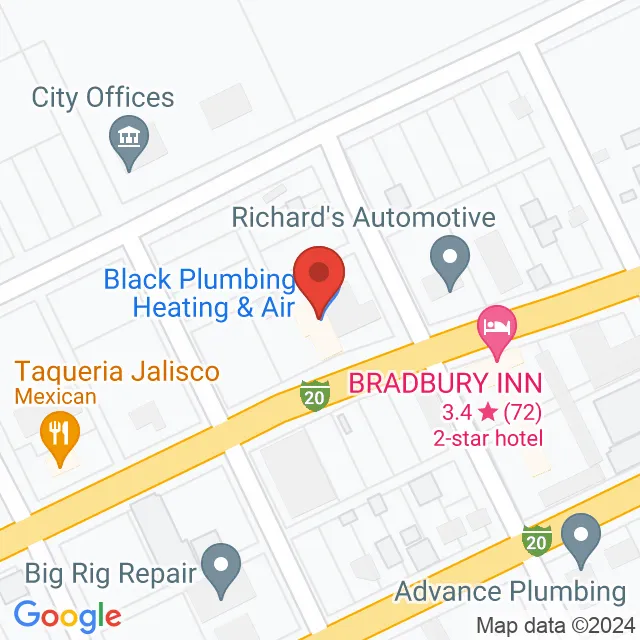
Which plumbing problems in a Brownwood home can you check yourself, and which ones need a licensed plumber? Small drips, running toilets and slow drains often start with a quick look. Hidden leaks, water heater failures and anything involving gas or sewage do not. This post sorts the common household problems into those two groups and tells you what to do first. Black Plumbing Heating & Air works from 703 W Austin Ave, Brownwood, TX 76801, is open 24/7 and has served this region since 1994.
A quick way to sort any plumbing problem
Ask three questions. Is water going somewhere it should not? Is anyone at risk, whether from gas, sewage, electricity near water or a flood? Can the problem be shut off at a fixture? If water is escaping and cannot be stopped, or if there is any chance of gas or a sewage backup, skip the do-it-yourself step and call. If the problem is isolated to one fixture and can be shut off at the supply valve, you have time to look more closely.
Knowing where your shutoffs are is the single most useful thing you can learn about your plumbing. Find the main water shutoff for the house, and note the small valves under each sink and behind each toilet. Test them once so they are not stuck when you need them.
Running toilets and constant refills
A toilet that runs on its own is the easiest leak to find and fix. The U.S. Environmental Protection Agency explains on its WaterSense toilet page that most toilet leaks come from old or worn-out flappers, the rubber, plastic or silicone part that controls water flow into the bowl, and that household leaks can waste 180 gallons per week. EPA adds that replacing a flapper is quick and easy, and that toilets account for nearly 30 percent of an average home’s indoor water use. Older toilets can use up to 6 gallons per flush, while a WaterSense labeled model uses 1.28 gallons or less.
You can check for a silent leak with a little food coloring in the tank. If color reaches the bowl without flushing, the flapper is not sealing. If you replace the flapper and the toilet still runs, or if water appears around the base of the toilet, a plumber should look at it.
Dripping faucets and fixtures
A faucet that drips is usually a worn washer, cartridge or seal. Many homeowners can replace these with the right part, but be careful. Turn off the supply first, plug the drain so small parts do not fall in and take a photo before you take it apart. If the faucet is old, corroded or the valve will not turn, forcing it can cause a bigger leak. That is a good time to call.
Slow drains and clogs
A single slow drain can often be cleared with a plunger or a hand snake, especially in a bathroom sink or tub where hair is the likely cause. Avoid chemical drain cleaners, which can leave caustic liquid standing in the line and are hard on older pipe. Call a plumber if the clog returns soon after you clear it, if more than one fixture drains slowly or if water backs up in a tub or floor drain when you use another fixture. Those are signs that the blockage is deeper in the system. Our drain services cover everything from a stubborn sink to a sewer line problem.
Low water pressure
Start by figuring out whether the problem is at one fixture or throughout the house. If it is one faucet or showerhead, mineral buildup in the aerator or the showerhead is the likely cause, and soaking it in vinegar often helps. If pressure is low at every fixture, the cause could be a partly closed valve, a failing pressure regulator, corrosion inside older pipes or a leak. A leak is worth ruling out first, so check your water meter with everything off. If the meter moves, there is a leak somewhere.
Water heater problems
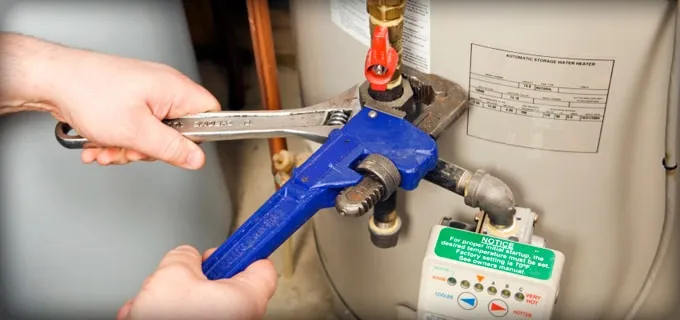
If hot water runs out quickly, comes out lukewarm or not at all, or the tank makes noise, the cause may be inside the heater. Typical issues include sediment or mineral buildup, a failed heating element, a faulty thermostat, ignition problems or a worn burner. You can check that the breaker has not tripped on an electric heater, and that the pilot is lit on a gas model, but do not take the heater apart. Any sign of water around the tank, a gas smell or scorching should be handled by a professional. If you smell gas, leave the home and call your gas provider or 911 from outside.
Our water heater repair and installation work covers tank and tankless units, and we can talk you through repair or replacement once we see what is going on.
Hidden leaks and high water bills
Water that disappears without a visible source is a plumber’s job. Warning signs include a rising water bill, damp spots on walls or ceilings, a musty smell, stained flooring and the sound of running water when nothing is on. EPA’s Fix a Leak Week page suggests a simple test: read your water meter, wait without using any water, then read it again. Any change suggests a leak. If you do find one, a technician can locate it without tearing open walls blindly. Our leak detection and repair service is built around finding the source first. For leaks in or under a foundation, we use methods such as infrared imaging and acoustic listening equipment.
Sewage odors and backups
A sewage smell, gurgling drains or water rising in a lower fixture means the sewer line or vent may be affected. Stop using water, keep people away from the area and call. Sewage is a health concern and cleanup is not a casual project.
Habits that prevent small problems from growing
Most big plumbing repairs start as small things nobody looked at. A few habits help. Glance under sinks every month for dampness or corrosion on connections. Note your normal water bill so a jump stands out. Replace toilet flappers when they wear, since EPA suggests checking them periodically and replacing them at least every five years. Do not pour grease down the kitchen drain, and keep wipes out of toilets. Learn what your water heater sounds like when it runs normally so you notice when it changes. None of this takes much time, and it gives you early warning when something is going wrong.
Quick guide: yourself or a plumber?
- You can usually handle: replacing a toilet flapper, clearing a hair clog in a tub, cleaning an aerator or showerhead, finding and testing shutoff valves.
- Call a plumber for: a leak you cannot find, any gas smell, a leaking water heater tank, repeated clogs, sewage backups, low pressure throughout the house and anything involving pipe replacement.
- Call right away for: water you cannot shut off, a burst pipe, flooding or sewage inside the home.
How we handle a plumbing call
- Listen first. We ask what you have seen and what you have already tried.
- Diagnose. We look at the fixture, line or appliance to confirm the cause.
- Explain the options. You hear what is wrong, what the choices are and what each one involves.
- Get your go-ahead. We do not begin work before you have agreed.
- Repair and test. We fix the problem, then check that it works and that nothing else leaks.
Jessica N., a Brownwood customer, put that approach in her own words in October 2026: “They checked with me before making any changes.” You should be part of every decision about your plumbing.
For ongoing care, our plumbing repairs and maintenance service keeps small issues from turning into emergencies, and our Brownwood plumbing and HVAC page lists everything we do locally.
Frequently asked questions about plumbing in Brownwood
When is a plumbing problem an emergency?
Water you cannot stop, a burst pipe, a sewage backup, flooding or any gas smell is urgent. We are open 24/7, so call as soon as you have shut off what you can.
Is it safe to use chemical drain cleaner?
We recommend against it. These products can sit in the line without clearing the clog and are hard on older pipes. A plunger or snake is the better first step, and a plumber should handle anything that returns.
How do I know if my toilet is leaking?
Put a little food coloring in the tank and wait without flushing. If color reaches the bowl, the flapper is leaking. Flush right away afterward so the dye does not stain.
Why is my water bill higher than usual?
A hidden leak is the first thing to rule out. Check toilets and faucets, then do the meter test. If the meter moves with everything off, a leak is likely and a plumber can find it.
Talk to our Brownwood plumbers
Call (325) 643-5215 or visit 703 W Austin Ave, Brownwood, TX 76801. Tell us what you are seeing and we will help you decide the next step.