Is your Snyder water heater worth repairing, or has it reached the point where replacing it makes more sense? The honest answer depends on where the problem is. A bad thermostat, element, or relief valve is a repair. Water leaking from the tank body is not. Black Plumbing is a family-owned plumbing and HVAC company founded in Abilene in 1994, and we serve Snyder as part of our service area, 24/7. Below is how the repair-or-replace question usually breaks down, so you can make the call with facts instead of pressure.
Start with where the problem is
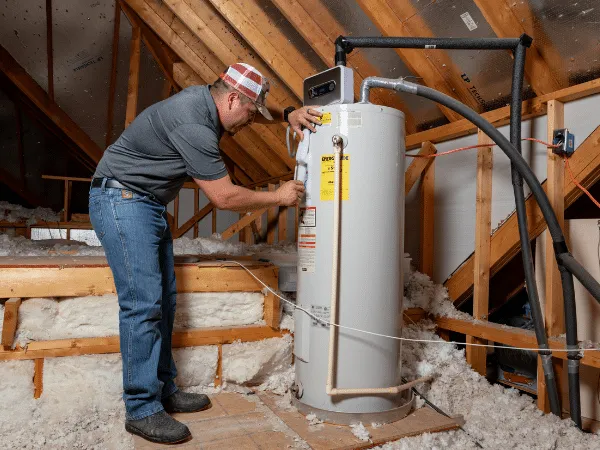
A tank water heater is a steel tank, a heat source, and a handful of replaceable parts. Some failures sit in the parts. Others sit in the tank. That difference decides almost everything.
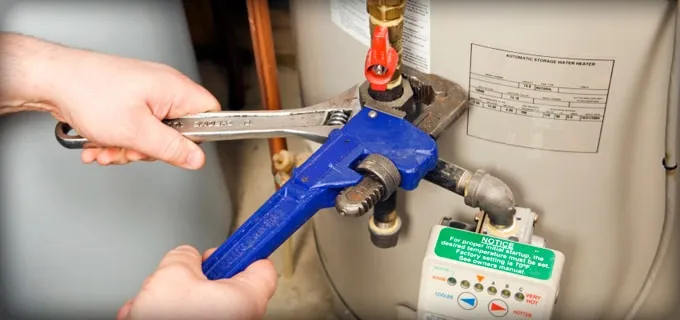
- Parts that can be replaced: thermostats, heating elements on electric units, gas control valves, thermocouples, pilot assemblies, the temperature and pressure relief valve, the drain valve, and the supply fittings.
- The tank itself: once the steel wall or the lining has corroded through, there is no patch. Water seeping from the tank body, or a puddle that returns after you dry the fittings, means the tank has failed.
So the first job is to find out which side of that line you are on. A plumber should identify the water source before discussing options.
Signs a repair is the right call
A repair usually makes sense when the problem is limited and the tank is sound. Examples:
- No hot water at all on an electric unit, which is often a failed element or thermostat.
- Lukewarm water that never gets hot, which can point to one of two elements or a thermostat setting.
- A gas heater that will not stay lit, which is often a thermocouple or gas control issue.
- A dripping relief valve with no sign of water from the tank wall.
- A leak at a supply line, shutoff, or fitting on top of the tank.
In these cases the tank is doing its job and a part is not. Replacing the part is the sensible step, and our water heater repair and replacement service handles it.
Signs the tank itself is done
Some symptoms point to replacement because the tank cannot be repaired. If you see any of these, the conversation shifts from fixing to planning.
- Water seeping from the bottom or side of the tank, not from a pipe or valve.
- Rust streaks running down the outside of the tank, or a heavy rust stain on the floor under it.
- Rusty hot water that clears when you run only cold water.
- A tank that makes rumbling or popping noises and also runs out of hot water quickly.
- Repeated repairs on the same unit within a short period.
A heater that is leaking from the tank can fail quickly, and the water can damage flooring, drywall, and anything stored nearby. If you find water around your heater, turn off the power or gas to the unit, close the cold water supply valve on top, and call us.
What a plumber checks before recommending replacement
A heater should not be replaced just because it is older. A sound evaluation usually runs in this order:
- Confirm the source of the water. Dry the fittings, check the valves, and watch the tank to see where moisture reappears.
- Read the label. The data plate gives the manufacture date, the capacity, and the fuel type.
- Test the working parts. Check the thermostat, element or burner, and the relief valve to learn what is still healthy.
- Look at the connections and venting. Corroded water lines, a weak flue, or a bad gas connection affect both repair and replacement choices.
- Explain the options. If a repair is reasonable, the plumber says so. If the tank has failed, the plumber explains why and what replacement involves.
The decision is yours, and no work should start until you agree to it.
Age is a clue, not a verdict
Every tank heater has a date on its label. A heater that has served a household for many years is closer to the end of its working life than a newer one, and repair parts on an older unit do not change that. But age alone does not tell you whether a given problem is worth fixing. A newer heater with a bad thermostat should be repaired. An older heater with a leaking tank should be replaced. A heater in between, with several small problems, is the hard case, and it deserves a real conversation about what the next repair buys you.
One practical point: if you are already thinking about replacement, do it on your schedule. A planned replacement lets you compare options and pick a day. An emergency replacement happens with water on the floor.
Choosing the replacement
If you do replace, a few decisions matter more than brand names.
Capacity
ENERGY STAR defines the first hour rating as an estimate of the maximum volume of hot water, in gallons, that a storage water heater can supply within an hour when it starts fully heated. That is the number to compare against how your household uses hot water in a busy hour. The definition is on the ENERGY STAR water heater key product criteria page. Your plumber can help you match it to your showers, laundry, and dishwasher use.
Efficiency
The same ENERGY STAR page describes the Uniform Energy Factor as the measure of a water heater’s overall efficiency. A higher number means a more efficient unit. When you compare models, look for that number on the label.
Fuel and location
The fuel you have now, gas or electric, and the place the heater sits both affect what can go in. Venting, clearance, gas line size, and electrical capacity can all limit the choice. A plumber checks these before recommending a unit.
Tank or tankless
Some households choose a tankless unit when they replace. That is a different decision with its own tradeoffs, and we cover it in our post on tank versus tankless water heaters. If you already have a tankless unit and it is misbehaving, see our tankless water heater repair page.
What a tank replacement involves
A licensed plumber generally works through steps like these for a standard tank replacement.
- The fuel or power and the water supply are shut off, and the old tank is drained.
- The old unit is disconnected and removed.
- The new heater is set in place, with a drain pan or protection where the space calls for it.
- The water lines, the relief valve and its discharge pipe, and the gas or electrical supply are connected.
- For gas units, the venting is connected and checked.
- The tank is filled, the air is purged, fuel or power is restored, and the unit is brought up to temperature.
- The plumber tests for leaks, checks gas connections where they apply, and confirms the heater is heating properly.
- The homeowner should be shown the controls and what to watch for.
Texas plumbing license M-40900 covers the plumbing side of this work, and our Texas HVAC (ACR) license is TACLA145786C.
What to do while you wait for service
If your heater is leaking or acting up and you cannot be seen right away, a few steps limit the damage.
- Turn off the power at the breaker for an electric unit, or set the gas control to off for a gas unit.
- Close the cold water supply valve on the pipe above the heater.
- Move stored items away from the floor around the tank.
- Use towels or a wet vacuum to keep the water from spreading to other rooms.
- Take a photo of the data plate so the technician has the model and serial number ready.
Do not open the access panels on an electric unit or work around the burner on a gas unit. Those are jobs for a licensed professional.
Frequently asked questions about replacing a water heater in Snyder
How do I know how old my water heater is?
Look at the data plate on the side of the tank. The manufacture date is usually in the serial number, as a letter for the month followed by digits for the year. If you cannot decode it, send us the serial number or ask the technician on a visit.
Is a small leak at the top of the tank a reason to replace it?
Not always. A leak at a fitting, valve, or supply connection can often be repaired. What matters is whether the water is coming from outside the tank or through it. A plumber confirms that before anything else.
My water heater is working but loud. Should I replace it?
Noise often comes from sediment on the bottom of the tank. Our post on yearly water heater checks explains how sediment builds up. If noise comes with rust, leaks, or hot water running out, replacement is worth discussing.
Can I wait until it fails?
You can, but failure usually comes with water on the floor and no hot water at the same time. If your heater shows the signs above, plan the replacement instead of waiting for it to choose its own moment.
Get a second opinion in Snyder
If a heater has been giving you trouble, we can look at it. Use our service scheduling page to book a visit, or learn more about our work in the area on the Snyder service page. If water is already on the floor, treat it as an emergency and reach out right away, because our team is available 24/7.