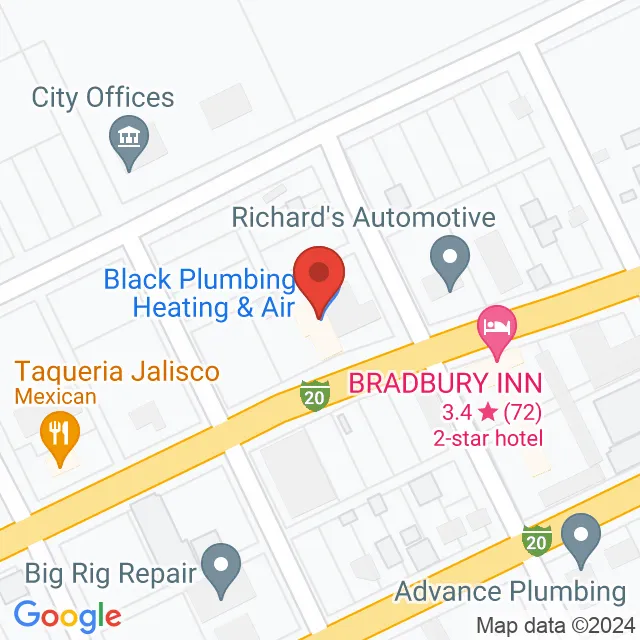
How can you tell whether a Big Spring home has a slab leak, and what happens once you suspect one? A slab leak is a break in a water or drain line that runs under or inside the concrete foundation. You cannot see it, so the clues show up elsewhere: a water bill that climbs, a warm spot on the floor or the sound of running water when everything is off. This post covers the signs, a safe way to check, how the leak is located and what repair options exist. Black Plumbing Heating & Air works from 1105 E 3rd St, Big Spring, TX 79720, is open 24/7 and has served this region since 1994.
What a slab leak is and why it stays hidden
Many homes are built on a concrete slab with supply lines, drain lines or both running beneath or through it. When one of those lines develops a pinhole or a crack, water escapes into the soil or gravel below the slab instead of into a room. Nothing drips, and nothing shows until the water has been moving for some time. That is why slab leaks are found through side effects, not through a puddle on the floor.
Several things can cause the failure. Pipes can corrode from the outside, especially where soil moisture is chemically aggressive. In Big Spring, the ground carries salts and minerals that attack buried copper and steel from the outside, while mineral-heavy water works on the pipe from the inside. Pipes can also rub against rock or concrete as the slab shifts, or wear at a joint where the original install was rough. Any one of these can eventually lead to a leak.
Signs of a slab leak
- A water bill that rises with no change in how your household uses water.
- The sound of running or hissing water when every fixture is off.
- A warm or hot area on the floor, often from a leaking hot water line.
- A damp spot, musty smell or mold growth along a baseboard or under flooring.
- Cracks in walls, tile or flooring that were not there before.
- Low water pressure at fixtures that used to run strong.
- Water collecting at the foundation’s edge or in the yard near the slab.
Any one of these can have another cause, which is why a single sign is not proof. Two or three at once deserve a closer look.
A safe first check you can do yourself
The U.S. Environmental Protection Agency describes a simple method on its Fix a Leak Week page: read your water meter, then wait without using any water and read it again. If the numbers change, water is going somewhere. Before you test, make sure no one is running a faucet, a toilet is not refilling, the dishwasher and washing machine are idle and any ice maker or irrigation system is accounted for. The same page notes that household leaks can waste more than 9,300 gallons of water a year in the average home, and that a family of four using more than 12,000 gallons in a cold winter month may have a serious leak.
If the meter test shows movement and you cannot find a leaking fixture, a hidden line is likely. Check your toilets and outdoor spigots first, because they are the easy suspects. If they are fine, call a plumber.
Why waiting makes it worse
A hidden leak does not stay the same. Water that escapes under a slab can wash away or soften soil, add moisture to the foundation and move toward walls and flooring. Over time that can mean damaged flooring, mold growth and added stress on the structure. Even a small leak keeps running day and night, wasting water you are paying for. Acting early keeps the repair smaller and protects your home.
How we find a slab leak without tearing into your floor
The first goal is to find the leak exactly, so that any cutting or digging happens in one place instead of several. Our Big Spring crews use acoustic listening equipment to pick up the sound of escaping water, thermal imaging to show temperature differences that point to a leaking hot line and camera inspection where a drain line may be involved. The steps look like this:
- Talk through the symptoms. We ask what you have seen, heard and measured.
- Isolate the system. We check which line is losing water, such as hot, cold or drain.
- Pinpoint the location. Listening equipment and thermal imaging narrow the search to a small area.
- Confirm before opening anything. We want to be sure of the source before a floor or wall is touched.
- Explain your options. You hear what the repair involves and what the alternatives are.
Our slab leak repair and detection service follows this process. For leaks that are not under the slab, such as in walls or yard lines, our water leak detection and repair service applies the same locate-first approach.
Repair options once the leak is located
The right fix depends on where the leak is, what kind of pipe is affected and how many other weak points the line has. In general there are three paths:
- Spot repair. If the damage is limited to one short section and the rest of the pipe is sound, that section can be cut out and replaced after access is made.
- Rerouting. A new line is run through the walls or attic and the old one under the slab is abandoned, which avoids breaking the concrete.
- Repiping. If the lines are old, corroded or leaking in several places, replacing a larger part of the system can be a better plan than chasing leaks one at a time.
A plumber should explain why one path suits your home better than another. Ask what condition the rest of the pipe is in and whether the cause of the failure has been addressed, so the new line is not exposed to the same problem.
Protecting your plumbing from the ground up
Once a leak is repaired, think about what caused it. If water chemistry is working on your pipes from the inside, softening or filtration can reduce the mineral load that your lines and water heater deal with every day. Our water softener and filtration installation is one way to do that. Keep an eye on your water bill, and learn where your main shutoff valve is so you can stop water quickly if a line fails.
What to tell the technician when you call
The more specific you are, the faster the search goes. Tell us when you first noticed the signs and which ones you have seen. Share your meter readings if you took them, and note which fixtures are on hot or cold lines if you can tell. Mention any remodeling, plumbing work or foundation repair in the past, since earlier work can leave weak points. If you know where the main shutoff is, tell us whether you have already closed it. This background helps a technician decide where to listen first and keeps the visit focused on finding the leak instead of reconstructing the history of your plumbing.
What to do if you suspect a slab leak right now
- Run the meter test described above and note the reading.
- Check toilets, faucets and outdoor spigots for easy-to-find leaks.
- If you can hear water or find a hot spot on the floor, shut off the main water valve and call us.
- Keep the main off if water is coming up through the floor or the area is soaking.
- Move rugs, furniture and electronics away from damp areas.
Frequently asked questions about slab leaks in Big Spring
Can a slab leak fix itself?
No. A leak in a pipe will not seal on its own. Water keeps escaping until the damaged section is repaired or replaced, and the problem usually spreads rather than shrinking.
Will you have to break the concrete?
Not always. Locating the leak first lets us decide the least disruptive route. Some repairs require opening the slab at one point, while rerouting a line through the walls or attic can avoid it. We explain which one applies before work begins.
How do I know the leak is under the slab and not in a wall?
Warm spots on the floor, sounds from the floor area and a meter that moves with no visible leak all point toward the slab. Locating equipment confirms the position, so we are not guessing.
Should I call right away or wait for business hours?
If water is coming up through the floor or you cannot stop a loss, shut off the main and call us now, because we are open 24/7. If the signs are mild, such as a slightly higher water bill, schedule a visit soon, but do not let it sit for weeks.
Call our Big Spring team
See our Big Spring plumbing and HVAC page for the services we offer, or call (432) 935-1117. Our office is at 1105 E 3rd St, Big Spring, TX 79720.