Is your Big Spring water heater worth repairing, or is it time to replace it? The answer depends on the unit’s age, what failed, how much mineral buildup is inside the tank and what your household needs from hot water. This post walks through each factor so you can ask better questions before you decide. Black Plumbing Heating & Air works from 1105 E 3rd St, Big Spring, TX 79720, is open 24/7 and has been serving this region since 1994.
Why this question matters in Big Spring
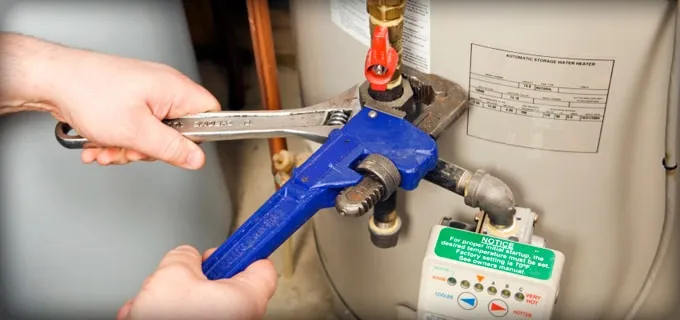
Water in this part of Texas carries a heavy mineral load. Minerals settle at the bottom of a tank as sediment, coat heating elements and burners, and use up the anode rod, the sacrificial metal piece that protects the inside of the tank from corrosion. Once the rod is gone, the tank itself begins to corrode. That is why a heater here can wear out sooner than the same model would in a place with softer water.
It also means the repair-or-replace decision is rarely about one part. A failed element is a simple part to swap, but if the tank is already full of scale and the rod is gone, the repair may only buy a short reprieve. A good technician looks at the whole unit, not only the part that stopped working.
Signs your water heater is struggling
- Hot water runs out sooner than it used to.
- Rumbling, popping or knocking noises from the tank, often a sign of sediment.
- Rusty or discolored hot water, but cold water looks normal.
- Water pooling around the base of the tank.
- A pilot light that will not stay lit, or a burner that sounds rough.
- The temperature swings between hot and lukewarm without anyone touching the setting.
- Visible corrosion on fittings, the tank top or the relief valve.
A leak from the tank body itself is the clearest sign. Water escaping through the steel shell is not fixable with a part swap. Shut off the water supply to the heater and the power or gas, and call us.
What usually points to repair
Repair makes sense when the problem is limited and the rest of the unit is in good condition. Typical examples include a failed thermostat, a worn heating element, a faulty gas control, a leaking relief valve or a loose connection. If the tank has been flushed regularly, the anode rod has been replaced on schedule and there are no leaks, fixing the failed part is often the sensible choice.
Ask the technician what they see inside the tank, not only outside it. Sediment level, rod condition and corrosion at the fittings tell you more about remaining life than the age on the label.
What usually points to replacement
- The tank is leaking through its shell.
- Heavy sediment has built up and flushing does not clear it.
- The unit has needed repeated repairs for different parts.
- The heater is well past the age at which the manufacturer expects it to last.
- Your household has grown and the current size no longer keeps up.
- You want a different type of heater, such as a tankless model.
The more of these that apply, the more a replacement is likely to serve you better than another repair. Our water heater repair and replacement service in Big Spring covers both paths, and a technician can explain which one fits your situation.
What goes into a replacement
If you are asking “how much,” the honest answer is that the total depends on several choices. We do not quote a figure in a blog post because no two homes are the same, but these are the factors that shape any replacement:
- Fuel type. Gas and electric units have different venting, wiring and gas line needs.
- Size. A heater that is too small runs out of hot water. One that is too large wastes energy keeping extra water hot.
- Tank or tankless. Each has different installation requirements and different ways of delivering hot water.
- Efficiency. Higher-efficiency models are designed to use less energy to heat the same water.
- Location and access. A heater in a tight closet or attic is a different job than one in an open garage.
- Code requirements. Venting, relief valves, drain pans and expansion control may need updating.
ENERGY STAR lists the main efficient water heater categories on its water heater product page: heat pump, high efficiency gas storage, whole-home tankless gas, solar and commercial models. That is a useful starting list when you want to know what types exist before you talk to a technician about what suits your home.
Tank or tankless in mineral-heavy water
Tankless units heat water on demand, so they have no tank to collect sediment. They are not immune to scale, though. Minerals can coat the heat exchanger inside a tankless unit, which is why flushing matters there too. If you are weighing a tankless model, our tankless water heater repair page explains how we handle those systems.
Whichever type you choose, think about water quality at the same time. Softening or filtration removes the dissolved minerals that build scale in heaters and shorten anode rod life. A water softener and filtration system installed alongside a new heater protects the equipment you just bought.
How we approach a water heater call
- Listen. We ask what you have noticed: noises, temperature changes, leaks, discolored water.
- Inspect. We look at the tank, fittings, relief valve, venting or wiring, and the anode rod where we can.
- Explain. We tell you what we found and why it matters.
- Offer options. You hear the repair path and the replacement path, with the tradeoffs of each.
- Do the work you choose. We repair or install, then test the unit and check for leaks before we leave.
If a failure cannot wait until morning, our emergency service runs 24/7.
What a Big Spring customer says
Mike K., a Big Spring customer, wrote in October 2026: “They got the job done in a timely and efficient manner.” That is the standard we work toward on every visit, whether it is a small repair or a full replacement.
Safety checks that matter with any heater
Whether you repair or replace, a few details deserve attention. The temperature and pressure relief valve should be in good shape and piped to a safe discharge point, because it is the part that protects the tank if pressure builds. Gas heaters need proper venting so combustion gases leave the home, and a heater in a closet should have the clearance its manufacturer requires. Electric heaters need correct wiring and a breaker sized for the unit. These are quiet details, and they are the reason replacement is not a good place for guesswork.
Around the heater, look for a drain pan or a clear path for water to escape if the tank fails. A small investment in that protection keeps a failed tank from reaching flooring or drywall. If you smell gas at any point, leave the home and call your gas provider or 911 from outside.
Questions to ask before you approve a replacement
- What did you find that makes repair a poor choice?
- What size and fuel type are you recommending, and why?
- Will the venting, gas line, drain or electrical connections need to change?
- What happens to the old unit?
- Is there anything about my water that I should deal with at the same time?
Frequently asked questions about water heater replacement in Big Spring
Can I flush my water heater myself?
Many homeowners do, and it can help with sediment. But a heater that has not been flushed for a long time may have hardened scale that does not drain out, and old drain valves can break when opened. If you are unsure, ask a technician to do it so a small chore does not turn into a leak.
How do I know what size heater my home needs?
Size depends on how many people live in the home, how many bathrooms you have and how much hot water you use at the same time. A technician can look at your current setup and your habits and recommend a size so you are not stuck with too little or too much.
Is a tankless water heater a better choice in Big Spring?
It can be, depending on your household and your home’s layout. Tankless units do not store water, so they avoid standby heat loss and sediment buildup in a tank, but they still need maintenance in mineral-heavy water. We can talk through both styles and help you decide.
What should I do if my water heater is leaking?
Turn off the power or gas to the heater and close the cold water supply valve above it. Keep people away from standing water around electrical components, and call us. A leaking tank usually needs replacement, and acting early limits damage to floors and walls.
Talk to our Big Spring team
Start at our Big Spring plumbing and HVAC page to see all our services, or call (432) 935-1117. Our office is at 1105 E 3rd St, Big Spring, TX 79720.