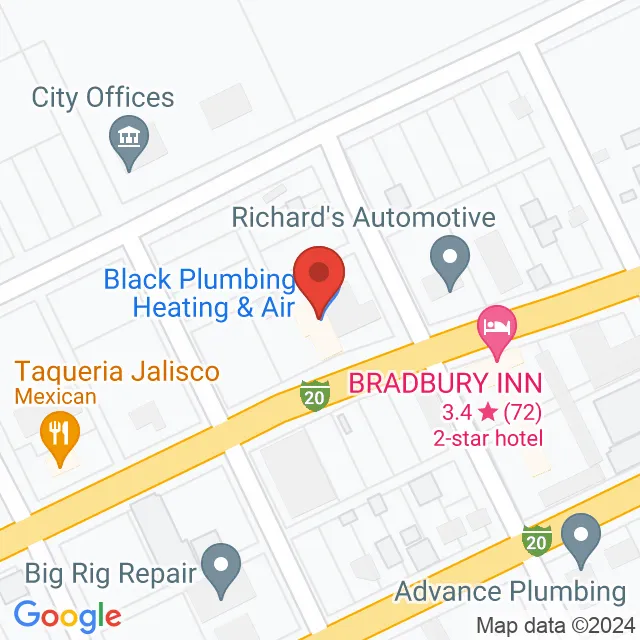
You have found a brown stain on the ceiling, a spongy patch of floor, or water where there should be none. What do you do before the plumber arrives? The first minutes matter, because water keeps moving and keeps soaking in until someone stops it. This post is a first-response guide for San Angelo homeowners: what to do, what to avoid, and how leak repair works once we arrive. If you would rather talk it through, Black Plumbing Heating & Air is at 501 N Main St, San Angelo, TX 76903, and our phones are answered 24/7.
First: make it stop, or make it safe
Do these in order. They take only a few minutes and they limit the damage.
- Shut off the water. If you can see the source, close the fixture shutoff valve under the sink or behind the toilet. If you cannot, close the main shutoff where the water line enters the house. If the main valve will not turn, do not force it. Call us and tell us.
- Watch for electrical danger. Water and electricity do not mix. If water is dripping from a ceiling light, pooling near outlets or reaching a breaker panel, turn off the power to that area at the breaker, but only if you can reach the panel without standing in water. If you cannot do that safely, stay out and call.
- Contain what you can. Put a bucket under a drip. Pull rugs and furniture off a wet floor. Use towels to slow the spread.
- Take photos and short videos. Capture the damage and the area around it for your own records and so you can describe it clearly on the phone.
- Call a plumber. Describe where the water is, what you have shut off and whether it is still spreading.
What not to do
- Do not poke a bulging ceiling, and do not stand under it. A bulge can hold a surprising amount of water, and it may sit near wiring or a light fixture. Keep people and pets away, shut off the water, turn off power to that area only if you can do it safely, and call us for guidance.
- Do not use a wet vacuum on standing water near electrical equipment unless it is rated for it and you are sure of the circuit.
- Do not ignore a damp spot because it is small. A small stain at the surface may be the visible end of a bigger problem inside the wall.
- Do not cover a damp wall with paint to hide the stain. Moisture trapped behind paint will stay there.
- Do not keep running appliances that may be connected to the leaking line, such as the washing machine or dishwasher, while you wait.
Why water damage gets worse the longer it sits
Water does not stay where it first appears. It follows pipes, wicks into drywall and insulation, and settles under flooring. Wood swells, drywall softens, and adhesives let go. Damp material also invites mold. The U.S. Environmental Protection Agency’s guidance on mold in the home says to fix plumbing leaks and other water problems as soon as possible and to dry all items completely, and it warns that if you already have a mold problem you should act quickly. Drying and repair belong together: fixing the pipe without drying the area leaves the conditions for mold in place.
There is also the water you cannot see. The EPA says the average household’s leaks can account for more than 9,300 gallons of water wasted every year, and that about nine percent of homes have leaks that waste 50 gallons or more per day. Leaks that never leave a puddle still cost you in water and in damage to the structure.
What a leak repair visit looks like
When we arrive, the job is to answer three questions: where is the water coming from, why, and what else is affected? Our process follows a sequence:
- Confirm the shutoff. We make sure the water supply is controlled before anything else.
- Find the source. A visible drip is not always where the leak is. Water can travel along a pipe before it appears, so the stain may be some distance from the break. When the source is not obvious, our technicians use acoustic and thermal equipment to locate a hidden leak without opening every wall to look for it.
- Identify the cause. A failed fitting, a worn supply line, corrosion, a loose connection and pressure problems each call for a different repair. In older San Angelo ranch-style homes, galvanized steel supply lines corrode from the inside and eventually rust through at the joints, so the answer to a leak is sometimes a section of failing pipe rather than a single bad joint.
- Explain the options. We tell you what failed, what the repair involves, and whether other parts of the system look like they are heading the same way.
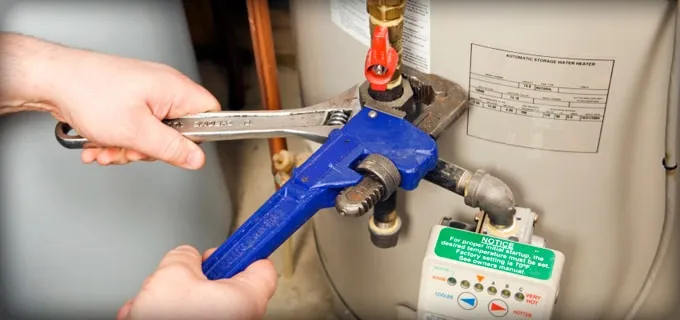
- Repair. We fix the leak, whether that means replacing a fitting, a supply line, a valve or a length of pipe.
- Test. We turn the water back on, check the repair under pressure and watch for further leaks before we leave.
You can see the broader range of work on our plumbing repairs and maintenance in San Angelo page, and the detection side on our leak detection and repair page.
After the plumber: drying and cleanup
Stopping the leak is the first half. The second half is drying what got wet. The extent of cleanup depends on what was wet and for how long, and some jobs call for other trades. What you can do yourself:
- Remove standing water and wet rugs, and lift wet items off floors and walls.
- Run fans and open windows when the weather allows, to move air across wet surfaces.
- Use a dehumidifier if you have one.
- Check the area over the next few days for stains that spread, a musty smell or warping.
- Remove and replace soaked drywall, insulation or carpet padding that will not dry, rather than painting over it.
If you see mold, the EPA recommends scrubbing mold off hard surfaces with detergent and water and drying them completely. For larger areas or soaked porous materials, talk to a restoration professional.
When the damage is not obvious
Many leaks never produce a clear sign. You may only notice a higher water bill, a meter that moves when everything is off, the sound of running water in the walls, or a warm spot on the floor. The EPA suggests comparing water use in a colder month, such as January or February, and says a family of four using more than 12,000 gallons a month could have serious leaks. If you suspect a hidden leak, do a simple test: turn off all water in the house, then look at the meter. If it is still moving, there is a leak somewhere.
For a closer look at the early clues, see our guide to early signs of water leaks in San Angelo homes. If the water seems to come from under the floor, read what homeowners should know about slab leaks before assuming the worst.
Preventing the next one
- Look under sinks and around toilets, the water heater and washing machine hoses a couple of times a year.
- Replace aging supply lines and worn parts before they fail. The EPA notes that toilet flappers wear out and can silently leak thousands of gallons a year.
- Know where your main shutoff is and make sure it works.
- Have older galvanized lines evaluated, especially if you see rusty water or falling pressure.
- Do not ignore small drips. They signal a part that is wearing out.
Frequently asked questions about leak repair in San Angelo
How do I know the leak is inside a wall?
Clues include a stain with no visible pipe above it, the sound of running water when nothing is on, a moving water meter with all fixtures off, and warm or damp spots on walls or floors. A technician can use detection equipment to confirm the location before any wall is opened.
Can I use the water while I wait for a plumber?
If you have shut off the main valve, no. If you have isolated one fixture, you can use the rest of the house as long as the leak is not affecting other lines. When in doubt, leave the water off and call.
Does a small drip need a repair visit?
Usually yes. A drip is a worn part giving notice. Replacing it is simple, and waiting lets it worsen and soak the surrounding materials.
Will you repair the drywall and flooring too?
Our work is the plumbing: finding the leak, repairing it and testing it. Wall and floor repair is a separate trade, and we can tell you what we saw so you know what to ask for.
Call Black Plumbing Heating & Air in San Angelo
If water is where it should not be, call (325) 659-3747 any hour, or visit 501 N Main St, San Angelo, TX 76903. We hold Texas plumbing license M-40900 and have served San Angelo since 1994. Our office is rated 4.8 out of 5 on Google. See what else we do on the San Angelo page.