Water on the floor near your water heater does not always mean the tank has failed. Where the water is coming from decides what happens next. A drip at a pipe fitting is a small repair. Water seeping from the tank body is not. This guide shows Snyder homeowners how to trace a water heater leak to its source, what to do in the first few minutes, and which leaks can be prevented. Black Plumbing is a family-owned company founded in Abilene in 1994, we serve Snyder as part of our service area, and our team is available 24/7.
First, make the leak stop spreading
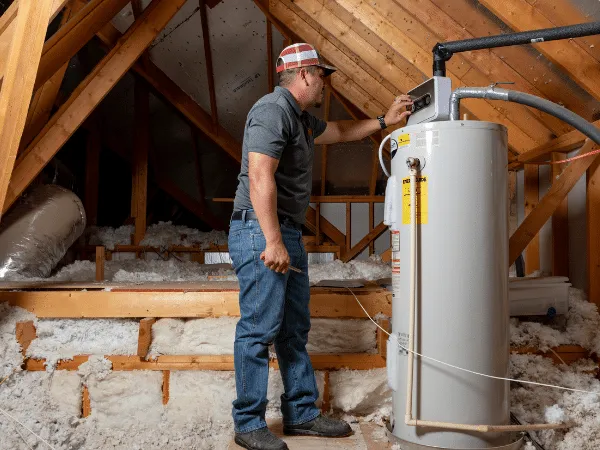
Before you work out the cause, limit the damage. These steps are safe for most homeowners:
- Turn off the power at the breaker for an electric heater, or set the gas control to off for a gas heater.
- Close the cold water supply valve on the pipe feeding the top of the tank.
- Put towels down, or use a wet vacuum, and move anything stored nearby out of the water.
- Do not touch electrical parts while standing in water.
If water is spreading fast or you cannot reach the shutoff, close the main water valve for the house. Then call us. For a heater that is flooding a room, our emergency plumber service is the right place to start.
Where the water is coming from
Dry the area with a towel, then watch for where moisture comes back first. The location tells you a lot.
From the top of the tank
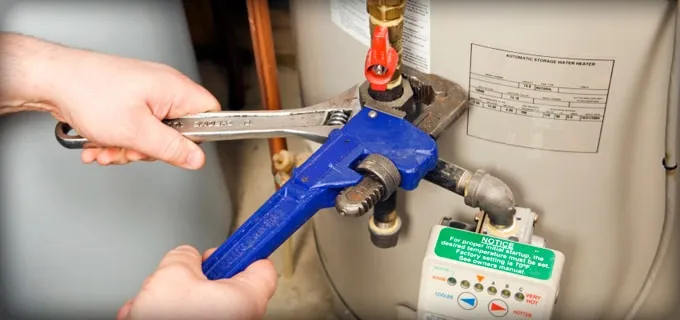
Look at the cold and hot water pipes where they enter the tank, and at the fittings and shutoff valve. White or green crust around a connection means a slow, long-running drip. Tightening or replacing a fitting often fixes it. Water that runs down the side of the tank from the top may be coming from one of these fittings and not from the tank at all, so check before you assume the worst.
From the relief valve or its pipe
The temperature and pressure relief valve has a discharge pipe that runs toward the floor. If that pipe is dripping or wet, the valve has opened or is leaking. It may be reacting to high pressure or high temperature, or it may be worn out. Do not cap or plug it. This is a safety device, and the cause needs a plumber to find.
From the drain valve near the bottom
A slow drip from the small valve near the base of the tank is common on older units, especially after the tank has been flushed. The valve may have a worn seat or a bit of grit that stops it from closing. A plumber can replace the valve without replacing the heater.
From underneath the tank
Water on the floor beneath the heater is harder to read. It could be condensation, a drip from above that ran down, or a failed tank. On a gas heater, check whether the burner area is wet. On an electric heater, do not open the panels. If you have dried everything above and the base is still wet, the tank may be leaking from inside.
From the tank wall or seam
Water that appears through the steel, or rust streaks that start at one point on the tank and run down, points to a failed tank. That cannot be patched. Replacement is the next step, and the sooner the heater is off, the less damage there will be.
Leaks that look like the heater but are not
Not every puddle near a water heater starts at the heater. Several other sources can leave water in the same spot:
- A washing machine hose or valve on a shared wall or in the same closet.
- A condensate line from a furnace or air handler that sits next to the heater.
- A supply pipe that runs overhead and drips onto the tank.
- A floor drain that has backed up or is slow to clear.
If the tank body, the fittings, and the valves are all dry, look at these next. If you cannot find it, call us. Tracing a leak that hides inside a wall or under a floor is what our leak detection and repair service is for.
Why tanks corrode
A steel tank holds water all day, so corrosion is a matter of time and conditions. Several things drive it:
- A used-up anode rod. The rod is there to corrode first. When it is gone, the tank wall takes its place.
- Sediment on the bottom. Minerals that settle in the tank can trap heat and hold moisture against the lining.
- High water pressure. Pressure that runs high stresses the tank, the fittings, and the relief valve.
- Heat cycling. Water heats, expands, and cools again every day. Metal and seals feel it.
- Age. Eventually the lining and steel wear through, no matter how well the heater is cared for.
Some of these you can influence. The anode rod, sediment, and pressure can all be checked. Age you cannot change, but you can plan for it.
What you can do to prevent leaks
Prevention for a water heater is mostly attention. A small habit catches most trouble early.
- Look under and around the heater when you do laundry or take out the trash. A glance takes seconds.
- Keep the space around the heater clear, so you can see the floor and the fittings.
- Put a drain pan with a drain line under the heater if the location is above living space.
- Have a plumber check the anode rod and the relief valve on a schedule. Our guide to yearly water heater checks lists what to look at.
- Ask a plumber to check the water pressure at your home. Pressure that is too high stresses everything it touches.
- Replace the heater before it fails if the signs are there. See our post on deciding between repair and replacement.
A drain pan does not stop a leak. It gives the water a place to go and gives you time to notice.
Why small leaks matter
A leak that drips once a minute does not look like much. The EPA reports that the average household’s leaks can account for more than 9,300 gallons of water wasted every year, and that about nine percent of homes have leaks that waste 50 gallons or more per day. You can read those figures on the EPA Fix a Leak Week page. A water heater is not the only source, but it is one place where a small drip becomes a flooded floor if nobody sees it. If your water bill climbs and you cannot find the reason, hidden leaks are worth ruling out. Our post on spotting hidden water leaks explains how.
How a plumber traces a water heater leak
For a leaking heater, a licensed plumber generally works in this order:
- Stop the water. If it is still running, supply and power or fuel are shut off first.
- Find the source. The unit is dried and the moisture traced to its starting point, checking the top fittings, the relief valve and pipe, the drain valve, and the tank wall.
- Explain the findings. You should hear where the water is coming from and whether the tank is still sound.
- Offer the options. If a valve or fitting is the cause, it can be repaired. If the tank has failed, replacement is the conversation.
- Test the result. After any repair, the heater is brought up to temperature and checked to confirm the leak is gone.
Our water heater service covers both repair and replacement. We hold Texas plumbing license M-40900.
Frequently asked questions about water heater leaks in Snyder
Is a leaking water heater an emergency?
Water coming from the tank is, because it can get worse quickly and damage the floor and nearby walls. A slow drip at a fitting is less urgent, but should still be looked at soon. When in doubt, shut off the water to the heater and call.
Can a leaking tank be repaired?
If the leak is through the tank wall, no. The steel or lining has failed. If the leak is at a fitting, a valve, or the relief valve, those parts can usually be replaced.
What is the wet spot under my heater if I cannot see a leak?
It could be condensation, which forms when cold water in the tank meets warm air, especially right after a heavy use of hot water. It could also be a slow drip from above that is running down the tank. Dry the area and watch it. If the spot returns, have it checked.
Should I drain the tank if it is leaking?
Shut off the power or gas and the cold water supply first. Draining a tank can limit damage from a large leak, but the water can be hot enough to scald, so let it cool and run a hose to a floor drain or outdoors. If you are not comfortable doing that, call a plumber.
Need help with a leaking heater in Snyder?
If your water heater is leaking now, shut off the supply and reach out. Our team is available 24/7 across the area. You can also read about our full range of work on the Snyder service page, or book a non-urgent visit through our scheduling page.