What counts as a plumbing emergency, and what should you do before help arrives? In short, it is any problem where water, sewage, or gas is putting your home or your health at risk right now. This guide for Snyder homeowners lists the situations that qualify, the first steps to take in each one, and how our emergency service works. Black Plumbing is a family-owned plumbing and HVAC company founded in Abilene in 1994. We serve Snyder as part of our service area, and our team is open 24/7.
What makes a plumbing problem an emergency
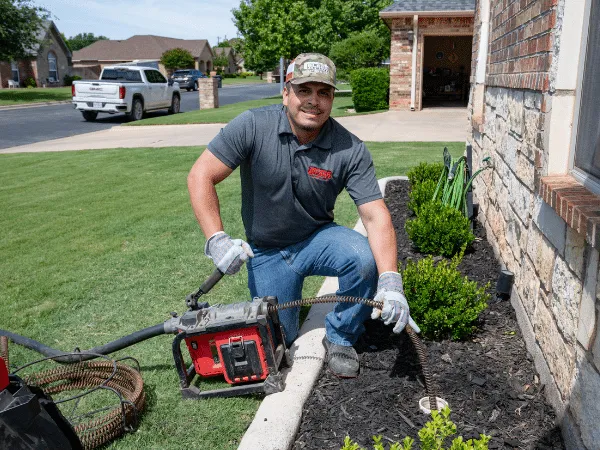
Plumbing emergencies rarely come at a convenient hour. A pipe does not care that it is a holiday. What turns a problem into an emergency is not how annoying it is. It is risk. Ask yourself:
- Is water flowing where it should not, and can you not stop it?
- Is there sewage in the house?
- Is there any chance of gas, fire, or electrical hazard?
- Will waiting make the damage much worse?
If the answer to any of these is yes, treat it as an emergency. If the answer is no, it can usually wait for a scheduled visit, and our post on which plumbing repairs can wait helps you sort the difference.
Emergencies and what to do first
Burst or frozen pipes
A pipe that freezes can crack, and the damage often shows up only when it thaws. Water can then flow into walls, ceilings, and floors quickly. Ready.gov advises homeowners to learn how to keep pipes from freezing as part of winter preparation, and it lists the steps on its winter weather page.
If a pipe has burst:
- Shut off the main water valve.
- Open a faucet at the lowest point in the house to drain the line.
- Turn off the power to affected areas if water is near outlets, and only if you can reach the panel without stepping in water.
- Move belongings out of the path of the water.
- Call us.
If a pipe is frozen but has not burst, do not use an open flame to thaw it. Open the faucet, apply gentle warmth, and call if you cannot clear it.
Sewage backup
Sewage coming up through a toilet, tub, or floor drain is an emergency. The EPA notes that sewer blockages and line breaks can cause backups into homes, leading to property damage and public health risk, on its sanitary sewer overflows page. What to do:
- Stop using water, including toilets, sinks, washers, and showers.
- Keep children and pets out of the affected area.
- Do not use chemical drain cleaners on a main line backup.
- Call us.
If the backup is a repeat problem, our guide on why drains keep clogging explains the likely causes.
A leak you cannot stop
Water spraying from a supply line, a failed fixture connection, or a flooded ceiling needs action now. Close the shutoff at the fixture or the main valve. If you cannot find the valve, close the main valve at the meter or at the house. Then call.
A water heater leaking from the tank
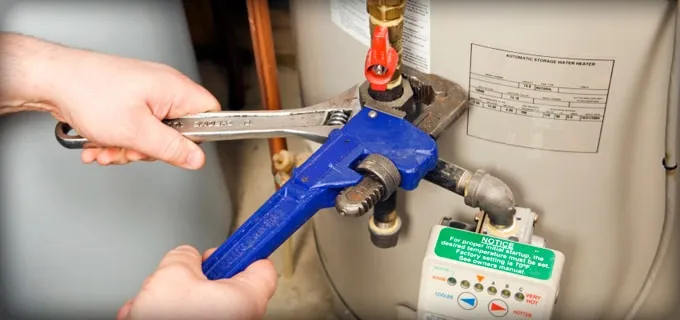
Turn off the power or gas, close the cold water supply valve above the tank, and call. See our post on finding where a water heater leak is coming from for more.
A gas smell
Leave the house right away. From outside, call your gas utility and emergency services. Do not turn lights on or off, use a lighter, or start a car in an attached garage. This is the one emergency where the plumber is not the first call. If our team needs to repair gas piping afterward, our gas line repair service covers it.
No water at all
If the whole house has no water, first check whether neighbors are affected. That points to a utility issue. If only your home is out, there may be a failed line or shutoff, and we can look at it.
Water and electricity do not mix
When a pipe fails, water often reaches outlets, appliances, and light fixtures before you realize it. Do not step into standing water to reach the breaker panel. If the panel is in a flooded area, stay out and call. If a ceiling is bulging or dripping near a light fixture, stay clear and turn off the breaker from a dry spot if you can. A bulging ceiling can hold a lot of water, and it may release it all at once. Leave it alone and call us.
Staying safe around sewage
Sewage is not like clean water. Do not wade through it, and do not let children or pets play in it. Wash your hands well if you touch it. Wear gloves and boots if you must move things out of the area. Keep fans and the HVAC system away from the affected rooms if you can, and open windows if the weather allows. Leave the cleanup of porous materials such as carpet and drywall for after the line is repaired and a professional can advise you.
After the water is stopped
Once the water is off and the plumber has made the repair, the next job is drying out. Wet materials stay wet for a long time unless they are dried deliberately, and that is when mold gets a start.
- Remove standing water with towels or a wet vacuum.
- Move furniture and belongings out of wet areas.
- Run fans and open windows to move air through the space.
- Pull up wet rugs and lift the edges of wet carpet when you can.
- Watch walls and ceilings in the days that follow for stains, soft spots, or a musty smell.
If damage is widespread, a water damage specialist can dry the structure.
What is not an emergency
Some problems feel urgent but can be scheduled:
- A single slow drain with no sign of backup.
- A dripping faucet.
- A toilet that runs on after flushing.
- A water heater that is making noise but not leaking.
- Low water pressure at one fixture.
These still deserve attention. They simply do not need a midnight call.
What a plumber does on an emergency call
Emergency work generally follows a sequence like this.
- Stop the damage. Shut off water or isolate the problem first.
- Find the cause. Locate the source, whether it is a broken pipe, a failed valve, or a blocked line.
- Explain. You should hear what happened, what is damaged, and what the repair involves.
- Repair or make safe. Fix it if possible. If a full repair needs parts or planning, make the situation safe and explain the next step.
- Test. Check the repair before leaving.
Our emergency plumber page has more about this service. We hold Texas plumbing license M-40900 and Texas HVAC (ACR) license TACLA145786C.
Emergencies in the cold months
Cold weather brings its own set of emergencies. Ready.gov notes that a winter storm can last a few hours or several days and can cut off heat, power, and communication services. When that happens at home, plumbing is exposed in several ways: pipes in unheated spaces can freeze, a water heater may be off for hours, and a heating failure can leave the house colder than the pipes can tolerate.
If a storm is coming, a few steps help. Let faucets drip on exterior walls if the forecast calls for a hard freeze, open cabinet doors under sinks on exterior walls so room air reaches the pipes, and keep the thermostat at a steady setting if you leave town. If the heat fails, our heating and air team can help with that side of the house as well.
Why a trusted plumber matters before an emergency
When water is pouring into your hallway, you do not want to be searching for a plumber. Knowing who you will call, and having the number saved, saves minutes. Black Plumbing has served Texas homes since 1994, and our team is open 24/7. You can read more on our Snyder service page.
Prepare before the next freeze or flood
- Know where the main shutoff is, and test it.
- Label fixture shutoffs.
- Insulate exposed pipes in garages, attics, and exterior walls.
- Disconnect and drain outdoor hoses before a freeze.
- Know where the main cleanout is.
- Check hoses on the washer and under sinks.
- Save our contact details in your phone.
If your hot water failed during cold weather, our post on yearly water heater checks may help you spot a problem earlier next time.
Frequently asked questions about emergency plumbing in Snyder
Do you take emergency calls at night and on weekends?
Yes. Our team is open 24/7, including nights, weekends, and holidays.
What should I do while I wait?
Stop the water at the nearest shutoff or the main valve, move belongings away from the water, and stay clear of electrical hazards. Take photos of the problem if you can do so safely.
Can you handle a hidden leak that is causing damage?
Yes. We use acoustic and infrared tools to locate hidden leaks, and you can read about it on our leak detection and repair page.
Is a burst pipe an emergency even if I turned the water off?
Once the water is off, the situation is more stable, but the pipe still needs repair. Wet materials also need attention soon, so call and tell us what happened.
Need an emergency plumber in Snyder?
If you have an emergency, shut off the water and reach out to our team. We are available 24/7. For a non-urgent repair, use our service scheduling page.