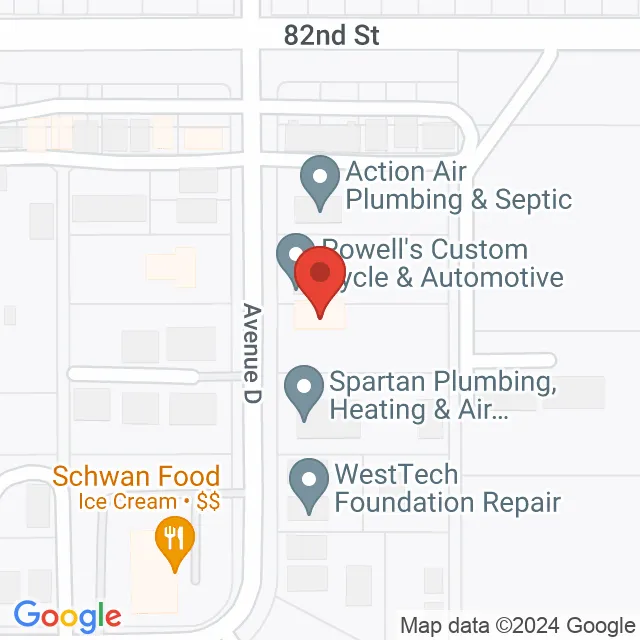
You cleared the drain, it ran fine for a week and now it is slow again. If that sounds familiar, the question is not “how do I clear it?” but “why does it keep coming back?” A drain that clogs repeatedly almost always has a reason, and the reason is rarely the clog itself. This guide is for Lubbock homeowners who are tired of the cycle. It explains the usual causes, what a camera inspection can show and what to expect when you call. Our plumbers work from 8215 Avenue D in Lubbock and are open 24/7.
A clog is a result, not a cause
Think of a clog as the place where trouble finally became visible. Material that should travel through the pipe and into the main line stopped moving, collected and formed a blockage. Clearing the blockage restores flow, but if the thing that made the material stop is still there, material will stop again.
That is why a repeated clog calls for a different kind of question. Instead of “what is in the pipe?” ask “what is it about the pipe, or about how we use it, that lets things collect?” The answer usually falls into one of a handful of categories.
The usual reasons a clog comes back
- Buildup on the pipe walls. Grease, soap residue and mineral scale narrow a pipe over time. The pipe still works, but with less room, so smaller amounts of material block it.
- A rough or damaged section. Cracks, corrosion or a joint that has shifted can catch material that would otherwise pass.
- A sag in the line. A low spot, sometimes called a belly, holds water and lets solids settle. The same spot clogs again and again.
- Roots or outside material in an underground line. Roots can enter through small openings and grow, catching whatever comes by.
- Something that does not belong. A toy, a wipe or a piece of a fixture stuck in the line keeps catching new material.
- A partly cleared blockage. A first attempt may have opened a channel without removing the mass. Water runs for a while, then the channel closes.
- Habits. Grease down the kitchen sink and wipes down the toilet will clog even a healthy line.
The EPA’s page on caring for your septic system lists what should stay out of drains: cooking oil and grease, oil-based paints, solvents and large amounts of toxic cleaners. It also says only human waste and toilet paper belong in a toilet, and it names wipes, diapers, paper towels, dental floss and cat litter among the items to avoid flushing. The guidance is written for septic homes, but those habits matter for any line.
How local water can feed the problem
Our Lubbock hub page explains that most of the city’s water comes from the southern Ogallala Aquifer, and that the Texas Water Development Board reports large areas of it carry more than 1,000 milligrams per liter of dissolved solids. The USGS explains that hard water leaves scale in pipes, which narrows them and reduces flow, and that scale builds when water is heated. In a line with scale on the walls, the usable diameter shrinks. Hair, soap and grease catch on a rough surface more easily than on a smooth one.
We want to be careful here. Scale is one possible factor, not a diagnosis for any particular drain. Only an inspection can show what is on the walls of your pipe. But if your drains have clogged more than once and your fixtures show white crust or spotting, it is a reasonable thing to ask about.
What a camera inspection shows
Our Lubbock hub page notes that when a blockage keeps returning, we run a camera so you are not paying for the same cleaning twice. A small camera on a flexible cable goes into the line, and we watch the picture as it travels. What we look for:
- The location and nature of the blockage.
- Buildup on the pipe walls.
- Cracks, offsets or separated joints.
- Low spots where water pools.
- Roots or foreign objects.
- The condition of the pipe material.
The inspection turns a guess into something you can see. We tell you what we found, show you where it is and describe your options. Sometimes the finding is simple, like buildup that a thorough cleaning removes. Sometimes it is a damaged section that needs repair. In either case, you make the decision with the facts in front of you.
Cleaning methods a plumber may choose
Once we know what is in the line, we choose a method to suit it. A cable machine can break through or retrieve a blockage. For heavier buildup on the pipe walls, a plumber may choose a high-pressure water method known as hydro jetting. The right tool depends on what the camera shows and on the type and condition of the pipe. We do not use a method just because it is available. We use it because it fits the line. You can read about what we handle on our drain cleaning services in Lubbock page.
What a repeat clog tells you about timing
The interval between clogs is a clue. A drain that slows again within days suggests a partial blockage that was never removed, or a spot where material catches immediately. A drain that stays clear for a few weeks and then slows suggests buildup that grows gradually, or a habit that adds material at a steady pace, such as grease in the kitchen line. A drain that clogs only after heavy use, such as after laundry day or a houseful of guests, suggests a line with limited room that cannot handle peak flow.
Tell the plumber about that interval. It helps us decide where to look first, and it helps you see whether habits or the pipe are the bigger factor. If you keep a short note of each clog with the date, you will have a pattern to share.
It also helps to think about the age and material of the plumbing. Older lines are more likely to have rough walls, shifted joints or corrosion. Newer lines are more likely to have a problem tied to how they were installed or to something that was put into them. You may not know what your pipes are made of, and that is fine. A camera inspection will show us.
When the answer is a repair
If the camera shows a cracked, separated or collapsed section, cleaning will not solve it. Material will catch on the damage again. Repair or replacement of the affected section is the lasting answer. Our sewer line repair page describes what that work involves. Jonah S., a Lubbock customer, wrote in September 2026 that the team has handled everything “from replacing 12 feet of a sewer line to a simple drain clog and replacing gaskets in a shower faucet.” That range, from a simple clog to a section of line, is what a good diagnosis lets us handle.
What you can do to help
- Note the pattern. Which drains, how often and after what activity?
- Tell us what you tried, including any cleaner. If you used a product, say so before we begin.
- Stop using the fixture if water is backing up, and keep water use low to avoid overflow.
- Clear access. Make sure we can reach cleanouts and the area under sinks.
- Share history. If you know of earlier line work, root problems or a previous inspection, tell us.
For a decision guide on cleaner and home attempts, see our article on whether store-bought drain cleaner is worth using in Lubbock.
Prevent the cycle once the cause is fixed
- Keep grease out of every drain.
- Use screens to catch hair and food.
- Flush only human waste and toilet paper.
- Run plenty of water with a disposal, and avoid fibrous or starchy foods.
- Pay attention to early signs, such as a slow drain or gurgling, and call before a backup.
Is it a drain problem or a pipe problem?
A slow drain can also be a sign that something else is going on with the plumbing. If you notice low pressure, wet spots or a rising water bill alongside drain trouble, tell us. Our plumbing repairs and maintenance in Lubbock team can look at the whole system on the same visit, so you are not left chasing one problem at a time.
Frequently asked questions about recurring clogged drains in Lubbock
Why does my drain clog every few weeks?
Something in the line is catching material: buildup on the walls, a rough section, a low spot, roots or an object. A camera inspection can show which.
Will a camera inspection find the cause?
Often, yes. It lets us see the blockage and the condition of the pipe, and we explain what we find. It is the way to avoid paying for the same cleaning twice.
Is hydro jetting right for every clog?
No. It suits some lines and some kinds of buildup. We decide after we see what is in the pipe and what the pipe is made of.
Can I prevent clogs myself?
You can reduce them. Keep grease out of drains, use screens and flush only toilet paper and human waste. These habits do not fix a damaged pipe, but they help a healthy one.
What if more than one drain is clogging?
That usually points to a shared line or the main. Call us promptly, and avoid using water in the house until it is cleared.
Break the cycle with a Lubbock plumber
If the same drain keeps giving you trouble, call (806) 787-2200. We are at 8215 Avenue D, Lubbock, TX 79404, and open 24/7. See more on our Lubbock location page.