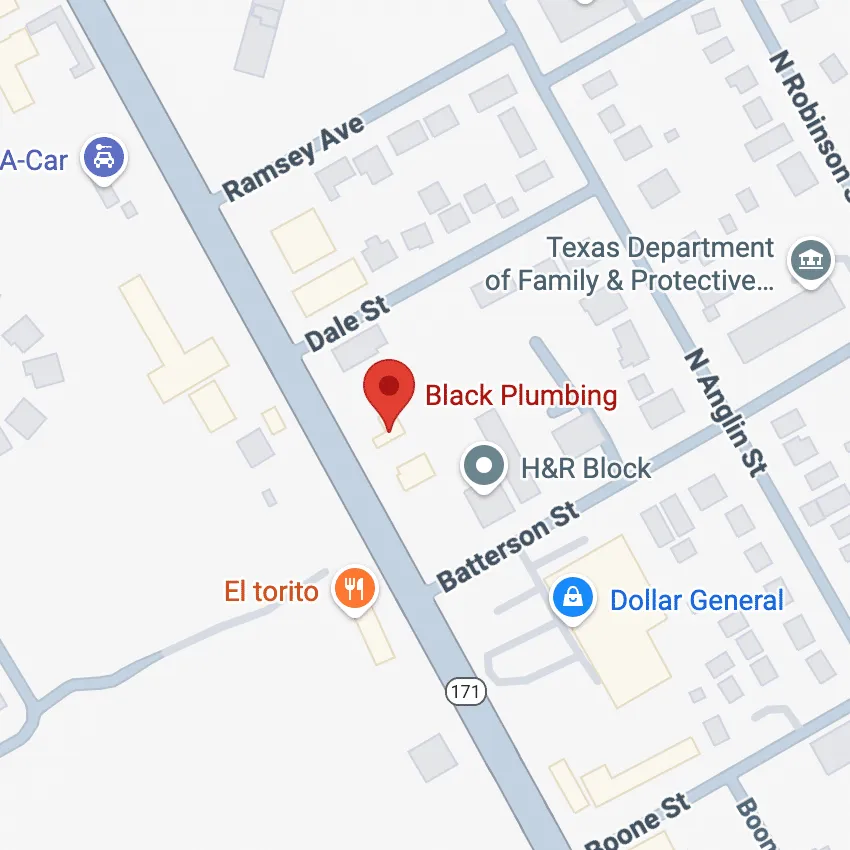
When the air in a house feels stale, dusty, or just off, the first instinct is to buy something: a purifier, a better filter, a spray. The better first question for a San Angelo homeowner is where the problem is coming from. This post follows the order the U.S. Environmental Protection Agency recommends for improving indoor air quality: find and reduce the source, then ventilate, then consider filtration. It also covers what your heating and air conditioning system can and cannot do about it. Black Plumbing Heating & Air serves San Angelo from 501 N Main St and is open 24/7.
What indoor air quality actually means
The EPA defines indoor air quality as the air quality within and around buildings, especially as it relates to the health and comfort of the people inside. In its introduction to indoor air quality, the agency says that indoor pollution sources that release gases or particles into the air are the primary cause of indoor air quality problems. Inadequate ventilation can make things worse by failing to dilute those emissions, and high temperature and humidity can raise the concentration of some pollutants.
That framing is useful because it shifts attention from the air itself to the things producing the problem. A house does not have bad air for no reason. Something is adding to it, something is failing to remove it, or both.
Common sources inside a home
The EPA’s list of indoor sources is long and ordinary. It includes:
- Fuel-burning combustion appliances.
- Tobacco products.
- Building materials and furnishings, such as newly installed flooring, upholstery, carpet, and cabinetry or furniture made of certain pressed wood products.
- Household cleaning and maintenance products, personal care products, and hobby supplies.
- Central heating and cooling systems and humidification devices.
- Excess moisture.
- Outdoor sources such as radon, pesticides, and outdoor air pollution.
Two items on that list deserve a second look, because they involve parts of your home that we work on. Heating and cooling systems and humidification devices appear as potential sources, which means a dirty or poorly maintained system can add to the problem instead of solving it. Excess moisture appears too, and it often traces back to a plumbing or drainage issue.
Strategy one: control the source
The EPA says source control is usually the most effective way to improve indoor air quality, and often more efficient than increasing ventilation, because moving more outdoor air into the house can raise energy use. Some sources can be sealed or enclosed, and others can be adjusted. The agency’s example is a gas stove, which can be adjusted to reduce emissions. It also notes that an improperly adjusted gas stove can emit significantly more carbon monoxide than a properly adjusted one.
Practical steps follow from that:
- Fix moisture problems at the source. A leak or a poorly draining condensate line keeps materials damp. If you suspect water inside a wall, our post on early signs of water leaks in San Angelo homes explains how to test for it.
- Have fuel-burning appliances checked, since worn or poorly adjusted combustion devices can be a significant source of carbon monoxide.
- Store paints, solvents, and cleaning products away from living areas, and use them with the windows open when you can.
- Think about new materials. New flooring, carpet, and pressed-wood furniture can release gases for a period after they arrive.
Strategy two: ventilate
The EPA explains that outdoor air enters a home in three ways: infiltration through cracks and openings, natural ventilation through windows and doors, and mechanical ventilation. It also points out that most residential forced-air heating systems and air-conditioning systems do not bring outdoor air into the house mechanically. They rely on infiltration and natural ventilation instead.
That matters in San Angelo because many of the city’s homes are older. Our hub page cites Census Bureau data showing that close to 55 percent of local housing units were built in 1979 or earlier. Older houses can leak more air than new ones, which affects ventilation in both directions. Do not assume a tight or a leaky house is automatically good or bad for air quality. The point is to know which you have.
For simple ventilation, the EPA suggests using bathroom and kitchen fans that exhaust outdoors. These remove contaminants directly from the room where they are produced, and they increase the outdoor air ventilation rate. Use them during cooking, showering, and cleaning, and during short activities that generate high levels of pollutants, such as painting or sanding.
Strategy three: filter and clean the air
Air cleaners and filters are the last tool, not the first. The EPA says there are many types and sizes on the market, that some are highly effective at particle removal while others, including most table-top models, are much less so, and that air cleaners are generally not designed to remove gaseous pollutants. It adds that how well a cleaner works depends on how efficiently it collects pollutants and how much air it moves, and that long-term performance depends on maintaining it according to the manufacturer’s directions.
The simplest filter in your house is the one in your heating and cooling system. ENERGY STAR advises inspecting, cleaning, or changing the filter once a month in a central air conditioner, furnace, or heat pump, and warns that a dirty filter can let dust and dirt build up inside the system. You can read that guidance on its maintenance checklist.
Signs your air may need attention
- Dust that returns quickly after cleaning.
- A musty or stale smell in one room or throughout the house.
- Air that feels humid or sticky even with the system running.
- Eye, nose, or throat irritation, headaches, or fatigue that improves when you leave the house. The EPA lists these among the immediate effects of indoor air pollutants and notes they can resemble a cold.
- Visible dust around supply vents.
- Rooms that never seem fresh, even with the windows open.
These signs do not point to one cause, and many have ordinary explanations. If they persist, or if symptoms follow you around the house, bring in a professional to look at the system and the home.
How our technicians approach it
We start with the same order the EPA uses. A technician looks at the house and the equipment, asks what you have noticed, and checks the things that are in our trade: the filter, the condition of the air handler, the ducts, drainage, and humidity. If the cause is a leak or moisture, we say so. If it is a source we do not handle, such as a household product, we say that too. Only after that do we talk about equipment.
When equipment is the right answer, our indoor air quality solutions in San Angelo are an option, along with the system maintenance that keeps your filter and air handler in good condition. Our post on the importance of regular air conditioning maintenance in San Angelo explains why a clean system is the foundation for everything else.
Safety note about combustion
One item deserves its own warning. Carbon monoxide is a combustion product, and the EPA describes it as colorless and practically odorless. If anyone in your home has headaches, dizziness, or nausea that clears when they leave, treat it as urgent. Get out of the house and call for help, then have your heating equipment inspected. Air quality products are not a substitute for fixing a combustion problem.
Frequently asked questions
Will an air purifier fix my air quality?
It may help with particles, but it is not a complete answer. The EPA notes that air cleaners are generally not designed to remove gaseous pollutants and that their effectiveness depends on the strength of the pollutant source. If the source is still there, the problem returns.
Do houseplants clean the air?
Not enough to count on. The EPA says there is no evidence that a reasonable number of houseplants remove significant quantities of pollutants in homes. They are fine to enjoy, but they are not a substitute for removing a source or ventilating.
Should I open the windows?
Often, yes, when the weather permits. The EPA lists opening windows and doors as natural ventilation that can reduce indoor pollutants. It also advises considering outdoor sources, such as smoke or refuse nearby, before relying on it.
Can my heating and cooling system make air quality worse?
It can, if it is dirty or poorly maintained, since the EPA lists central heating and cooling systems and humidification devices among possible sources. That is why the filter and the system itself are part of any honest look at indoor air.
A simple plan to follow
- Identify the likely source: moisture, a product, a material, an appliance, or the system itself.
- Reduce or remove that source, starting with water and combustion.
- Use exhaust fans and natural ventilation where weather permits.
- Change the system filter on schedule and keep the system maintained.
- Consider equipment only if the problem remains.
Our San Angelo hub page gives an overview of every service we offer if you want to see how the pieces fit together.
Talk to a technician
If your home’s air has you wondering where to begin, call our San Angelo office at (325) 659-3747 or visit 501 N Main St, San Angelo, TX 76903. We are open 24/7, and we will start by listening.