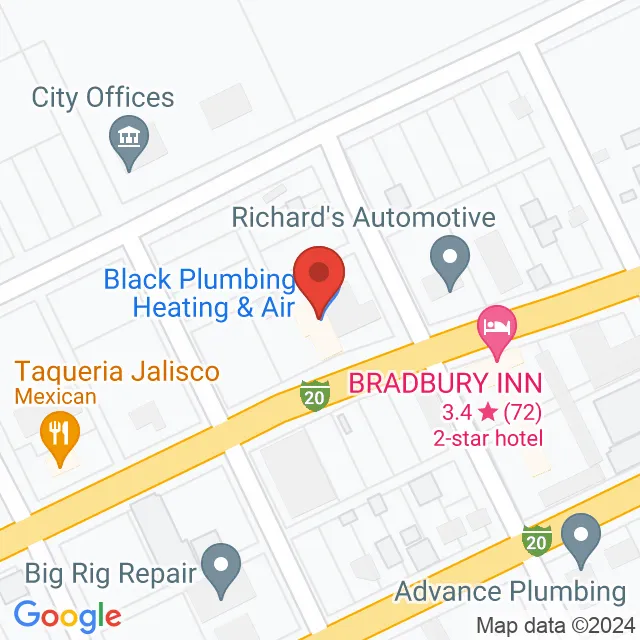
“Tune-up” is one of those words that can mean a great deal or almost nothing. For a San Angelo homeowner booking air conditioning (AC) maintenance, the useful question is concrete: what is a technician actually supposed to check, and what should you be doing yourself in between visits? This post lays out the contents of a real maintenance visit, explains why each item matters, and separates the tasks that belong to a technician from the ones that belong to you. Black Plumbing Heating & Air works from 501 N Main St in San Angelo and is open 24/7.
What a maintenance visit is meant to accomplish
The purpose of maintenance is not to sell you something. It is to catch small problems before they become failures, and to keep a working system running the way it was designed to. ENERGY STAR compares it to a car tune-up: a yearly check of your heating and cooling equipment can improve efficiency and comfort. Its guidance also advises scheduling the cooling check in the spring, before contractors get busy once summer arrives.
The agency publishes a maintenance checklist that describes what a typical check-up should include. We use it here as a benchmark, because it shows what to expect from any company, ours included.
Items that apply to the whole system
- Thermostat settings. The technician checks that your settings keep you comfortable at home and save energy while you are away.
- Electrical connections. Connections are tightened and voltage and current are measured on motors. ENERGY STAR notes that faulty electrical connections can cause unsafe operation and reduce the life of major components.
- Moving parts. Parts that need it are lubricated. Without lubrication, friction in motors increases the electricity the system uses.
- Condensate drain. The drain is inspected. A plugged drain can cause water damage in the house and affect indoor humidity.
- Controls and starting cycle. The technician confirms that the system starts, operates, and shuts off properly.
Items specific to cooling
These are the items that make a cooling tune-up different from a general walk-through.
- Evaporator and condenser coils. Dirty coils reduce the system’s ability to cool the home and make it run longer. That raises energy use and wears the equipment.
- Refrigerant level. The level is checked and adjusted if needed. ENERGY STAR notes that too much or too little refrigerant makes the system less efficient and shortens equipment life. A system that repeatedly loses refrigerant has a leak, and that is a repair question, not a maintenance one.
- Blower components. The blower is cleaned and adjusted for proper airflow. The agency says airflow problems can reduce a system’s efficiency by up to 15 percent.
If a technician arrives, spends a few minutes looking at the outdoor unit, and leaves, ask what was checked from this list. A thorough visit has a story to tell about each item.
What you can do between visits
The same checklist assigns one task to homeowners: inspect, clean, or change the air filter once a month in your central air conditioner, furnace, or heat pump. ENERGY STAR says a dirty filter can increase energy costs and damage your equipment, leading to early failure. Its broader heating and cooling advice adds that if a filter looks dirty after a month it should be changed, and that at a minimum it should be changed every three months.
A few other habits take little effort and help the system:
- Keep the outdoor unit clear. Trim plants and keep leaves, grass clippings, and stored items away from it so air can move through.
- Keep vents and returns open. Furniture, rugs, and curtains that cover them disrupt airflow.
- Watch the drain line area. Water around the indoor unit, or a drain pan that is wet, is a reason to call.
- Notice changes. A new sound, a new smell, or a room that has stopped cooling as well as it used to are early warnings. Write them down with the date.
What should be left to a technician
Some tasks are not for homeowners to try:
- Anything involving refrigerant. Handling refrigerant is regulated, and the EPA’s Section 608 rules cover the servicing and disposal of refrigerants in air conditioning and heat pump equipment, including technician certification.
- Opening electrical panels or testing live connections.
- Cleaning evaporator coils inside the air handler, where the wrong method can damage the coil.
- Adjusting blower components or motors.
If you are not sure whether something is a do-it-yourself task, assume it is not, and ask.
Why this matters in a San Angelo home
Our San Angelo hub page observes that many local homes were built before central air was standard, and that older houses can have thin ductwork, limited attic space, or electrical systems that were never designed for modern air conditioning loads. In a house like that, a maintenance visit does more than clean a coil. It is a chance for a technician to notice a duct that has come loose, an electrical connection that is showing wear, or a unit that is working harder than it should for the space it serves.
That kind of observation is easy to miss when you only call a technician after a failure. When a system is checked while it is still working, small signs stand out.
How a visit with us goes
- We ask what you have noticed. Any change you have seen goes first, because it tells us where to look.
- We work through the system. The thermostat, electrical connections, moving parts, drain, coils, refrigerant level, and blower are checked against the list above.
- We explain what we found. If everything is in order, you hear that. If something is wearing out, you hear what it is, why it matters, and what your options are.
- We confirm the system runs properly. The unit is run through its cycle to confirm that it starts, runs, and stops as it should.
You can read about our air conditioning maintenance in San Angelo on its service page, and you can ask our office about maintenance plans.
If a visit finds a problem
A maintenance visit sometimes turns up something that needs repair. When that happens, you should hear it as a finding, not a pitch. The technician should be able to show you what is worn or failing, explain what could happen if it is left alone, and describe the options. Many repairs can be handled through our air conditioning repair service. If the system is near the end of its service life, we will tell you that too.
How often should you book this?
This post covers what a maintenance visit contains. If your question is about timing, how often a San Angelo system should be serviced, our companion article on how often to schedule air conditioning maintenance in San Angelo answers it. The ENERGY STAR guidance above is a good starting point: a yearly check, timed ahead of the season.
Questions to ask when you book
You can learn a lot about a maintenance visit before it happens. A few questions at the time of booking set expectations for both sides.
- What will be checked? The answer should line up with the items listed earlier: electrical connections, drain, coils, refrigerant level, blower, thermostat, and controls.
- Will you test the system while it is running? Measuring voltage and current on motors and watching the starting cycle require the system to be operating.
- What happens if you find something? You should hear that you will be told about it first, with options, before any repair.
- Can the visit include the ducts? This is worth asking in an older home, where airflow problems are often in the duct system.
Frequently asked questions
Is maintenance worth it if the system works fine?
That is exactly when maintenance does its job. ENERGY STAR describes the check-up as a way to keep a system performing well and to prevent future problems. A system that works fine today may be running with a dirty coil or a loose connection that no one has noticed.
Can I do the whole tune-up myself?
Only part of it. The filter, the outdoor unit’s surroundings, and the vents are yours to look after. Refrigerant, electrical testing, and coil cleaning belong to a technician.
What if the technician finds nothing wrong?
Good. That is a finding, and it is useful. You will know the system was checked, what was checked, and that it is ready for the season.
Does maintenance include heating?
Cooling and heating each have their own check items. ENERGY STAR suggests checking cooling in the spring and heating in the fall. This post focuses on the cooling side, and our hub page lists heating and furnace repair as a separate service.
A simple checklist to keep
- Check the filter once a month and change it when it is dirty.
- Keep the outdoor unit and the vents clear.
- Book the cooling check in the spring.
- Ask what was checked, and compare it to the list above.
- Call about water, new noises, or rooms that no longer cool.
Book a visit
To schedule a maintenance visit or ask a question about your system, call (325) 659-3747 or stop by 501 N Main St, San Angelo, TX 76903. You can see the full range of services on our San Angelo hub page. We are open 24/7.