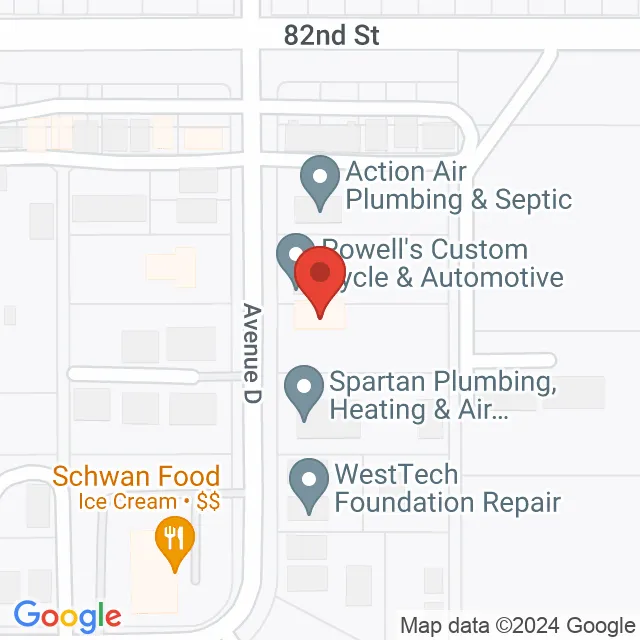
The sink drains slowly, the shower pools around your ankles and there is a bottle of drain cleaner under the cabinet. Should you pour it in? It is a fair question, and the answer depends on what is blocking the line. Sometimes a first attempt at home is reasonable. Other times it wastes an evening and leaves you with a standing pool of chemical water that is unpleasant and unsafe to work around. This guide helps Lubbock homeowners decide. Our plumbers work from 8215 Avenue D in Lubbock and are open 24/7.
What store-bought cleaners are designed to do


Most liquid and gel drain products rely on a chemical reaction to loosen the material in a pipe. They work best when the blockage is small, close to the drain opening and made of the kind of material the product is built to break down. They work poorly when the clog is a solid object, a mass of material far down the line or a problem in the pipe itself, such as a belly, a root intrusion or a crack. The chemical sits in the line, the water does not move and nothing changes.
That is the first thing to understand: a drain cleaner treats a symptom in one spot. It does not tell you what is causing the clog or where it is.
What the EPA says about chemical drain openers
The EPA’s page on caring for your septic system advises homeowners to avoid chemical drain openers for a clogged drain, and suggests boiling water or a drain snake instead. The page is written for homes with septic systems, where harsh chemicals can kill the microorganisms that treat household waste. If your home is on a city sewer, not septic, that specific concern may not apply to you. But the advice is still useful as a reminder that a chemical is not the only tool, and that something gentler is available.
The same page lists things that should not go down a drain: cooking oil and grease, oil-based paints, solvents and large amounts of toxic cleaners. It also says to flush only human waste and toilet paper, and to avoid flushing wipes, feminine hygiene products, diapers, dental floss, paper towels, cat litter, coffee grounds and cigarette butts. Stubborn clogs can start with one of those items.
Safety: the part people skip
Drain products are strong chemicals, and they create hazards that are separate from the clog.
- Never mix products. Combining cleaners can release dangerous fumes. If a first product did not work, do not add a second one.
- Do not use a plunger or snake in a drain that holds cleaner. Splashback can burn skin and eyes.
- Wear eye protection and gloves and ventilate the room if you do use a product, and follow the directions on the label.
- Tell the plumber. If you call us after using a product, say so. The water in the drain may still be harsh, and our technicians need to know before they start.
A sensible order of attempts
If the clog is in a single sink or tub and is only slow, try these in order.
- Remove what you can see. Take off the stopper and clear hair or debris from the opening.
- Use a plunger. Seal the overflow opening with a wet cloth and plunge firmly.
- Try hot water. The EPA suggests boiling water. Be careful with plastic pipes and porcelain, which can be damaged by water that is too hot, and use your judgment.
- Use a small hand snake. The EPA suggests a drain snake as an alternative to chemicals. Feed it gently and pull out what it catches.
If none of these helps, stop. Repeated attempts on a line that does not respond often point to a clog deeper than you can reach.
How to tell where the clog is
You can often narrow down the location without any tools, and that tells you whether a home attempt makes sense.
- One fixture only. If only the bathroom sink is slow, the clog is probably in that fixture or its branch line. A home attempt is reasonable.
- Several fixtures on the same floor. The clog may be in a shared branch. A snake of the right size may reach it, but it is harder to do well without practice.
- Every fixture, or the lowest drain in the house. The blockage is likely in the main line, where store-bought products and small hand tools do not reach.
- Only when a specific appliance runs. If the sink backs up each time the dishwasher or washing machine drains, the shared line is partly blocked.
Noting these patterns before you call helps. When you describe which fixtures are affected, and when, our plumbers can bring the right tools and go straight to the likely spot. It also saves you from spending time on a line that was never the problem.
One more thing to keep in mind: a drain that clears for a day and then slows again was not fixed, only opened. The material that caused the clog is still in the line, or something in the line is catching it. That pattern is the signal to stop treating the opening and start looking at the pipe.
Signs the problem is bigger than a clog
Some symptoms mean the cleaner, the plunger and the snake are all the wrong tools. Call a plumber if you see any of these.
- More than one fixture is slow or backing up. A shower that gurgles when the washing machine drains points to the main line.
- Water comes up in the lowest drain. A tub or floor drain that fills when you flush a toilet suggests a blockage in the main.
- The clog returns within days or weeks. Something in the line is catching material again.
- There is a persistent sewer odor with no clear source.
- You hear gurgling from drains when other fixtures run.
- The yard is wet or unusually green over the line.
Our companion article on why stubborn clogged drains in Lubbock keep coming back explains what we do when a clog will not stay gone.
Why water quality can play a part in Lubbock
Our Lubbock hub page notes that the southern Ogallala Aquifer water used here carries a heavy dissolved mineral load. The USGS explains that hard water leaves scale buildup inside pipes, which gradually narrows them and reduces flow. A line with scale on its walls is less forgiving. Material that would have passed through a clean pipe can catch on a rough surface. This is one reason a drain can clog more than once, and why a cleaner that clears one blockage does not fix what lets the next one form.
We are not saying every Lubbock drain has scale. We are saying it is a possibility, and an inspection is the way to know.
What a plumber does that a bottle cannot
When you call us, the visit follows a plain order. We ask about the symptoms and what you have tried. We locate the blockage. We clear it with a tool suited to the line. If the clog has returned before, or if the first attempt does not explain the problem, we can look inside the pipe with a camera and explain what we see. Then we describe your options, and you decide.
That sequence is what the bottle cannot offer. Our drain cleaning services in Lubbock page lists what we handle. For a look at the preventive side, see our article on the benefits of regular drain cleaning in Lubbock.
Prevent the next clog
- Use drain screens in showers and tubs.
- Do not pour cooking oil or grease down any drain. Let it cool and put it in the trash.
- Limit garbage disposal use for fibrous or starchy waste, and run cold water as you use it.
- Flush only toilet paper and human waste, as the EPA advises.
- Run water for a short time after using a drain for soapy or greasy tasks, to help carry material along.
What Lubbock customers say
Jonah S., a Lubbock customer, said in September 2026 that the team is “always helpful and happy to help explain what the situation is and potential options for what work needs to be done.” With a drain, that explanation is half the value: you learn why it clogged.
Frequently asked questions about drain cleaner in Lubbock
Is drain cleaner safe for my pipes?
We cannot give a blanket answer. The EPA advises avoiding chemical drain openers in its septic guidance and recommends boiling water or a drain snake instead. If you do use a product, follow the label exactly and never mix products.
Why did the cleaner not work?
The clog may be a solid object, far down the line or caused by a problem in the pipe. A product treats the area it reaches and may do nothing for anything else.
Is it safe to call a plumber after I used a cleaner?
Yes. Just tell us what you used and when, so our technicians can take proper precautions.
When should I stop trying at home?
Stop when more than one drain is affected, water backs up, the clog returns quickly or your first attempts do nothing.
Call a Lubbock plumber for a stubborn drain
If a clog has beaten your first attempts, call (806) 787-2200. We are at 8215 Avenue D, Lubbock, TX 79404, and open 24/7. You can also read about our work on the Lubbock location page.