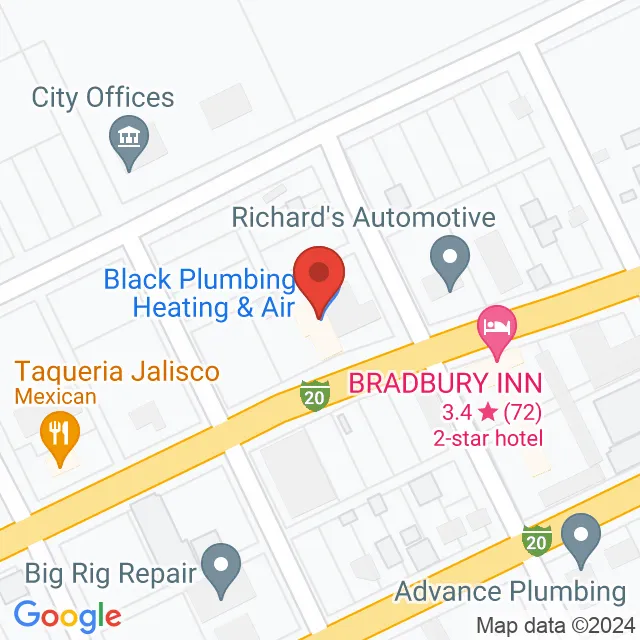
An older air conditioner can feel like a gamble you are winning. It still starts, the house still cools, and replacing it feels like paying for a problem that has not happened yet. The harder question for a San Angelo homeowner is when to stop betting: should you replace the system in spring, on your own schedule, or wait until it fails in the heat and make the decision under pressure? This post is about timing, not about whether any single system is worth keeping. It gives you the factors that make a planned air conditioning (AC) replacement different from an emergency one. Black Plumbing Heating & Air serves San Angelo from 501 N Main St and is open 24/7.
Why the calendar matters
The strongest argument for deciding early is simple. ENERGY STAR observes in its maintenance guidance that contractors get busy once summer and winter arrive, which is why it recommends checking the cooling system in the spring. The same logic applies to replacement. A system that fails in the middle of a hot spell puts you in a hurry, and a hurry narrows your choices. A system you replace on a quiet week leaves room to ask questions, compare options, and think.
That does not mean every old system needs to go this spring. It means the decision is better made while the house is still comfortable.
Signs it may be time to plan a replacement
No single symptom decides the question. Several together usually do.
- Repeated repair calls. Our hub page lists how often you have needed service in the past year as one of the factors in the repair-or-replace decision. One repair is a repair. A pattern is information.
- The system is old. Age is the other factor we weigh, along with the condition of the equipment.
- The house cools unevenly. Some rooms never catch up, or the system runs nearly all day.
- Rising electricity use with no change in habits. A system that works harder than it used to is telling you something.
- A refrigerant leak or a major component failure. These can make a repair a larger conversation, especially on older equipment.
- Noises or smells that keep returning. Intermittent problems often come back after a repair when the equipment is worn.
If you are not sure where your system stands, our post on how to know it is time for AC repair in San Angelo walks through the signs that separate an ordinary repair from a larger problem.
What a planned replacement lets you do
When you are not in a rush, you can use the time on questions that matter.
- Have the home looked at as a whole. A replacement is a chance to examine ductwork, airflow, and the electrical supply, not only the unit.
- Size the equipment to the house. Our hub page notes that we size a replacement to your home instead of swapping in whatever fits the existing ductwork. A system that is too large or too small for the space does not perform well, however new it is.
- Compare options calmly. You can ask what each choice means for comfort, noise, and operation before deciding.
- Plan around your schedule. You choose when the work happens, instead of working around a breakdown.
Why older San Angelo homes need extra attention
Many San Angelo homes went up in a single building boom, as our hub page explains, and census data cited there shows that close to 55 percent of the city’s housing units were built in 1979 or earlier. A house from that era may never have been designed around central air. Thin ductwork, limited attic space, or an electrical panel that was never meant to carry a modern air conditioning load can turn a straightforward swap into a larger project involving ducts and electrical capacity.
That is the main reason we encourage planning ahead. A project that involves several trades takes coordination, and coordination goes better when nothing is failing. It is also why we send technicians who look at more than the outdoor unit. The same visit can cover the ducts, the airflow, and the electrical supply that feeds the system.
Ducts matter as much as the unit
A new system connected to leaky ducts delivers less than it should. ENERGY STAR’s heating and cooling guidance notes that ducts moving air to and from a forced-air furnace, central air conditioner, or heat pump are often big energy wasters, and that sealing and insulating them can improve efficiency by as much as 20 percent. It recommends focusing first on ducts that run through the attic, crawlspace, unheated basement, or garage.
If you are replacing a system, ask what will be done about the ducts. The answer might be nothing, if they are sound. It should never be “we did not look.”
What to ask before you decide
- Why do you recommend replacement instead of repair? The answer should refer to the specific system: its age, its condition, its repair history.
- How did you size the new system? The answer should reference your home, not the old unit’s model number.
- What will you check in the ducts and electrical supply? This is where older homes surprise people.
- What are my alternatives? A technician should be willing to describe repair as an option if it is a reasonable one.
- What does the process look like from start to finish? You should know what happens and who is responsible at each step.
Our hub page makes a point we hold to: we lay out both the repair option and the replacement option, not just the one that favors a sale. That is the right standard to ask of any company.
What we do on a replacement visit
- A technician looks at the existing system and asks about its history.
- The home is assessed, including airflow, ducts, and electrical supply.
- You hear the findings, the options, and our recommendation, and you decide.
- The new system is installed and connected.
- It is started and tested, and the technician shows you how it operates.
Our air conditioning replacement service in San Angelo follows this order, and our air conditioning repair service is available if a repair is the better choice for your system right now.
If you decide to wait
Waiting is a legitimate choice when the system is working and the evidence is mixed. If you wait, make it an informed one.
- Book a maintenance visit in the spring so a technician can check the system and give you a clear picture of its condition. See our air conditioning maintenance service for details.
- Change the filter regularly. ENERGY STAR advises inspecting or changing it once a month, since a dirty filter can damage equipment and lead to early failure.
- Decide in advance what would change your mind: a second repair, a refrigerant leak, or a rising electric bill.
- Know who you will call if the system fails. We are open 24/7.
Having a plan turns a possible emergency into a decision you have already half made.
Whichever way you lean, the goal is the same: make the decision while you still have choices, with the facts about your own system in front of you, and not with a warm house and a short list of options.
How to prepare for a replacement assessment
A little preparation makes the visit more useful, and none of it requires technical knowledge.
- Gather what you know about the current system: roughly how old it is, who has serviced it, and what repairs it has had.
- Write down what bothers you about it: rooms that do not cool, noise, humidity, or the way the system cycles.
- Know where the thermostat, indoor unit, and outdoor unit are, and make sure the technician can reach them.
- Think about how you use the house. A home office, a converted garage, or a bedroom that always runs warm all matter when a system is sized.
- Write down your questions so you do not forget them once the technician is talking.
The more the technician knows about how the house actually behaves, the closer the recommendation will be to what you need.
Frequently asked questions
Is spring really better than waiting for the system to fail?
For most homeowners, yes, because you get time to compare options and schedule the work. A failure in the heat compresses all of that into a single day, and, as ENERGY STAR notes, contractors are busy once summer arrives.
Does an older system have to be replaced?
Not necessarily. Age is one factor, alongside condition, repair history, and how the system performs. A technician can look at all of them and tell you where your system stands.
Will the ductwork need work?
Sometimes. In older homes especially, the ducts and electrical supply are worth inspecting during a replacement. If they are sound, they stay as they are.
Plan your replacement
If you would like a technician to look at your system and tell you honestly where it stands, call our San Angelo office at (325) 659-3747 or visit 501 N Main St, San Angelo, TX 76903. Our San Angelo hub page shows everything else we handle for local homes. We are open 24/7.