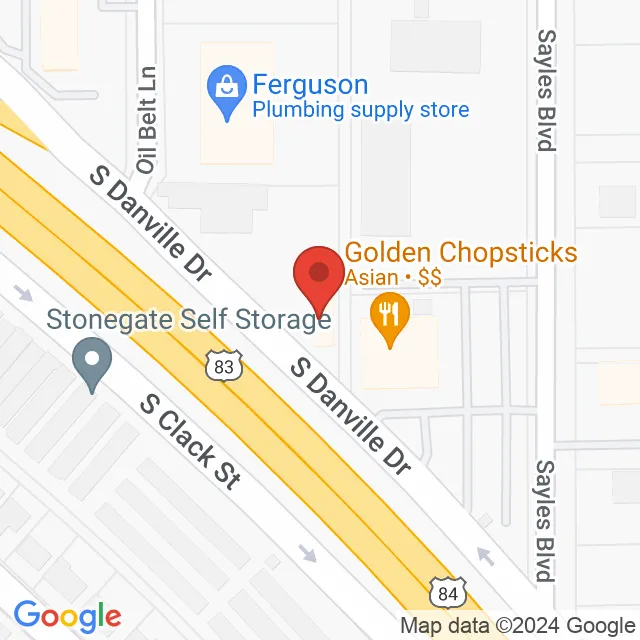
If you own a tankless water heater in Abilene, one question matters more than any other: does our hard water mean the unit needs descaling? With hard water, the honest answer is often yes, at some point. Black Plumbing Heating & Air has worked out of 4402 S Danville Dr in Abilene since 1994, and our crews are open 24/7. This post explains how scale forms inside a tankless heater, what you can notice from the kitchen, and what a maintenance visit actually covers.
Why hard water and tankless heaters do not mix well
The U.S. Geological Survey defines water hardness as the amount of dissolved calcium and magnesium in the water. You can read their plain-language explanation on the USGS page on the hardness of water. Their page also points to the everyday signs: soap that leaves a film, and glassware that never quite clears up. Hard water is standard in this part of Texas, so those minerals are in your pipes whether or not you notice the spots on your dishes.
Heat makes the problem worse. When water gets hot, dissolved minerals come out of solution and cling to whatever surface is hottest. In a tank heater that surface is the bottom of the tank, and the minerals settle as sediment. In a tankless heater the hottest surface is the heat exchanger, a set of narrow passages that a lot of water must pass through quickly. A thin crust on those passages does more harm than the same crust in a big tank, because there is very little room to spare.
That is why we treat scale as the main reason tankless units misbehave. A scaled heat exchanger transfers heat poorly, so the unit has to work harder to reach the temperature you set. It may shut down to protect itself, or it may throw an error code you have never seen before. Neither one means the heater is worn out. Very often it means the unit needs to be cleaned.
Signs your tankless heater is asking for descaling
Your heater rarely fails without warning. Watch for these changes:
- Water that runs warm, then cool, then warm again. Scale restricts flow through the heat exchanger and the unit struggles to hold its set temperature.
- A drop in hot water flow. If the shower used to be strong and now trickles, look at the inlet filter screen and the heat exchanger before blaming the faucet.
- Error codes that come and go. Many units display a code when water flow, temperature or ignition is off. A repeat code is a reason to call.
- Noises you have not heard before. Rumbling, popping or kettle-like sounds can point to mineral buildup.
- Hot water that takes longer to arrive. The delay can come from a unit that fires, shuts down and fires again.
- Hot water that looks cloudy or leaves flakes in an aerator. Check the aerator on a bathroom faucet. White or tan grit is a clue that minerals are moving through the system.
One caution: several of these symptoms also appear with a failing igniter, a venting problem or a gas supply issue. A wrong guess here can mean a descaling visit that does not fix anything. We diagnose first, then clean or repair. If your problem looks like a breakdown rather than a maintenance need, our guide on when you need water heater repair in Abilene covers the signs.
What a tankless maintenance visit covers
A visit is a set of specific checks, not a quick glance. Here is how we approach it.
We start with what you have noticed
Before we touch the unit, we ask about the symptoms above. When did the temperature swings start? Does it happen at one fixture or all of them? Do you remember seeing a code? Your description tells us where to look first.
We read the unit and check the basics
We look at the display, any stored codes, the gas or electric supply and the venting. A tankless heater that burns gas needs clean combustion and a clear path for exhaust. We confirm the vent is intact and nothing is blocking it. We also check the temperature setting, because a setting that is too high speeds up scaling.
We clean the inlet filter
Most tankless units have a small screen where water enters. Debris and mineral flakes collect there and cut flow. Cleaning the screen is quick, and it sometimes clears up a low-flow complaint by itself.
We flush the heat exchanger with a descaling solution
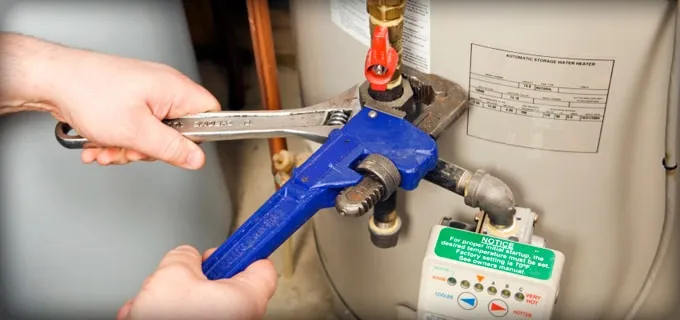
This is the heart of the visit. We connect a small pump and hoses to the unit’s service valves, then circulate a descaling solution through the heat exchanger so it dissolves the mineral layer. Afterward we flush the system with clean water and return the valves to normal. Units installed without service valves are harder to flush, and we will tell you if yours needs them added.
We test the unit and explain what we found
After the flush we run hot water at a few fixtures and watch the unit fire, hold temperature and shut off properly. Then we explain what we saw in plain language. If something else is wrong, such as a worn component, we describe your options and wait for your decision before we do anything further.
Why we keep the manufacturer’s maintenance steps in mind
Tankless heaters are not all built alike. The service valves, filter screens and approved cleaning solutions differ from one model to the next. When we descale a unit, we follow the maintenance steps in the manufacturer’s instructions for that model so the work does not create a new problem. That is one reason we do not recommend a do-it-yourself vinegar flush without reading the manual first. A flush done wrong can leave residue in the lines or damage seals.
Does a water softener or filter take the place of descaling?
Treating the water ahead of the heater reduces how much scale forms, and that is a sensible step for a home on hard water. A properly sized system for your household can protect the heater, the fixtures and the appliances that share the same supply. But treatment lowers the rate of buildup; it does not make the heater maintenance-free. The unit still needs an occasional look. If you want to explore treatment, our water filtration page describes the systems we size and install.
What Abilene customers say
The Abilene office is rated 4.8 out of 5 on Google across 1,350 reviews. One customer, Julie M., wrote in October 2026 about a plumbing call: “I wouldn’t hesitate to use Black Plumbing again.” That is the standard we hold ourselves to, whether the visit is a drain, a water heater or a flush on a tankless unit.
Tank or tankless: does this change how you decide?
If you are weighing a new heater, scale is worth putting on the scale. A tank unit tolerates mineral buildup better in some ways, but it collects sediment at the bottom and the element or burner has to work through it. A tankless unit gives you hot water on demand and takes little space, but it asks for regular cleaning in a hard-water city. Neither type is wrong for an Abilene home. The right choice depends on how much hot water your household uses at once, where the unit will go and whether you will keep up with maintenance. We service both types, and we will tell you plainly when a repair no longer makes sense on an old tank.
Related services in Abilene
- Tankless water heater repair for error codes, no-heat calls and temperature swings.
- Water heater installation and repair for tank and tankless units.
- Water filtration systems sized for your household.
- Our Abilene location page for the full list of services in the area.
Frequently asked questions about tankless water heater maintenance in Abilene
How do I know scale is the problem and not a failed part?
You often cannot tell from the kitchen. Temperature swings and low flow point to scale, but a bad igniter or a blocked vent can look the same. A technician reads the unit, checks the vent and the filter screen, and then decides whether a descaling flush or a repair is the right step.
Can I flush my tankless heater myself?
Some owners do, but the steps depend on the model. You need service valves, a pump and the right solution, and you have to follow the instructions for your specific unit. If your heater has no service valves, or you are unsure about the gas and venting side, it is safer to call a licensed plumber. Our Texas plumbing license is M-40900.
Does a water filter mean I can skip maintenance?
No. Treatment reduces scale but does not remove the need for an occasional check. The heater still has a filter screen, a vent and a burner or elements that deserve attention.
Is a noisy tankless heater always a sign of scale?
Not always. Popping and rumbling often point to mineral buildup, but noise can also come from airflow, ignition or a failing fan. Describe the sound when you call and we will plan the visit around it.
What should I tell you when I call about a tankless heater?
Give us the make and model, any error codes you have seen and when the symptoms started. With the model in hand, we can follow the manufacturer’s maintenance steps for that unit.
Schedule tankless water heater service in Abilene
If your hot water is running uneven or you cannot remember the last time anyone looked at your tankless unit, call our Abilene office at (325) 675-8391 or stop by 4402 S Danville Dr, Abilene, TX 79605. We are open 24/7.