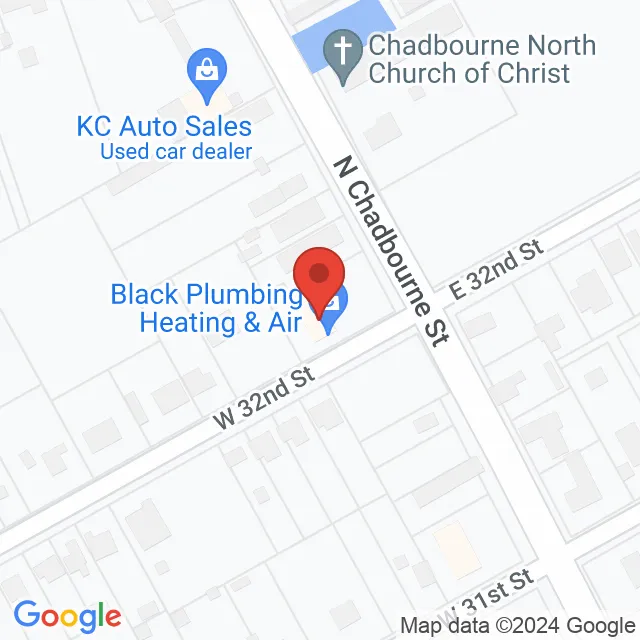
Summer is hard on a house, and plumbing is easier to look at before the heat arrives than during it. What does a pre-summer plumbing inspection in San Angelo, TX actually cover? This post answers that question item by item, so you know what a technician looks at, why each check matters, and what you can do yourself. Black Plumbing Heating & Air works from 501 N Main St, San Angelo, TX 76903, and our phones are answered 24/7.
What an inspection is, and what it is not

An inspection is a planned look at the parts of your plumbing that fail quietly. It is not a repair visit, though it often ends in a short list of things to fix. The aim is to find a worn part, a slow leak or a restriction while it is still a small job. A typical plumbing visit with us includes checking water pressure, looking at exposed pipe for corrosion, and running a camera through drain lines when the situation calls for it. Those three pieces form the backbone of the checklist below, and we add the fixtures and the water heater around them.
It also helps to say what the inspection does not do. It does not diagnose a problem you cannot see without further testing, and it does not replace emergency service when something is actively failing. If you already have water where it should not be, skip ahead to our guide on what to do when you find water damage and call us.
Check 1: Water pressure
Water pressure is the first measurement we take. A gauge on an outdoor hose connection or a similar point shows what the pipes in your house are experiencing. Pressure that is too high stresses fittings, supply lines, appliance connections and the water heater. Pressure that is too low can point to a restriction, a partly closed valve, corrosion inside the pipe or a leak.
Summer can expose weak spots. More showers, more laundry, more dishwasher cycles and guests all draw more water, and a system on the edge shows it. Knowing the number now gives you a baseline, and it tells the technician where to look next.
Check 2: Exposed pipe and its condition
We look at the pipe you can see: under sinks, in the water heater closet, in a garage or utility room, and in a crawlspace or attic where there is safe access. What we look for:
- Corrosion. Green or white crust on copper, rust on steel and flaking at joints are signs of a pipe or fitting that is wearing out.
- Moisture and staining. A damp patch, a ring on a cabinet floor or a water stain beneath a pipe shows a slow leak.
- Supply line condition. Braided hoses, flexible connectors and old rubber lines to toilets, faucets and appliances age and fail.
- Shutoff valves. A valve that is stiff, seized or weeping at the stem may not close in an emergency. We test the main and the fixture valves.
- Support and fittings. Loose or sagging pipe, and fittings that are discolored or crusty, point to stress.
San Angelo has many ranch-style homes built during the wool and mohair years. In those houses, galvanized steel supply lines were standard, and galvanized pipe corrodes from the inside, narrowing the passage and eventually rusting through at the joints. Checking water pressure and visible pipe together is how a technician can flag a galvanized line before it fails. Rusty water from one tap or a gradual drop in pressure are the clues you may notice first.
Check 3: Leaks you cannot see
Some leaks never leave a puddle. The U.S. Environmental Protection Agency says the average household’s leaks can account for more than 9,300 gallons of water wasted every year, and that about nine percent of homes have leaks that waste 50 gallons or more per day. An inspection includes simple tests for leaks that are not obvious:
- The meter test. With all water off in the house, a moving meter means water is escaping somewhere.
- The bill review. The EPA suggests comparing usage in a colder month such as January or February, and says a family of four using more than 12,000 gallons a month could have serious leaks.
- Toilet checks. A few drops of food coloring in the tank show a silent leak if color reaches the bowl. The EPA notes that worn flappers can leak thousands of gallons a year.
- Listening. A hiss or trickle in a quiet house suggests water escaping from a pressurized line.
If the tests point to a hidden leak, our technicians use acoustic and thermal equipment to find the source without opening every wall to look for it. See our leak detection and repair page for more, and our post on early signs of water leaks in San Angelo homes if you want to know what to watch for between visits.
Check 4: Drains and the main line
Drains are easy to ignore until they back up. We run water in each fixture and watch how it drains, and listen for gurgling, which can mean a venting problem or a partial blockage further down the line. A slow drain at one fixture is usually a local clog. Slow drains at several fixtures at once often point to a problem in the main line.
When the situation calls for it, we run a camera through the drain line. That lets us see what is going on: a buildup of grease or debris, a sag in the line, a crack, or roots that have found their way into an older pipe. Slow kitchen sinks and backed-up floor drains in older lines usually trace to one of those causes, and a camera shows which. Our drain services page covers clearing and follow-up.
Summer matters here because heavy household use, guests and extra laundry load the drain system. A line that is already narrowed will show it first.
Check 5: The water heater
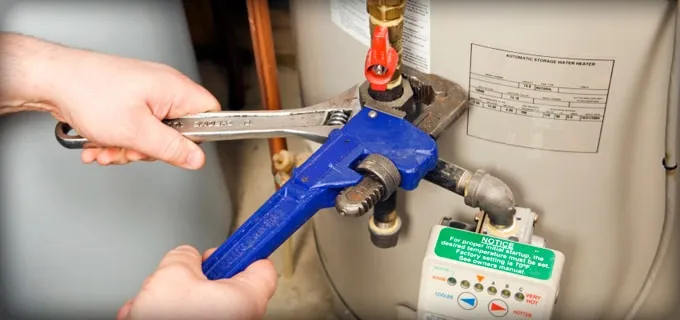
A water heater works every day, which is why it is on the list. We look at the tank for rust, moisture at the base and corrosion at the connections. We check the temperature and pressure relief valve and the supply and shutoff connections, and we listen for the rumbling or popping that suggests sediment buildup. Sediment, a failed heating element or a unit that cannot keep up with the household are all reasons to call. If the water heater is tankless, we look at the connections, the venting and signs of scale. Our water heater services page explains repair and replacement.
Check 6: Fixtures and appliance connections
Small parts cause many plumbing calls. During a visit we look at:
- Faucets for drips and weak flow.
- Toilets for running, rocking or a loose base.
- Showers and tubs for slow drains, caulk gaps and stem leaks.
- Washing machine hoses and shutoff valves.
- Dishwasher and ice maker supply lines.
These fixes are small, and each one prevents a larger problem. A cracked washing machine hose, for example, can release a lot of water in a short time.
What customers say about being walked through the findings
An inspection is only as useful as the explanation that follows. One San Angelo customer, Elaine W., wrote in October 2026: “The repairs were explained well, my questions answered, and the work carried out conscientiously.” That is the standard we aim for: you should leave knowing what was found, what it means, and what your options are.
What you can do before the technician arrives
- Clear the area under sinks and around the water heater so the technician can see the pipes.
- Make a note of problems: slow drains, noises, low pressure, spots on walls or ceilings.
- Find your main shutoff and check that it turns.
- Note any rusty or discolored water and where it appears.
- Gather past service records if you have them.
Pairing the plumbing check with your cooling system
The plumbing check and the cooling check can be booked in the same season. If you are preparing for summer, our air conditioning (AC) maintenance in San Angelo visits cover the other half of the home. Both trades are served from one office, so it is easy to arrange them together. For the full range of plumbing work, see plumbing repairs and maintenance in San Angelo.
Frequently asked questions about plumbing inspections in San Angelo
Do I need an inspection if nothing seems wrong?
Plumbing problems often give no warning until they become serious. An inspection looks at pressure, pipe condition, drains and the water heater, which is where quiet failures start. If everything checks out, you have peace of mind and a baseline.
Will the technician fix problems during the visit?
Small items, such as a worn part, can often be handled right away. For larger findings we explain what we saw and the options so you can decide what to do and when.
Do I need to be home?
Someone should be there to let the technician in and to hear what was found. Tell us when you call if access is an issue and we can talk through it.
Does an inspection find leaks inside walls?
It can show signs of one, such as a moving meter or damp spots. If there are signs of a hidden leak, we follow up with detection equipment to find the source.
Book a plumbing inspection with Black Plumbing Heating & Air
To schedule an inspection before the heat arrives, call (325) 659-3747 or visit 501 N Main St, San Angelo, TX 76903. We hold Texas plumbing license M-40900, have served San Angelo since 1994, and our office is rated 4.8 out of 5 on Google. Browse everything we do on the San Angelo page.