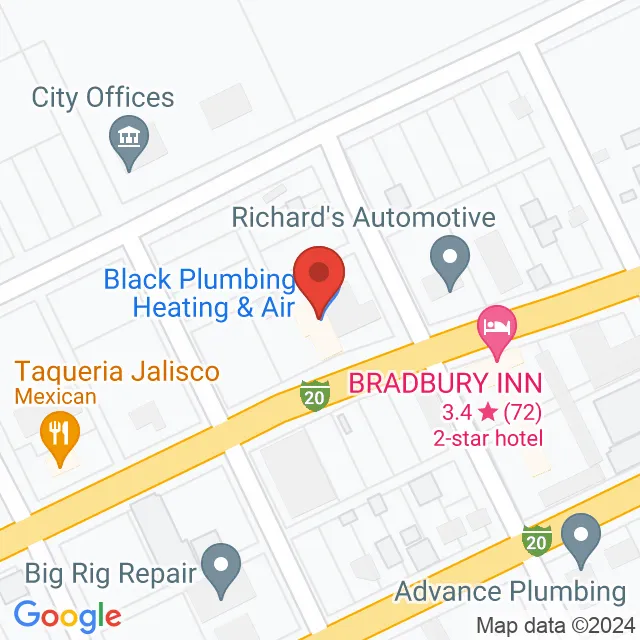
A technician walks around your system, says a few words you do not follow, and tells you what needs to happen. How do you know whether you just heard a real diagnosis? For San Angelo homeowners choosing an HVAC company, this is the question that matters most, and it is not answered by a logo or a phone number. This post describes what a good diagnosis sounds like, which questions bring one out, and which answers should make you pause. Black Plumbing Heating & Air works from 501 N Main St in San Angelo, holds Texas HVAC license TACLA145786C, and is open 24/7.
A diagnosis has a shape
A real diagnosis answers four things in order: what is wrong, how it was found, what the options are, and what each option changes. If any of those is missing, you have an opinion, not a diagnosis. That is not a criticism of technicians. Heating and cooling equipment is complicated, and good ones simplify it for you without hiding the reasoning.
Compare these two example statements. “Your system is shot.” And: “The condenser fan motor is not starting, which is why the outdoor unit is silent. The capacitor tests weak, which is a smaller repair, but the motor itself shows wear, so here are the two paths.” The second one lets you ask questions and make a decision. The first only asks you to trust.
What the technician should check before saying anything
The ENERGY STAR maintenance checklist is a useful measuring stick, because it lists what a typical check-up should include. For a cooling system it names the thermostat settings, electrical connections and motor voltage and current, moving parts, the condensate drain, controls and the starting cycle, evaporator and condenser coils, refrigerant level, and blower components. For heating it adds gas connections, gas pressure, burner combustion, and the heat exchanger.
A repair visit is narrower than a maintenance visit, but it should still touch the parts that relate to your symptom. If your cooling is weak and nobody has looked at the filter, the coils, the airflow, or the refrigerant level, ask why. A diagnosis made without testing is a guess.
Questions that bring out a real answer
- What did you test, and what did you find? A technician should name the measurement or the observation, not only the conclusion.
- Could anything else cause the same symptom? Honest technicians can describe what they ruled out.
- What happens if I do nothing for now? You should hear the realistic consequence, whether that is a slow decline or a safety concern.
- What are my options? Repair, a larger repair, or replacement are different paths, and you are entitled to hear each one described.
- Is this repair likely to hold, or is something else wearing out? The answer tells you whether you are fixing a part or a pattern.
Our San Angelo hub page describes the same principle in the context of repair versus replacement: age, the repair cost against a new unit, and how often you have called in the past year all factor in, and we lay out both paths instead of only the one that favors a sale. That is the kind of answer you should expect from any company.
Refrigerant is a place to pay attention
Refrigerant questions are where vague answers do the most damage. A cooling system is a sealed loop. If the level is low, there is normally a leak, and topping off without finding it only delays the problem. The U.S. Environmental Protection Agency regulates this work under Section 608 of the Clean Air Act, and its page on managing refrigerant lists venting, service practices, leak repair, and technician certification among the topics the rules address.
When refrigerant is the issue, ask where the leak is and what happens to the repair. A company that treats refrigerant as a routine add-on is not being straight with you about the cause.
Answers that should make you pause
- The diagnosis arrives within moments, with no testing.
- Replacement is offered as the only option on a system with no repair history.
- The technician cannot explain the problem in words you understand, after being asked twice.
- You are asked to decide immediately, with no room to think.
- Safety-related findings, such as a cracked heat exchanger or a failing electrical connection, are mentioned with no explanation of the risk.
- The company cannot say who is responsible for the work, or will not give a license number.
Pressure to decide on the spot is a poor basis for any repair, so give yourself permission to ask for a moment. A clear diagnosis will still be clear after you have thought about it.
The last point is easy to check. We hold Texas HVAC license TACLA145786C, and you can ask any company for its number.
Safety findings are different
Most heating and cooling findings are comfort and efficiency issues, and you can take your time. A few are not. The ENERGY STAR checklist says improperly operating gas connections are a fire hazard, and that a dirty burner or cracked heat exchanger causes improper burner operation, making equipment less safe and efficient. Faulty electrical connections, it adds, can cause unsafe operation. If a technician raises one of these, you should hear exactly what was found and why it matters. Ask to be shown. A technician who is confident in a finding can point at it.
What our visits look like
- Questions first. We ask what the system has been doing and when it started.
- Testing. The thermostat, electrical connections, airflow, and the relevant refrigerant or combustion components are checked.
- Plain explanation. You hear what was found, how it was found, and why it matters.
- Options. The repair choices and, where it applies, replacement, are laid out so the decision is yours.
- Repair and confirmation. After the work, the system is run through its cycle to confirm it does what it should.
You can read more about this work on our pages for HVAC repairs and installation and air conditioning (AC) repair in San Angelo.
How to check us out before you call
Read what other customers have written, and read it for specifics, not stars. Google lists our San Angelo office as rated 4.8 out of 5, based on 678 reviews, so there is plenty to read. Look for descriptions of what the problem was, what the technician explained, and how the visit went. Those details tell you more about how a company communicates than any summary we could write.
Homes in San Angelo raise their own questions
Our hub page points out that many San Angelo houses were built before central air was common, and that census data places close to 55 percent of local housing units in 1979 or earlier. In a house like that, a good diagnosis often includes the ducts, the attic space, and the electrical supply, not only the equipment. A technician who looks only at the unit outside can miss the reason it struggles.
If you own or manage a business, the questions are the same but the equipment is different, with rooftop units and different schedules. Our post on choosing commercial HVAC services in San Angelo covers that side. For a wider view of the heating, cooling, and air quality work we do, see our post on matching a symptom to the right HVAC service in San Angelo.
Frequently asked questions
Should I get a second opinion?
You may. If a diagnosis leaves you with unanswered questions, a second visit is reasonable, especially before a large repair or a replacement. Share what the first technician found so the second one can test it rather than start from scratch.
What if I do not understand the explanation?
Ask again, and ask for it in plainer terms. A technician who knows the system can describe a failed part by what it does and how it was tested. If you are still lost after two tries, treat that as information about the company.
Does a repair always mean replacing a part?
No. Some repairs are adjustments, cleanings, or reconnections. Ask what exactly will be done and whether any part is being replaced, and why.
How do I know whether to repair or replace?
Age, the condition of the equipment, repair history, and how the system performs all matter. Ask for both paths to be described so you can compare them side by side, and take the time you need to decide when there is no safety concern.
A short checklist for your next call
- Ask for the license number and who is responsible for the work.
- Ask what was tested and what was found.
- Ask what else could cause the same symptom.
- Ask for the options and what each one changes.
- Ask to be shown any safety-related finding.
- Take the time you need to decide, unless there is a safety reason not to.
Talk to our San Angelo team
If you would like a diagnosis you can follow, call us at (325) 659-3747 or visit 501 N Main St, San Angelo, TX 76903. The San Angelo hub page lists everything we handle. We are open 24/7.