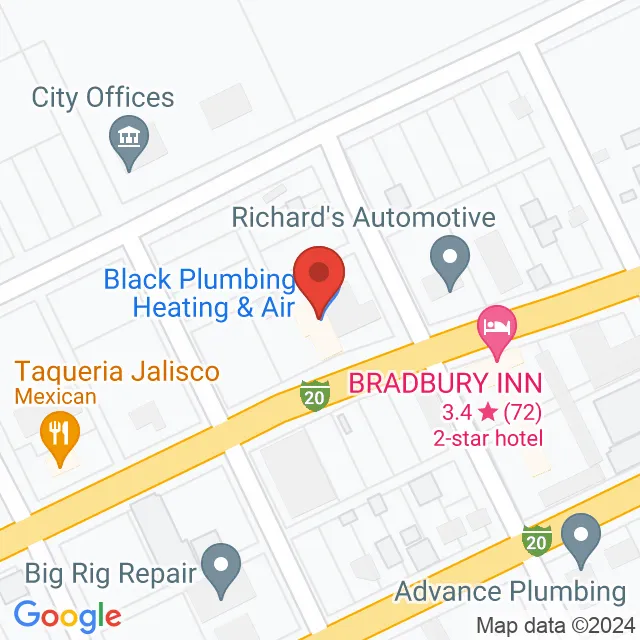
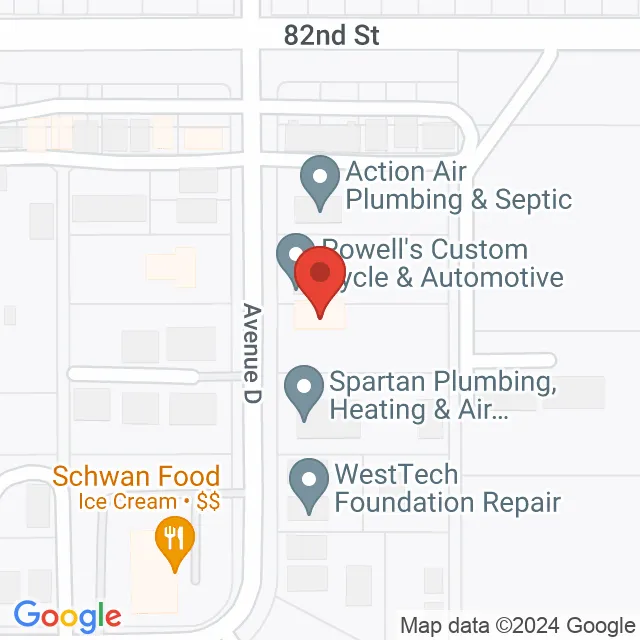
Your air conditioning (AC) stops working at 9 p.m. Is this an emergency call tonight, or can it wait for morning? The answer depends less on the outdoor temperature than on who is in the house, what the system is doing, and whether a safety or water-damage risk is involved. This post gives Lubbock homeowners a simple way to triage an AC failure, a few safe things to try first, and the situations where you should not wait. Black Plumbing’s Lubbock office is at 8215 Avenue D, and we take calls 24/7.
Ask who is in the house before you ask what broke
The National Weather Service’s heat safety page states that heat can be very taxing on the body, that it can lead to heat-related illness or worsen existing health conditions, and that everyone can be vulnerable. It names groups that are especially at risk: young children and infants, older adults (particularly those with existing disease, those on certain medications, those living alone, or those with limited mobility), and people with chronic medical conditions. It also advises checking in on friends and relatives in those groups, especially if they do not have air conditioning.
That shapes the first question. If anyone in your home falls into one of those groups, an AC failure is an emergency on the first warm evening, and you should call us right away. If everyone is healthy and the house is still comfortable, the situation is different. The hotter the house gets and the longer it stays that way, the more the risk grows.
A triage guide: call now, call today, or wait for morning
Call now
- Someone in the house is an infant, an older adult, or has a medical condition, and the home is getting warm.
- Anyone shows signs of heat illness, such as dizziness, nausea, confusion, or very hot, dry skin. Treat that as a medical emergency first and call 911 if it is serious.
- You smell burning, see smoke, or hear a loud electrical buzz from the unit or the air handler. Turn off the system at the thermostat and the breaker, and call.
- Water is leaking from the air handler, or a ceiling or wall is wet. Moisture damage grows by the hour.
- The breaker trips every time you reset it. Do not keep resetting it.
Call today
- The system runs but the house is warming up and falling behind the thermostat.
- Air from the vents is warm, or only mildly cool.
- The outdoor unit does not start, though the indoor fan runs.
- You see ice on the refrigerant line or the indoor coil.
- The system turns on and off in short bursts.
Safe to wait for morning, in most cases
- The house is still comfortable, everyone is healthy, and the problem is a steady, faint noise.
- The system works but a single room is a little warm.
- The thermostat display is blank but the breaker is on. Check the batteries first.
These are guidelines, not rules. If you are unsure, call and describe what you see. We would rather have a short phone call about a thermostat battery than have you sit in a hot house wondering.
Safe things to check before you call
A few quick checks sometimes solve the problem. They are also useful to tell the dispatcher, because they narrow the cause.
- Thermostat. Is it set to cool, with the temperature below the room temperature? Does it have fresh batteries, if it uses them?
- Filter. ENERGY STAR advises checking the filter monthly in heavy-use months. A filter clogged with dust restricts airflow and can lead to a frozen coil.
- Breakers. Check both the indoor and outdoor unit breakers. Reset once at most. If it trips again, stop.
- Outdoor unit. Make sure the area around it is clear of leaves, debris, and anything blocking airflow. Do not open it or hose it down while it runs.
- Vents and returns. Make sure registers are open and furniture is not blocking returns.
- Condensate drain. A clogged drain can trip a safety switch that shuts the system down. ENERGY STAR’s maintenance checklist includes checking the condensate drain because a plugged one can cause water damage and affect indoor humidity.
If none of that works, stop and call. Do not remove panels, handle refrigerant lines, or bypass safety switches. Those jobs belong to a licensed technician, and doing them yourself can cause injury or turn a small repair into a large one.
What to do in the house while you wait
- Close blinds and curtains on sun-facing windows to slow the heat gain.
- Run ceiling fans in occupied rooms. Fans cool people, not rooms, so turn them off when you leave.
- Move to the coolest room, usually one on the lowest floor and away from afternoon sun.
- Drink water regularly, and avoid heavy cooking and appliance use that adds heat.
- Check on neighbors and relatives who are at higher risk, as the National Weather Service suggests.
- Never leave a child, a disabled person, or a pet in a parked car to cool off. The same NWS page stresses that it is never safe.
When the outdoor temperature changes the answer
The thermostat setting you can live with depends on the weather and on how your house holds heat. A well-insulated home with shaded windows can stay tolerable for hours after the system fails. A house with big west-facing glass and an upstairs bedroom can become uncomfortable much sooner. You know your house better than anyone, so use your own experience as part of the triage.
Pay attention to the trend, not just the number. If the indoor temperature climbs a little every hour and the afternoon sun is still ahead, waiting until morning is a bigger bet than it looks. If it is evening and the house is cooling slowly after sunset, the picture may be better. When in doubt, call and describe the situation. A dispatcher can help you weigh it, and a call is the quickest way to find out your options.
How we handle an emergency AC call
When you call our Lubbock office, the dispatcher asks about who is in the house, what the system is doing, and what you have already tried. That tells us how urgent the call is and what to bring. You get a courtesy call before we arrive.
On site, the technician follows the same steps each time.
- Check the thermostat, the filter, the electrical supply, and the safety switches.
- Test the capacitor, contactor, and motors at the outdoor unit and the blower at the air handler.
- Check airflow, coil condition, the condensate drain, and refrigerant-side symptoms.
- Explain what failed and what the options are.
- Get your approval on the work before starting.
- Repair, then run the system through a cooling cycle to confirm it holds temperature.
For details on this service, see our page on emergency AC repair in Lubbock. If your problem is less urgent, our AC repair services page covers scheduled visits.
Prevent the next emergency
The best emergency is the one that does not happen. The ENERGY STAR maintenance checklist recommends a yearly tune-up and notes that contractors get busy once summer and winter arrive, so it is best to check the cooling system in the spring. A typical visit includes tightening electrical connections, lubricating moving parts, cleaning the evaporator and condenser coils, and checking the condensate drain and controls.
Dirty coils reduce the system’s ability to cool and make it run longer, which raises energy use and wear. Loose electrical connections can cause unsafe operation and shorten the life of major components. Those are common causes of breakdowns on the hottest days. Our AC maintenance in Lubbock page explains what we check, and you can see all our services on the Lubbock hub.
What Lubbock customers say
Carlye H., a Lubbock customer, wrote in September 2026 that the team “came out to help me with my plumbing needs on a Saturday,” and that they call before and confirm the date and time. Wes R., another Lubbock customer, wrote in October 2026: “I wasn’t expecting Black Plumbing until the following week, but they sent a tech out and he was done in well under 20 minutes.” Both reviews are about plumbing, but the habits they describe, the call ahead and the quick visit, are how we run HVAC calls too.
Frequently asked questions about emergency AC repair in Lubbock
Is a warm house always an emergency?
No, but it can become one. If anyone in the home is more vulnerable to heat, treat it as urgent from the start. For healthy adults in a house that is still tolerable, a morning visit may be reasonable.
Why does my AC run but not cool?
Common causes are a dirty filter, a frozen coil, a failed capacitor, a refrigerant problem, or a blocked outdoor unit. A technician can tell which by testing the system. Running a frozen unit can damage the compressor, so turn it off and let it thaw if you see ice.
Should I keep resetting the breaker?
No. A breaker that trips repeatedly is warning you about an electrical fault or a failing component. Reset it once, and if it trips again, leave it off and call.
Do you work nights and weekends?
Yes. Black Plumbing is open 24/7, including nights and weekends.
Call our Lubbock team now
If your AC is down, call (806) 787-2200. We are at 8215 Avenue D, Lubbock, TX 79404, and Black Plumbing holds Texas HVAC license TACLA145786C. Tell us who is in the house and what the system is doing, and we will help you decide the next step.