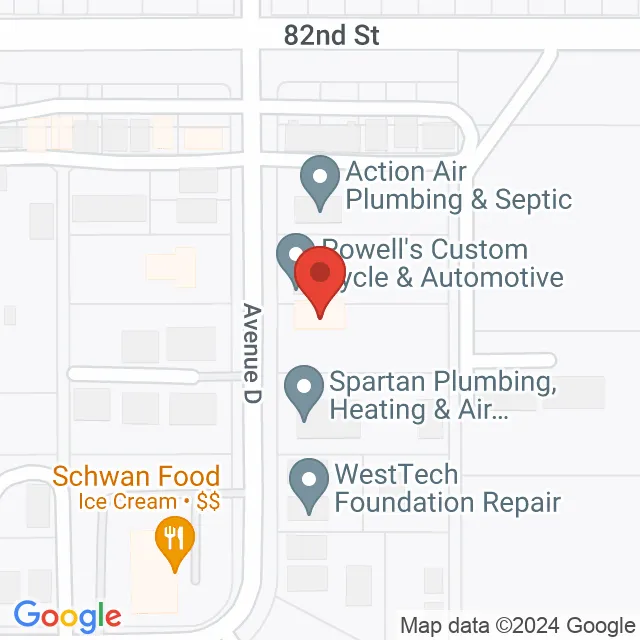
Once you know there is a slab leak, the next question is what the repair looks like. Will the crew break up your floor? Can the line be rerouted instead? When does a repipe make more sense than another patch? This post explains the repair options for a leak under a Lubbock home’s concrete slab, how we choose among them, and what to expect during the work. It assumes you already suspect or have confirmed a leak. If you are still trying to confirm one, start with our post on leak detection in Lubbock. Black Plumbing’s Lubbock office is at 8215 Avenue D, and we are open 24/7.
What a slab leak is, and why it is common here
A slab leak is a leak in a pipe that runs under or inside the concrete foundation of a house. Our Lubbock plumbing hub notes that lines run under the concrete in most Lubbock homes, and that a break there can undermine the foundation. That is why this repair matters more than a leak in an open wall.
The same hub explains one local cause. The expansive clay in the area’s playa basins swells after rain and shrinks through drought, which flexes buried joints and works pipe connections loose. Mineral-heavy water adds to the wear. The hub notes that water carrying a heavy dissolved-solids load leaves scale and deposits that narrow pipes and stress fittings over time. A slab leak is often the end result of years of those forces acting together.
Signs that a leak may be under the slab
- A water bill that rises with no change in use.
- A water meter that moves when every fixture is off.
- The sound of running water in a quiet house, sometimes heard through the floor.
- A warm spot on the floor, which can point to a hot-water line.
- Damp carpet, lifted tile or wood flooring, or a musty smell with no clear source.
- Low water pressure at several fixtures at once.
- New cracks in floors, walls, or around doors.
No single sign proves a slab leak. A technician confirms the loss and then traces the leak with electronic and acoustic equipment. That step matters, because the repair choice depends on exactly where the line is failing and how much of the system is in the same condition.
Why the diagnosis comes before the repair
We pinpoint the leak first, then repair or reroute with minimal demolition. That is how we work, and it is the reason we spend time on diagnosis. If we know exactly where the water is escaping, we can open only the section that needs it. If we guess, we may break concrete in the wrong place and still have the leak.
The diagnosis also tells us whether this is a single failure or a sign of wider wear. A single pinhole in a line that is otherwise healthy is a different problem from a leak in a line that has multiple weak spots. The first suggests a localized repair. The second suggests that fixing one spot will only move the problem to the next one.
Your repair options
Option 1: repair the pipe where it is
With the leak pinpointed, we open the slab directly above it, expose the pipe, cut out the damaged section, and replace it. Then we pressure test, close the concrete, and restore the surface. This is the most direct fix when the failure is limited to one spot and the surrounding pipe is in good condition.
It works best when the leak is accessible, the rest of the line is sound, and the floor above can be restored without major disruption. It is less suitable when the pipe runs beneath a feature that is hard to remove, or when the line shows wear along its length.
Option 2: reroute the line
Rerouting abandons the leaking line under the slab and runs a new line through walls, the attic, or another accessible path to the same fixtures. The old line is capped. The slab stays intact.
This option fits when the leaking pipe is in a bad spot, such as under a cabinet or a finished floor, when the line has failed more than once, or when the pipe beneath the slab is in poor condition overall. Repair or reroute, with as little demolition as possible, are the two main ways we fix a slab leak. The tradeoff is that the new line is visible in walls or the attic, and some wall repair may follow.
Option 3: repipe part or all of the system
When corrosion, scale, or ground movement has aged out the whole system, spot repairs stop paying off. We repipe with modern materials built to handle the region’s mineral-heavy water. A repipe is a bigger decision, and we walk you through it before any work starts.
How to choose among them
We use a few questions to guide the decision, and you can use them too.
- How many failures has the system had? One leak is a repair. Repeated leaks suggest a reroute or repipe.
- What is the condition of the pipe around the leak? A technician can often judge this from the section we expose or from the symptoms.
- What is above the leak? Tile, hardwood, built-ins, and finished surfaces affect how disruptive a direct repair would be.
- How old is the plumbing? Older systems are more likely to have more weak spots.
- What are your plans for the house? If you plan to stay, a more complete fix may make sense. If you plan to sell, you may want the most thorough repair available.
We lay out the options in plain terms and tell you what we would do and why. The choice is yours.
What happens during the repair
- We shut off water to the affected line and protect the area with floor covering.
- We mark the pinpointed location and open the surface carefully.
- We expose the pipe, make the repair or the reroute, and test it under pressure.
- We restore the opening and clean up the work area.
- We turn the water back on, check all fixtures, and confirm the meter holds still.
- We explain what we did and what to watch for afterward.
You will hear a lot of noise during concrete work, and there will be dust. We contain the work area as much as we can. If your home needs drying afterward, we tell you what we saw.
Moisture, mold, and why speed matters
Water under a slab does not stay put. It can travel through soil, wick up into flooring, and add to the movement of the ground around the foundation. Above the slab, moisture is the ingredient mold needs. The U.S. Environmental Protection Agency’s guidance, Mold and Your Home, says the key to mold control is moisture control. If you see damp flooring or smell mustiness, tell us, because we may recommend drying and checking affected materials after the repair.
The EPA’s WaterSense program also reports that the average family can waste 9,400 gallons of water a year from household leaks, according to its statistics and facts page. A slab leak can run unseen for a long time, so the waste can add up.
What Lubbock customers say
Wes R., a Lubbock customer, wrote in October 2026: “I wasn’t expecting Black Plumbing until the following week, but they sent a tech out and he was done in well under 20 minutes.” Not every leak is a slab leak, but the response matters on any leak. Jonah S., another Lubbock customer, said the team has handled everything from a sewer line replacement to a simple drain clog, and is “always helpful and happy to help explain what the situation is and potential options for what work needs to be done.”
Frequently asked questions about slab leak repair in Lubbock
Do you have to break my floor to fix a slab leak?
Not always. When we can reroute the line through walls or the attic, the slab stays intact. When a direct repair is the better answer, we open only the section above the pinpointed leak.
Can a slab leak damage my foundation?
It can, because water escaping under a house adds to ground movement. Repair promptly, and tell us if you see new cracks or movement.
How do you find a slab leak without tearing things apart?
We start by confirming the system is losing water, then use electronic and acoustic equipment to trace it to a point. That lets us open only what we need.
Should I turn off the water if I suspect a slab leak?
If you hear water running, see it spreading, or cannot reach us right away, shutting off the main valve stops the loss. Then call us and tell us what you found.
Schedule a slab leak diagnosis in Lubbock
If you suspect a slab leak, call us at (806) 787-2200. We are at 8215 Avenue D, Lubbock, TX 79404, and we answer 24/7. Learn more about the service on our leak detection and repair in Lubbock page, or see everything we offer on the Lubbock hub.