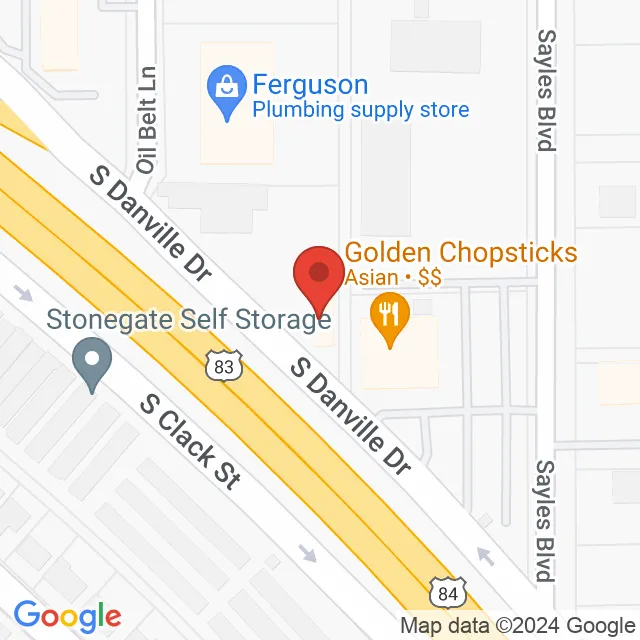
Some duct jobs are a Saturday morning with a vacuum. Others need a technician, a camera and a collection system that a household vacuum cannot match. The trick is knowing which is which. This post sorts the common air duct tasks into three groups: what you can do safely on your own, what to hand to a professional, and what turns out not to be a cleaning job at all. Black Plumbing Heating & Air has been family-owned in Abilene since 1994, with our main office at 4402 S Danville Dr, Abilene, TX 79605, and we take calls 24/7.
Where the line sits between DIY and professional work
The line is access and consequences. Anything you can reach from the room with the system switched off, and that cannot damage the equipment if you do it slightly wrong, is reasonable to do yourself. Anything that involves getting inside the ductwork, opening equipment cabinets, or moving contaminants out of the house is a different category.
The U.S. Environmental Protection Agency explains why the second category matters. In its guidance on duct cleaning, it says a service provider who does not follow proper procedures can cause indoor air problems. An inadequate vacuum collection system can release more dust, dirt and other contaminants than if the ducts had been left alone, and careless work can damage the ducts or the heating and cooling system. If a trained crew with the right equipment can get this wrong, a homeowner with a shop vacuum and a long brush is at greater risk of the same outcome.
Jobs you can do yourself
These tasks are low risk and do more for the day-to-day condition of your system than many people expect.
- Change or clean the filter. This is the single most useful maintenance task. A restricted filter slows airflow through the entire system. Use the size printed on the frame of the old one, and check the arrow so the new filter goes in facing the right way.
- Vacuum the return grilles. The EPA notes it is normal for return registers to get dusty, and that the registers can easily be vacuumed or removed and cleaned.
- Wash the supply registers. Take them off, wash them, dry them and put them back. Watch for a loose duct boot behind the register as you do.
- Clear the area. Keep furniture, curtains and rugs off the registers so air can leave the duct.
- Vacuum what you can reach inside the register opening. A hose attachment can pick up loose debris just past the grille. Stop there. Pushing a brush deeper can knock a duct loose.
- Look. A flashlight at each register tells you whether a professional is needed.
If you do these jobs regularly, the system stays in better shape and the question of a full duct cleaning rarely comes up.
Jobs to leave to a professional
Some work looks simple from the outside and goes wrong in the middle.
- Cleaning the inside of the main trunk and branch ducts. The reasonable tools are powerful negative-pressure collection equipment and agitation tools sized for each duct. A household vacuum pushes fine particles back through the filter bag and into the room.
- Cleaning the blower and indoor coil. This requires opening the air handler or furnace cabinet. Blower wheels are balanced, coils have delicate fins, and electrical components sit nearby.
- Anything in an attic or crawl space. Attic work is hard on a person and hard on flexible duct. A boot that is stepped on or a duct that is kinked can reduce airflow for a long time before anyone notices.
- Dealing with suspected mold. A substance that looks like mold can only be confirmed by an expert and may need laboratory analysis, according to the EPA. The EPA also says the conditions that caused the mold must be corrected or it will recur.
- Removing a pest infestation from ducts. The EPA lists vermin in the ducts as a reason to consider cleaning. That involves containment and sanitation steps.
- Repairing or replacing damaged duct. If a section is crushed, torn or wet insulation has failed, cleaning is not the answer. The EPA says wet or moldy insulated duct cannot be effectively cleaned and should be replaced.
For anything on that list, our air conditioning and HVAC repair team can inspect the system and explain what the problem is before any work begins.
Jobs that people try to clean but should seal
A common mistake is treating a leaky duct as a dirty duct. ENERGY STAR reports that in a typical house, about 20 to 30 percent of the air moving through a duct system is lost to leaks, holes and poorly connected ducts, and notes that many homeowners work with a professional contractor on duct improvement projects, while some seal accessible ducts themselves with mastic or metal tape (and never duct tape) (ENERGY STAR duct sealing guidance). If your home has hot and cold rooms, high summer and winter utility bills, or a system that runs constantly, the cause is more likely leakage or a poor connection than dust.
You can run a simple check in an accessible attic or crawl space. With the system running, look at the joints where trunk lines meet branch lines and at the connections to the supply boxes. A joint that has pulled apart, tape that has dried and peeled, or a duct that is visibly disconnected is not something a cleaning will solve. Duct repair needs the right materials, and ENERGY STAR specifically says not to use duct tape because it does not last. A connection has to stay sealed through many heating and cooling cycles.
What the pro does that a vacuum does not
When a duct cleaning is justified, the difference between the two approaches comes down to four things.
- Containment. A professional keeps the system under negative pressure so debris moves toward the collection unit and not into the living space.
- Reach. Cleaning tools designed for duct work can get through bends and long runs where a household attachment cannot.
- Inspection. A technician looks at the duct condition while the work is under way, which is when loose connections and hidden damage tend to show up.
- Repair and follow-up. Any damage can be dealt with in the same visit, and the system can be checked for proper operation when the work is complete.
Because cleaning has to be done correctly to help, the EPA suggests asking a provider to show you any mold they say they found, since many parts of a system cannot be seen without special tools. A good provider will have no trouble with that request.
Is the cleaning worth doing at all?
The EPA is direct about the limits. Duct cleaning has never been shown to actually prevent health problems, studies do not conclusively show that particle levels in homes go down after cleaning, and much of the dirt in a duct stays stuck to the duct surface. The EPA says there is no evidence that a light amount of household dust in ducts poses a health risk. It recommends cleaning as needed, not on a schedule.
That is why the DIY versus professional question usually has a third answer: do the easy maintenance yourself, inspect the rest, and bring in a professional if the inspection finds visible mold, pests, heavy debris or a connection problem. If your concern is allergies, our indoor air quality solutions go beyond the ducts, because the EPA points out that pollutants from cooking, cleaning and other household activity can cause more exposure than dirty ducts.
A quick decision guide
- Dust on a return grille, nothing else wrong: vacuum or wash it yourself.
- Weak airflow from one room: check the filter, the register and the visible duct, then call if the cause is not obvious.
- Musty smell when the system starts: call us. The cause may be moisture, and the fix may not be a cleaning.
- Visible mold, droppings or heavy debris inside the duct: bring in a professional.
- High utility bills with uneven rooms: have the ducts checked for leaks and poor connections.
- After a remodel with heavy drywall dust: ask for an inspection to see whether the dust actually reached the ducts.
Frequently asked questions about DIY and professional duct cleaning
Can I clean my own air ducts with a shop vacuum?
You can vacuum the register openings and the first few inches of duct. Beyond that, a shop vacuum without proper collection and filtration can blow fine dust into the house, and reaching further risks knocking ducts loose. Leave anything deeper to a technician.
Do I need to clean the ducts when I change the filter?
No. Changing the filter on schedule is how you keep the ducts from getting heavily loaded in the first place. Treat the filter change as the maintenance task and the duct cleaning as a repair for a specific problem.
How do I know if a duct cleaning was done properly?
Ask what was found, ask to see it, and ask how dust was contained. Afterward, the registers and visible duct should be clean, the access openings should be closed up properly, and the system should run as it did before. If airflow drops or the system gets louder after a cleaning, call the contractor back.
Who should I call if I am not sure which category my problem is in?
Call our Abilene office. A technician can look at the system and tell you whether the problem is dust, airflow, a damaged duct or something else, and you decide what to do next.
Talk to a technician
If you are weighing a DIY cleaning against a professional visit, start with a plain inspection. Call us at (325) 675-8391 or stop by the Abilene office at 4402 S Danville Dr, Abilene, TX 79605. If you are outside Abilene, see our service locations for the office nearest you.