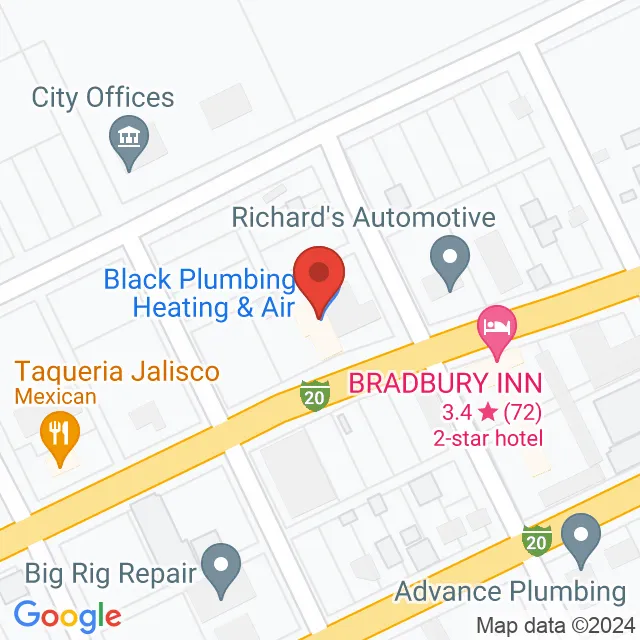
Your air conditioning (AC) keeps the house comfortable overnight, then by mid-afternoon the rooms feel warm and the thermostat will not come down. Why does a system that works at 2 AM struggle at 2 PM? It is a recognizable pattern, and it is rarely random. The system is telling you it can handle a light load but not a heavy one. This post goes through the causes one by one, shows which ones you can check yourself, and explains what a repair visit covers. Black Plumbing Heating & Air is at 501 N Main St, San Angelo, TX 76903, and we take calls 24/7.
Why the afternoon is the hardest part of the day for an AC
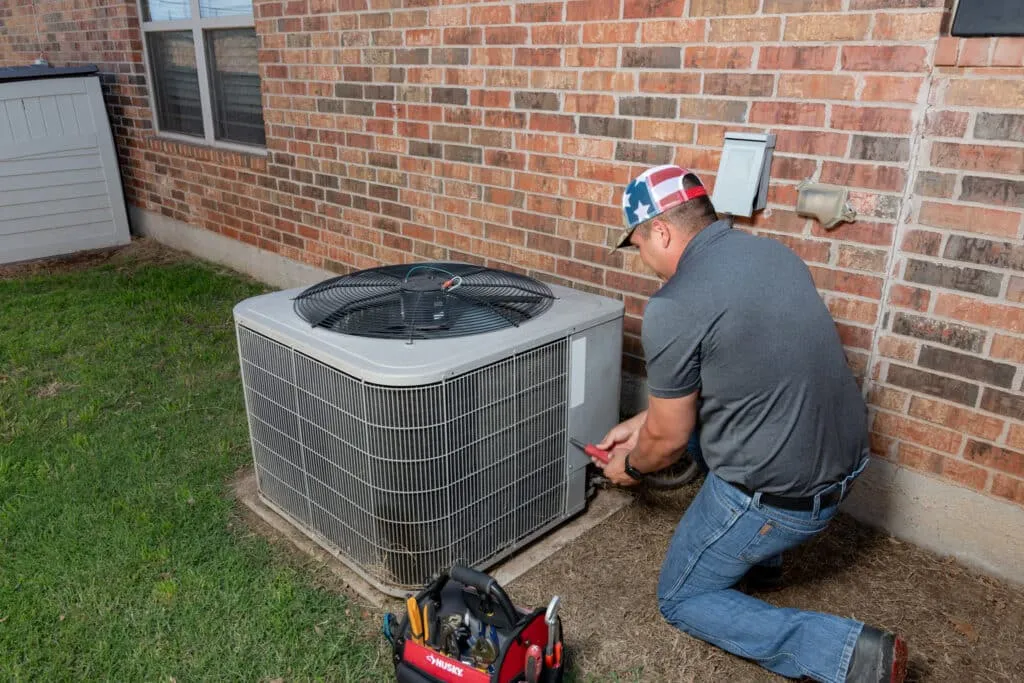
At night the job is easy. The air outside is cooler, the sun is not heating the roof and walls, and the house has no solar gain pouring through the windows. A system with a hidden weakness can still keep up because it is not asked to do much.
By afternoon everything changes. The roof and walls have been absorbing heat for hours, the attic has heated up, and west-facing windows let in direct sun. The outdoor unit has to reject heat into the hottest air of the day, which makes the job harder. The cooling the house needs is at its highest at the same moment the system has the most difficulty delivering it. Anything that is slightly off shows up now, which is why “it works at night” is not the same as “it is fine.”
Cause 1: A dirty outdoor coil
The outdoor coil is how your system dumps heat. When it is coated with dust, cottonwood fluff, grass clippings or lint, heat cannot leave efficiently. Pressure and temperature inside the system rise, capacity drops and the compressor works harder. On a mild night the effect is hidden. On a hot afternoon it can be the difference between keeping up and falling behind.
You can look at it yourself. With the power off at the disconnect, see whether the fins are caked with dirt or blocked by debris, and clear a few feet of space around the unit. A gentle rinse with a hose, from the inside out where you can, helps. Anything beyond that, such as a coil that is deeply fouled or bent, should be handled by a technician.
Cause 2: A clogged filter or a dirty indoor coil
Airflow is half of cooling. If the filter is clogged or the indoor coil is covered in buildup, not enough air passes over the coil, and the system cannot move the heat it has absorbed. The result is weak airflow at the vents and, in severe cases, ice on the coil. Ice makes things worse, because it blocks airflow further. If you find ice on the refrigerant line or the indoor unit, turn the system off and let it thaw before you call.
Check the filter. If it looks gray and matted, replace it. A filter that fits poorly or is the wrong type can also restrict flow.
Cause 3: Low refrigerant
An air conditioner does not use up refrigerant. If the charge is low, there is a leak. A system low on refrigerant has less capacity, and the shortfall shows up under load. The U.S. Department of Energy’s guidance on residential central air conditioners lists improper charging among the installation problems that cause efficiency losses, and says regular maintenance, including charging refrigerant, is necessary to maintain peak performance. Adding refrigerant without finding and fixing the leak is a temporary answer, so our technicians measure the charge and look for the cause.
Cause 4: Ducts that lose cooled air
Many homes have ducts running through an attic that gets very hot in the afternoon. A duct with leaks, loose connections or poor insulation loses cooled air into the attic and pulls hot air in. At night the attic is cooler and the loss is small. In the afternoon, it is large. The same department’s guidance names leaky ducts as a common installation problem that causes efficiency losses.
In San Angelo, many homes are ranch-style houses from the wool and mohair years, and older homes of that era often have thin ductwork or limited attic space. If some rooms stay warm while others are fine, or if airflow at a distant register is weak, the ducts deserve a look.
Cause 5: A system that does not match the house
Sometimes the problem is the size of the system relative to the house. The Department of Energy’s guidance lists oversizing as an installation problem. An oversized system cools quickly, shuts off before it removes much humidity, and cycles on and off, which leaves the house clammy. An undersized system runs all day and cannot catch up at the peak. A house that has changed, with added windows, a room addition, or a loss of shade from a removed tree, can also outgrow its system.
If the system has never kept up since it was installed, this is a likely cause. We size replacements to the home rather than swapping in whatever fits the old ductwork. Our air conditioning replacement in San Angelo page explains how.
Cause 6: Failing electrical parts
Capacitors, contactors and motors weaken with age and heat. A part that works when it is cool can fail or drop out as temperatures climb. Signs include a unit that hums but does not start, a fan that spins slowly or not at all, or a breaker that trips in the afternoon. These parts are small repairs when caught early, and a failed capacitor left in place can damage the motor or compressor it serves.
Cause 7: The thermostat and the way you use it
It is worth ruling out the simple things. A thermostat in direct sun or near a heat source reads wrong. A setback schedule that lets the house warm up during the day leaves the system with a bigger job when it restarts. A thermostat set to “fan on” instead of “auto” blows warm, humid air between cycles. Sometimes the fix is a setting.
If you use a large temperature setback while you are out, try a smaller one. Cooling a house down by many degrees on a hot afternoon asks more of the system than holding it steady.
Cause 8: Heat coming from inside the house
Appliances, lighting and cooking add heat during the day. A west-facing room with no shade can take on a lot of sun. Closing blinds or curtains on the sunny side, running the oven at off-peak times and keeping interior doors open to allow return air can make a visible difference. These steps will not fix a faulty system, but they take load off a marginal one.
A quick self-check before you call
- Is the thermostat set to cool and to “auto”?
- Is the filter clean?
- Is the outdoor unit running, and is the fan spinning?
- Is there ice on the indoor unit or the refrigerant line?
- Is the outdoor coil blocked by debris?
- Do some rooms cool better than others?
- Has the breaker tripped?
If the answers do not solve it, you now have a clear description to give. Note when the problem starts, which rooms are affected, any sounds or smells, and what the outdoor unit is doing. A phone video of the unit running is helpful.
What a repair visit covers
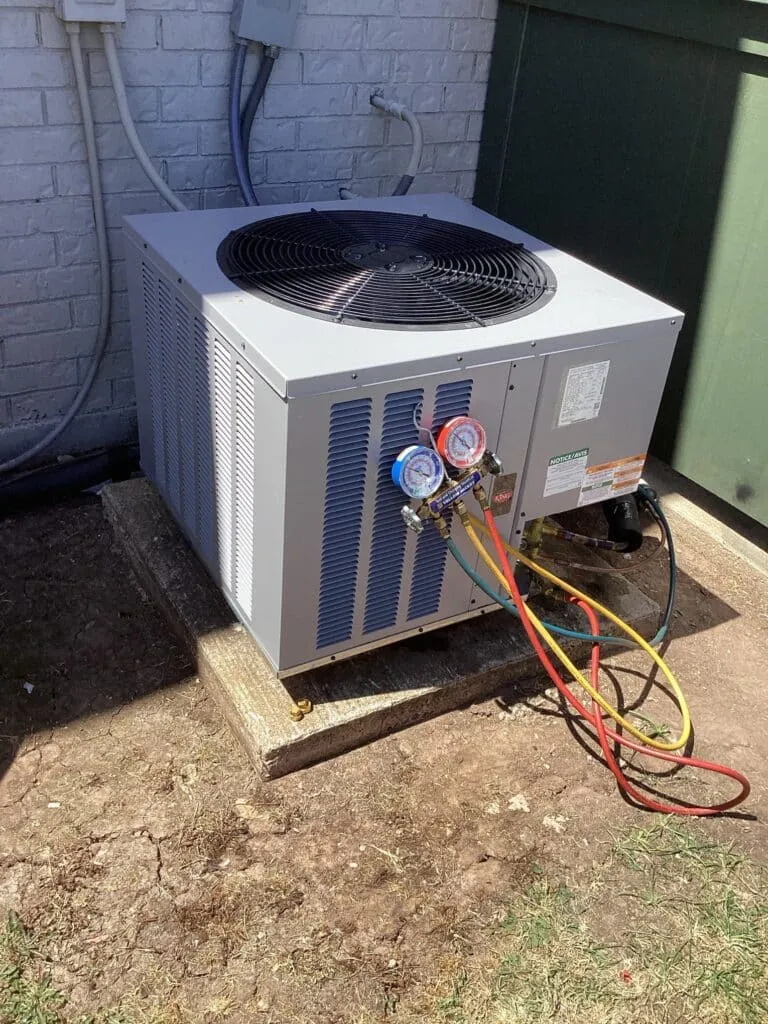
When our technicians service a San Angelo air conditioner, the visit covers the refrigerant level, the electrical connections, airflow and the condition of the ductwork. For an afternoon problem we add a close look at the outdoor coil and the temperature drop across the indoor coil. We test capacitors and motors under load, and we compare the system’s performance with what it should be delivering. Then we explain what we found and what the options are. Our AC repair services in San Angelo page lists the work we do, including refrigerant leaks, failed capacitors and airflow problems.
Preventing the pattern next summer
Many afternoon failures start with something a tune-up is meant to catch. A clean coil, a verified charge and healthy electrical parts mean the system has reserve capacity when the heat arrives. See our AC maintenance in San Angelo page, and our guide to how often to service your air conditioning. If the system is shutting down completely, read when to call for emergency AC repair.
Frequently asked questions about AC problems in San Angelo
Is it normal for an AC to run all afternoon?
On a very hot day, long run times are normal. What is not normal is a house that keeps getting warmer while the system runs. If the temperature climbs despite constant operation, something is limiting capacity.
Why does my AC work better at night?
Lower outdoor temperatures and no solar heat mean the system has a lighter job. It can mask a weakness, such as a dirty coil or low charge, that shows up under heavy load.
Can I fix this by lowering the thermostat?
Usually not. Setting the thermostat lower does not make the system cool faster. It only asks the system to run longer, and if it is already at its limit it will not help.
Could my ducts be the problem?
Yes. Leaking or poorly insulated ducts in a hot attic lose cooled air and are a common cause of uneven cooling in the afternoon.
Call Black Plumbing Heating & Air in San Angelo
If your air conditioning loses the afternoon battle, call (325) 659-3747 any hour or visit 501 N Main St, San Angelo, TX 76903. We hold Texas HVAC license TACLA145786C and have served San Angelo since 1994. Our office is rated 4.8 out of 5 on Google. You can see all our local services on the San Angelo page.