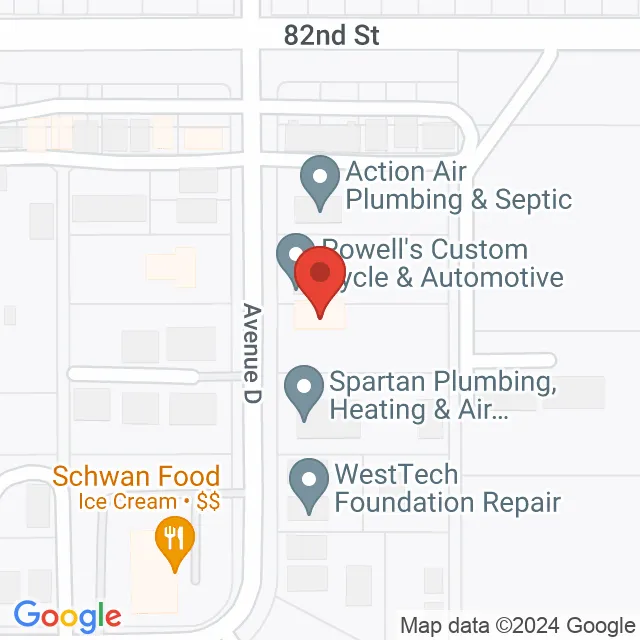
Most Lubbock homeowners who look at water filters are really asking one thing: which kind do I need, and where should it go? A pitcher on the counter, a filter under the kitchen sink, and a system on the main line all do different jobs. Choosing the wrong one means paying for something that does not address what is actually wrong with your water. This post explains what each type does, what the water under the South Plains is known for, and how to decide. Black Plumbing’s Lubbock shop is at 8215 Avenue D, and we are open 24/7.
First, find out what you are trying to fix
Filters solve specific problems. Before you shop, write down what you notice, because the symptom points to the type.
- White crust on faucets, shower heads, and kettles. That is scale, a mineral deposit.
- Cloudy glasses and spots on dishes. Also minerals, usually.
- A salty or flat taste. Often dissolved solids.
- A chlorine smell or taste. That is treatment residue, not minerals.
- Brown or rust-colored water, or stained fixtures. Iron or corrosion in pipes.
- Short life for water heaters and appliances. Scale and sediment inside them.
Each of these has a different cause, and a filter that helps with one may do nothing for another. That is why the starting point is a look at your water and your plumbing, not a product catalog.
What is in South Plains water
The Texas Water Development Board describes the Ogallala Aquifer as the largest aquifer in the United States and a major source of water under the High Plains. It reports that water quality there declines toward the south, where large areas contain total dissolved solids in excess of 1,000 milligrams per liter. It also notes that water levels have fallen more than 300 feet in some areas over the last 50 to 60 years.
The U.S. Environmental Protection Agency sets a non-mandatory guideline for total dissolved solids of 500 milligrams per liter in its secondary drinking water standards. The agency says these standards address aesthetic issues such as taste, color, and odor, and that the listed contaminants are not considered to present a risk to human health at the guideline level. It lists hardness, deposits, colored water, staining, and a salty taste as the problems high levels can cause. It also says federal rules do not require water systems to treat for them.
Put plainly: much of the water in this region is mineral-heavy, and the effects show up as scale, spots, and short appliance life more than as a health alarm. The Lubbock plumbing hub says the same thing from the plumber’s side. Water carrying a heavy load of calcium, sulfate, and other dissolved solids leaves scale and sediment in water heaters, supply lines, valves, and fixture cartridges, and the deposits narrow pipes over time.
The types of filters, and what each one does
Pitcher and faucet-mount filters
These are simple to start and simple to use. They treat a small amount of water at one tap, usually for taste and odor. They do nothing for the shower, the water heater, or the washing machine. They are a reasonable starting point for drinking water, and a poor answer to scale in your pipes.
Under-sink filters
These sit under the kitchen sink and feed a dedicated tap or the main faucet. They can improve the taste of water you drink and cook with. Like a pitcher, they treat only that fixture. Cartridges need to be replaced on schedule or the filter stops working as intended.
Whole-home filters
A whole-home system goes on the main water line where it enters the house, so every tap, shower, and appliance gets treated water. The Lubbock hub explains the case for it in this region: a whole-home filter protects fixtures, water heaters, and pipes and improves the tap water. This is the type that matters most for people who see scale and sediment problems throughout the house.
Which one fits you?
- If the complaint is the taste of drinking water only, start with an under-sink filter or a pitcher.
- If you see scale on fixtures, spots on dishes, or you are replacing appliances early, a whole-home approach addresses the root.
- If you have both, many homes use a whole-home system and an under-sink filter for drinking water.
- If you are on a private well, tell us first. Wells have their own conditions, and the Lubbock hub notes that customers on private High Plains wells feel dropping pressure and pull more sediment as the water table falls.
Get the water tested before you decide
The honest way to choose is to know what is in your water. The EPA’s home drinking water filtration fact sheet is a place to start reading about what filters can and cannot do. If you are on a public system, your water utility publishes a consumer confidence report. If you have a well, a lab test of the water is the way to know.
When we visit, we look at the plumbing as well as the water. We check incoming pressure and look at what has built up inside fixtures and the water heater. We then explain what we see and which filtration approach fits. If the problem turns out to be a failing pipe and not the water, we will say so.
What a whole-home filter installation involves
- Review. We ask about the symptoms you see, how many people live in the house, and what is plumbed where.
- Locate the install point. The filter goes on the main line after the shutoff and before the branches to the house. We choose a spot with room for service and cartridge changes.
- Size it. The unit needs to handle the flow your household uses, or pressure will drop at the taps.
- Install. We cut in, connect, and add a bypass or shutoff valves so the filter can be serviced without shutting off the house.
- Test. We check for leaks, flush the system, and confirm pressure at the fixtures.
- Explain maintenance. We explain how often to change cartridges so the system keeps working.
More detail is on our water filter installation in Lubbock page, and you can see every service we offer on the Lubbock hub.
What a filter will not do
It helps to be clear on this, because it is easy to expect too much. A filter reduces what it was designed to reduce. It will not fix a leaking pipe, a corroded water heater, or a municipal supply problem. A filter that is not maintained can stop working or even add its own problems. And no filter is the right answer to every complaint. That is why we start with the symptoms and the water, not the product.
A filter also does not replace good plumbing practice. Scale already inside your pipes and heater stays there. Flushing the water heater and replacing worn valves are separate jobs that go hand in hand with filtration.
Signs your filter needs attention
- Pressure at the taps drops over time.
- Taste or odor returns after it had improved.
- Scale builds again on fixtures.
- The cartridge is past its change date.
- You notice leaks or dampness at the housing or fittings.
What Lubbock customers say
Jonah S., a Lubbock customer, wrote in September 2026 that the team is “always helpful and happy to help explain what the situation is and potential options for what work needs to be done.” For a filtration decision, options and plain explanations are what you need. Another Lubbock customer, Carlye H., noted that the team calls ahead, gives an estimate, and confirms the date and time you request.
Frequently asked questions about water filters in Lubbock
Is Lubbock tap water safe to drink?
Public water systems are required to meet federal health standards, and utilities publish yearly reports on their results. The issues most people notice, such as scale, spots, and taste, are aesthetic. If you have a health concern or a private well, have the water tested.
Will a filter fix the white crust on my faucets?
It depends on the cause and the type of filter. Crust is mineral scale, and a filter chosen to address it can reduce new buildup. It will not remove what is already there. We explain what each option handles before you buy.
Do I need a whole-home filter or just one at the kitchen sink?
If you only care about drinking and cooking water, a kitchen filter may be enough. If scale affects your showers, water heater, and appliances, a whole-home system protects all of them.
How often do filters need maintenance?
It depends on the system and your water. Cartridge-based filters need regular changes, and we explain how often to change yours at installation. Skipping changes is a common reason a filter stops doing its job.
Talk to a Lubbock plumber about your water
If you are weighing filter options, call us at (806) 787-2200. We are at 8215 Avenue D, Lubbock, TX 79404, and we answer 24/7. We will look at your plumbing and your water, then recommend what fits.